What Did ‘Occult’ Originally Mean?

A magnet attracts iron. To a medieval natural philosopher, that familiar observation could present an occult problem. The attraction was visible enough; what remained hidden was the power by which it occurred. This is some distance from the associations the word now carries. Yet the older meaning is not simply a quaint ancestor of the modern one. Following it through a few texts reveals changes in what people thought nature contained, how its workings might be known, and where they placed the limits of legitimate inquiry.
The Latin occultus means hidden, concealed or secret. It describes something’s relation to an observer, without deciding whether the thing is holy, dangerous or even especially mysterious. A concealed cause, an undisclosed intention and a secret teaching might all be called occult. The word did not acquire all its later associations at once.
In natural philosophy, the distinction was often between qualities that could be readily perceived and powers known chiefly through what they did. Heat could be felt. The magnet’s attraction of iron was equally observable, but it could not be accounted for by saying that the magnet was hot, cold, wet or dry. Thomas Aquinas takes precisely this example in his short treatise On the Occult Workings of Nature. Certain natural activities appear, he writes, although their principles cannot be clearly understood. His question is not whether magnetism is real, but what sort of cause can account for it.

Aquinas offers an answer within his own account of nature. If every magnet attracts iron, he argues, the power belongs to magnets as a kind of thing; it is not an occasional intervention produced from outside. He relates such powers to the forms of natural bodies and, ultimately, to the ordered influence of higher causes. We need not accept that explanation to see that he has supplied one. In the Summa theologiae, he speaks of “certain occult forces, the reason of which man is unable to assign”. The word marks a difficulty for inquiry, not an exemption from it.
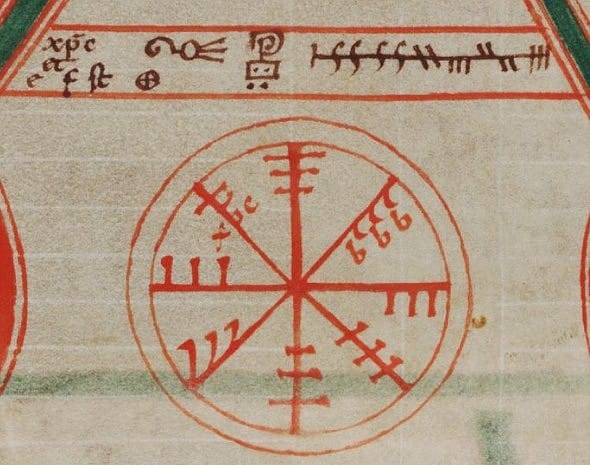
This distinction matters because occult quality can sound, to modern ears, like a substitute for thought: a name bestowed on anything one cannot explain. It could certainly be used carelessly. But in the scholastic discussion, it often identified a more specific problem. An effect occurred regularly; the ordinary account of elemental qualities did not suffice; some further natural power had to be considered. There was considerable room for disagreement about what that power was.
Natural magic and the reach of hidden powers
Renaissance natural magic enlarged this field of inquiry. Writers including Marsilio Ficino and Heinrich Cornelius Agrippa considered how properties of plants, stones, animals and other bodies might be related to celestial influences or to wider patterns of sympathy and antipathy. Their explanations drew on different philosophical commitments, and the label natural magic should not make them into a single school. What they shared was an interest in effects whose causes were thought to lie beyond readily manifest qualities.
Agrippa’s Three Books of Occult Philosophy, completed in print in 1533, makes the enlarged scope unusually plain. He divides his undertaking into natural, celestial and ceremonial magic. The first concerns powers in the material world; the second considers the heavens; the third includes religious ceremonies and spiritual intelligences. His occult philosophy is therefore not merely a handbook of puzzling physical effects. It attempts to describe a universe whose different levels are connected and, under appropriate conditions, open to human action. The 1651 English translation gives his scheme succinctly: “the first contains naturall Magick, the second Celestiall, and the third Ceremoniall.”
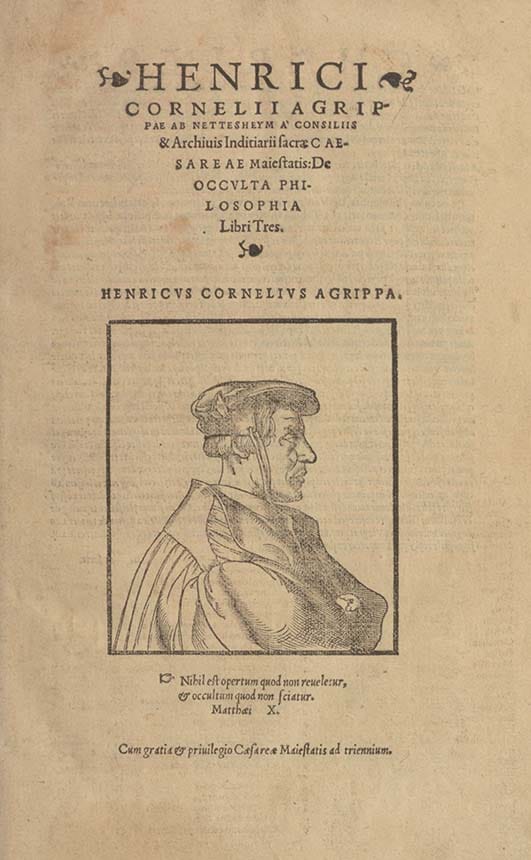
Agrippa’s title can thus mislead in two directions. It does not mean that he was discussing only the occult qualities recognised by scholastic natural philosophers. Nor does it mean that his project was identical to what a nineteenth-century reader would call occultism. His account belongs to a particular Renaissance effort to bring natural philosophy, astrology, learned magic and theology into relation. It also belongs to a Christian intellectual world in which the legitimacy of such an effort could be sharply contested.
Giambattista della Porta’s Natural Magic, first published in four books in 1558 and greatly expanded in 1589, shows another use of the term. Its twenty-book version ranges across plants, metals, medicine, distillation, cookery, mirrors, writing and mechanical devices. Some proposed effects are doubtful; others belong recognisably to the practical arts or to experimental investigation. Della Porta calls natural magic “the practical part of natural Philosophy”, producing effects through the suitable application of one natural thing to another. That is his claim for the enterprise, not a judgement we have to adopt wholesale.
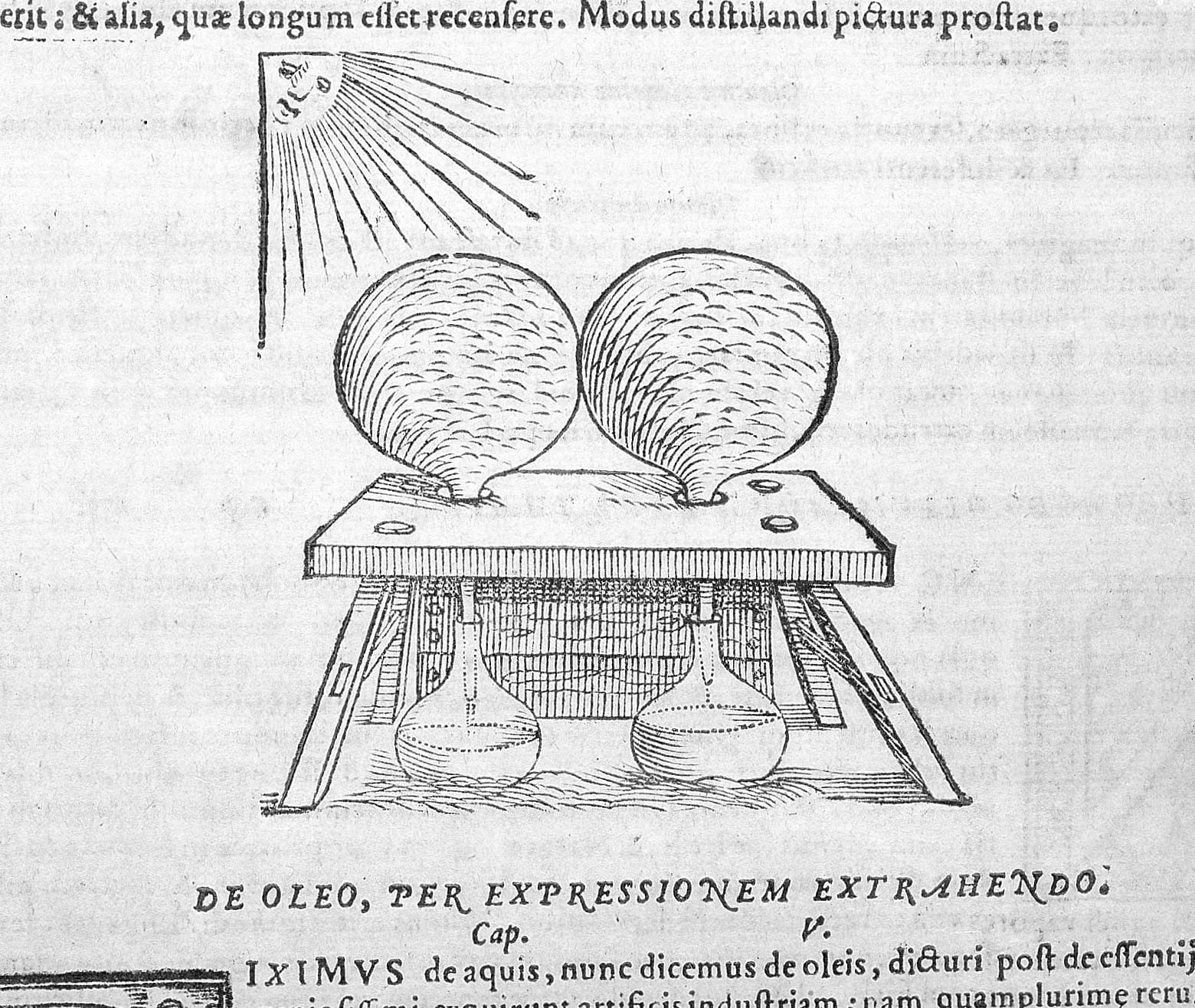
Della Porta also insists on a boundary. At the beginning of the work, he distinguishes the natural magic he wishes to practise from sorcery involving spirits and enchantments. The distinction was important to him, but it did not settle every dispute. Aquinas, for instance, had allowed that a natural substance might possess a hidden power while rejecting characters and observances that could not produce their alleged effects by natural means. A talisman attributed with celestial power might look like an application of nature to one author and an illicit sign to another. “Occult”, “natural” and “lawful” were not interchangeable terms.
An adjective becomes a field
During the seventeenth century, philosophers increasingly demanded other kinds of explanations for the properties of bodies. Robert Boyle, for example, sought to account for many such effects through the structure, motion and relations of material particles. To say that a substance acted by an occult quality could be criticised if it merely renamed the effect under investigation. Yet it would be too neat to say that Boyle abolished hidden qualities. He acknowledged powers whose explanations remained to be found. What changed was the standard by which a proposed explanation might be judged adequate.
The later history of the occult cannot be derived simply from that change in natural philosophy. In nineteenth-century France, occultisme began to name a more self-conscious body of ideas and practices. Éliphas Lévi—Alphonse-Louis Constant—was central to its formation, although the word should not be credited to him as a lone invention. His Dogme et rituel de la haute magie appeared in two volumes in 1854–56 and placed magic within an ambitious account of religion, symbolism and knowledge. Lévi’s intellectual setting also included contemporary debates about Christianity and social reform; modern occultism did not arise in isolation from them.
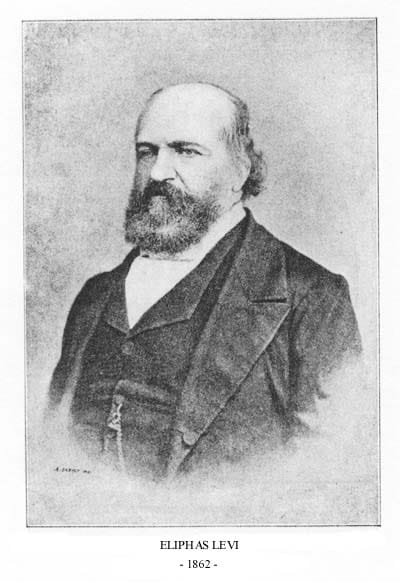
The difference in emphasis can be heard in Lévi’s opening pages. Beneath the allegories and initiations of many cultures, he proposes, lies “a doctrine which is everywhere the same and everywhere carefully concealed”. That is a claim about a hidden tradition and its recovery, not simply about the cause of an observable natural effect. The quotation is from A. E. Waite’s 1896 translation; it should be read as Lévi’s nineteenth-century argument rather than as a description of what earlier writers collectively believed.
There is continuity here, but not an unbroken definition. Lévi and later occultists drew upon older authors, texts and terms. They also selected, recombined and interpreted them for new readers living amid different arguments about science and religion. An occult quality, Agrippa’s occult philosophy and nineteenth-century occultism are related expressions. They do not designate one stable subject pursued under three successive names.
If we ask what occult originally meant, then, the shortest answer is hidden. In medieval natural philosophy, that ordinary word could be used with considerable precision for powers recognised through their effects but not explained by manifest qualities. Later writers extended it towards larger accounts of nature, cosmos and spiritual knowledge. The history is more interesting if we keep those uses in view at once: neither treating a medieval magnet as an anticipation of modern occultism, nor assuming that the older word was innocent of every meaning it subsequently acquired.
Primary texts discussed: Thomas Aquinas, De operationibus occultis naturae and Summa theologiae, II–II, q. 96, a. 2; Heinrich Cornelius Agrippa, De occulta philosophia, I.1–2 (quoted from the 1651 English translation); Giambattista della Porta, Natural Magick, I.1–2 (1658 English translation); Éliphas Lévi, Dogme et rituel de la haute magie (1854–56), quoted from A. E. Waite’s 1896 translation. For Lévi’s nineteenth-century setting, see Julian Strube, “Socialist Religion and the Emergence of Occultism”, Religion 46, no. 3 (2016).