Thelema
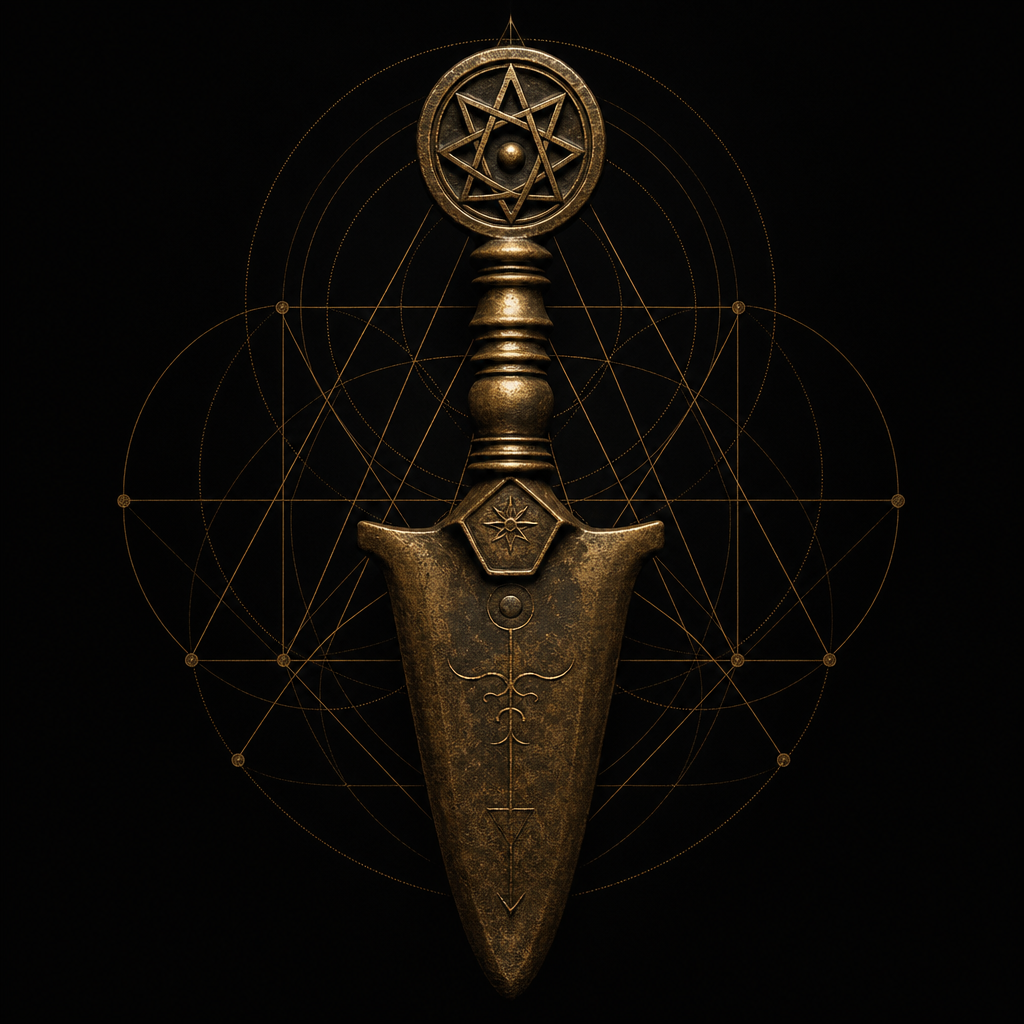
Thelema is one of the most distinctive and influential religious and magical systems to emerge from the early twentieth-century occult milieu. Associated above all with Aleister Crowley, it developed from the late Victorian and Edwardian world of ceremonial magic, the Hermetic Order of the Golden Dawn, comparative religion, yoga, sexual symbolism, and modern individualism. Its central formula, “Do what thou wilt shall be the whole of the Law,” has often been misunderstood as a licence for appetite or self-indulgence. In Thelemic thought, however, “will” refers not simply to desire, whim, or social rebellion, but to the discovery and enactment of one’s True Will: the deepest and most proper course of the individual life within the order of the cosmos.
Thelema’s immediate antecedents lie in the Occult Revival and the Hermetic Order of the Golden Dawn. The Occult Revival had already reconfigured magic as a disciplined path of spiritual development, drawing together tarot, Kabbalah, astrology, ritual, alchemy, grimoires, and Eastern religious concepts into modern occult systems. The Golden Dawn provided Crowley with a structured magical education: graded initiation, ceremonial symbolism, the Kabbalistic Tree of Life, elemental and planetary magic, Enochian materials, astral work, and the idea of magical attainment as a progressive ascent. Thelema inherited this technical apparatus, but it radically reoriented its meaning.
Crowley’s break with the Golden Dawn was not simply a matter of personality, though personality certainly made its contribution with the subtlety of a brass band in a crypt. The Golden Dawn remained tied to older Rosicrucian, Christian, Masonic, and Victorian moral frameworks. Crowley reworked ceremonial magic through a more deliberately transgressive, individualist, and prophetic lens. He retained the discipline of magical training but placed it within a new religious myth. The central event was his reception of The Book of the Law in Cairo in 1904, which he claimed was dictated by a praeterhuman intelligence named Aiwass. This text became the foundational scripture of Thelema.
The Book of the Law announced the advent of a new spiritual age, the Aeon of Horus. Crowley’s aeonic theory interpreted religious history as a sequence of great symbolic epochs. The Aeon of Isis was associated with maternal, nature-centred, and ancient religious forms; the Aeon of Osiris with patriarchy, sacrifice, suffering, death, and resurrection; and the Aeon of Horus with the child, sovereignty, self-realisation, and the discovery of individual will. This structure is not historical scholarship in the ordinary academic sense. It is a mythic and magical model of religious consciousness. Its purpose is not merely to classify the past, but to frame the spiritual task of the present.
The doctrine of True Will is the heart of Thelema. It proposes that each person has a unique path or function, not imposed externally but discovered through disciplined self-knowledge, magical practice, and the stripping away of false conditioning. To do one’s True Will is not to indulge every impulse. Indeed, ordinary desire may obscure the Will as much as social repression does. Thelema therefore combines radical freedom with rigorous discipline. The aspirant must learn concentration, self-observation, ritual practice, ethical clarity, and the ability to distinguish passing preference from deeper necessity. This is one reason Thelema is so easily caricatured and so difficult to practise seriously.
Crowley’s magical system retained and transformed many Golden Dawn techniques. Rituals such as banishings, invocations, scrying, astral exploration, and Kabbalistic analysis remained important. Yet Crowley recast them in Thelemic terms, integrating Egyptian divine forms, the formula of the Aeon of Horus, and his own interpretations of yoga, tantra, and sexual magic. The Great Work was no longer merely the attainment of mystical union or the recovery of hidden wisdom; it became the conscious realisation of True Will and the alignment of the individual with the dynamic order expressed in Thelemic symbols.
Thelema also placed strong emphasis on the union of opposites, especially through the formula of Nuit and Hadit. Nuit, in The Book of the Law, represents infinite space, total possibility, and the boundless field of manifestation. Hadit represents the infinitely contracted point, the centre of experience, motion, and individual consciousness. Their union gives rise to Ra-Hoor-Khuit, a form of Horus associated with the new aeon. This symbolic structure is metaphysical, devotional, and magical at once. It presents existence as the ecstatic interplay of infinite extension and individual point-consciousness. As usual, occultism manages to make metaphysics sound like both theology and advanced geometry with better costumes.
Sexual symbolism and sexual magic occupy an important, though often sensationalised, place in Thelema. Crowley associated sexual energy with magical force and spiritual transformation, drawing from both Western esoteric currents and his interpretations of Eastern tantric ideas. In organisations such as the Ordo Templi Orientis, sexual symbolism became integrated into graded initiatory teachings. This dimension has contributed to Thelema’s notoriety, but it should not be isolated from the wider system. In Thelemic thought, sexuality is one expression of creative force, polarity, union, and will. Its ritual use was intended to participate in a broader magical cosmology, not merely to shock Edwardian society, though Crowley was hardly allergic to that outcome.
Thelema is also inseparable from Crowley’s complex reception of Eastern religious practices. His study of yoga, meditation, and Buddhist and Hindu ideas shaped his understanding of concentration, consciousness, ego, and mystical attainment. In works such as Book 4 and Magick in Theory and Practice, Crowley attempted to integrate yoga and ceremonial magic into a unified discipline. He interpreted mystical states with unusual seriousness for a Western magician of his period, even when his interpretations were filtered through his own system. The result was a magical religion that combined ritual, meditation, scripture, myth, and technical training.
Institutionally, Thelema developed through several channels. The A∴A∴, founded by Crowley and George Cecil Jones, presented a rigorous initiatory system focused on individual attainment, drawing on Golden Dawn grade structures but reorganised around Thelemic principles. The Ordo Templi Orientis, which Crowley came to lead in its British section and later more broadly, became a major vehicle for Thelemic liturgy and sexual-magical symbolism. The Gnostic Mass, or Liber XV, gave Thelema a public ritual expression, combining sacramental structure with Thelemic theology. These bodies allowed Thelema to survive beyond Crowley’s personal career and become an ongoing religious and magical tradition.
Thelema’s later influence has been substantial. It shaped twentieth-century ceremonial magic, chaos magic, occult counterculture, esoteric publishing, modern tarot, and alternative religious movements. Crowley’s Thoth Tarot, created with Lady Frieda Harris, became one of the most important occult tarot decks of the twentieth century. Thelemic ideas of will, magical practice, aeonic change, and self-realisation entered broader esoteric culture, sometimes in disciplined forms and sometimes as vague slogans detached from their demanding context. This is the normal fate of powerful ideas once popular culture gets its sticky little hands on them.
The significance of Thelema lies in its transformation of modern magic into a religion of will, initiation, and individual spiritual sovereignty. It inherited the technical systems of the Occult Revival and the Golden Dawn, but it refused to remain within their symbolic and moral boundaries. It placed the individual at the centre of a cosmic drama, not as an isolated ego but as a star whose proper orbit must be discovered and fulfilled. Whether one regards Crowley as prophet, poet, magician, provocateur, or problem, the system he created remains one of the major currents of modern Western esotericism.
For the Western esoteric tradition, Thelema marks a decisive shift from inherited Christian, Rosicrucian, and Masonic models toward a more explicitly modern and self-authorising magical spirituality. Its language of True Will, aeonic transformation, disciplined magical practice, and divine individuality continues to shape contemporary esoteric thought. It is controversial, uneven, and often misunderstood, but it cannot be dismissed as mere scandal or eccentricity. Thelema gave modern occultism one of its most enduring and provocative formulas: the spiritual life as the discovery and enactment of the will that is truly one’s own.
Antecedent Traditions
· Occult Revival & Ritual Magic
· Hermetic Order of the Golden Dawn
Succeeding Traditions
· None mapped