Spiritualism
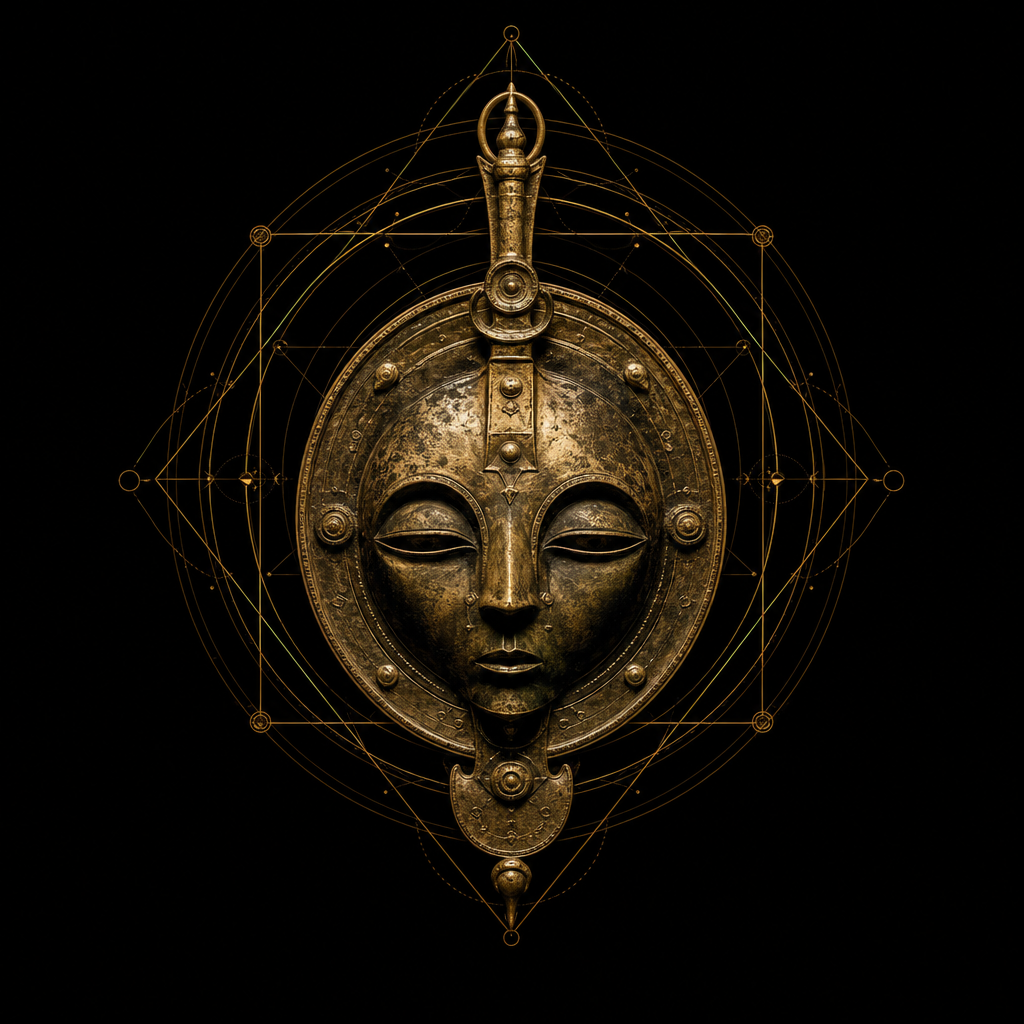
Spiritualism emerged in the nineteenth century as one of the most influential religious and esoteric movements of the modern West. At its centre was a simple but far-reaching claim: the dead survive bodily death and can communicate with the living. This claim was not new in itself. Belief in spirits, apparitions, ancestors, ghosts, saints, angels, and post-mortem existence is almost universal in human religious history. What made Spiritualism distinctive was its modern form. It presented communication with the dead not merely as folklore, miracle, or private vision, but as an observable phenomenon that could be investigated, repeated, witnessed, and debated. In an age increasingly shaped by science, journalism, public lectures, reform movements, and domestic sociability, Spiritualism made the unseen world into a matter for parlour demonstration, public controversy, and metaphysical argument.
The movement is usually dated from 1848, when the Fox sisters of Hydesville, New York, became associated with mysterious rapping sounds interpreted as communications from a spirit. Whether one treats the episode as revelation, fraud, performance, or social catalyst, its historical effect was immense. The idea of spirit communication spread rapidly across the United States and then to Britain, Europe, and beyond. Mediums claimed to receive messages through knocks, trance speaking, automatic writing, table turning, clairvoyance, materialisation, and other phenomena. These practices entered drawing rooms, lecture halls, newspapers, reform circles, and eventually organised Spiritualist churches and societies. The dead, having apparently discovered public relations, became astonishingly busy.
Spiritualism appealed to a society caught between religious inheritance and modern doubt. Traditional Christianity taught survival after death, resurrection, judgement, heaven, and hell, but many educated people in the nineteenth century found inherited doctrines increasingly difficult to reconcile with scientific naturalism, biblical criticism, and religious pluralism. Spiritualism offered another path. It promised empirical reassurance of immortality. The afterlife was no longer merely a matter of faith or ecclesiastical teaching; it could be heard in raps, written through a medium’s hand, or described by entranced speakers. For bereaved families, especially in periods marked by high mortality, war, disease, and child death, this promise carried tremendous emotional power.
At the same time, Spiritualism was not only a consolation for grief. It was also a religious and philosophical movement with a distinctive view of the universe. Many Spiritualists rejected eternal damnation and emphasised progressive development after death. The spirit world was often imagined as a series of spheres or conditions through which souls advanced morally and intellectually. Death was not a final judgement but a transition into continuing growth. This progressive afterlife harmonised with nineteenth-century liberal religion, social reform, and evolutionary ideas. It also softened older Christian images of divine punishment, replacing them with education, purification, and ascent. The cosmos became, in effect, a vast improvement scheme, because evidently even the afterlife requires professional development.
Spiritualism also had significant social implications. It provided unusual public roles for women, especially as mediums, lecturers, healers, and religious leaders. In many religious institutions, women were restricted from formal authority. Spiritualism, by contrast, often treated mediumship as a gift rather than an office, allowing women to speak with spiritual authority while technically claiming to transmit messages from beyond themselves. This did not free the movement from the gender assumptions of its age, but it did create spaces in which women could exercise public voice, religious agency, and social influence. Spiritualism also overlapped with abolitionism, women’s rights, temperance, pacifism, and other reform causes, especially in the Anglo-American world.
The movement’s relationship with science was complex. Critics dismissed Spiritualist phenomena as fraud, delusion, hysteria, or credulity. Certainly, fraud existed. Exposés of fake materialisations, manipulated spirit photographs, concealed devices, and theatrical tricks were common. Yet the history is not reducible to deception. Some scientists, intellectuals, and serious investigators took Spiritualist claims seriously, not necessarily because they accepted every medium, but because they believed anomalous phenomena deserved disciplined inquiry. The later emergence of psychical research owed much to this tension. Spiritualism provoked questions about evidence, consciousness, telepathy, survival, and the limits of material explanation. It turned ghostly claims into experimental problems, which is exactly the sort of thing modernity does when confronted with mystery: it reaches for notebooks.
In esoteric history, Spiritualism is important because it shifted attention toward communication with invisible intelligences in a democratic and experiential form. Earlier ceremonial magic often involved complex rites, divine names, astrological timings, ritual purifications, and learned traditions of conjuration. Spiritualism required far less apparatus. A table, a medium, a circle of sitters, and an expectation of contact could suffice. This made the unseen world socially accessible. It also altered the tone of spirit contact. Instead of commanding spirits through ritual authority, Spiritualists often cultivated receptive conditions in which spirits communicated voluntarily. The medium became a channel rather than a magician, and the séance became a central ritual form of modern esotericism.
Spiritualism also contributed to changing ideas of the subtle body, clairvoyance, trance, healing, and psychic faculties. It encouraged the belief that human beings possessed latent capacities through which they might perceive or interact with non-physical realities. Mediumship, clairaudience, automatic writing, psychometry, and healing were not always framed as miracles. They could be treated as natural but little-understood powers. This language would later prove highly adaptable. It allowed occultists, Theosophists, psychical researchers, and New Age teachers to speak of unseen worlds without relying wholly on traditional theology or ceremonial magic.
The connection between Spiritualism and the Theosophical Society is especially significant. Helena Petrovna Blavatsky and Henry Steel Olcott moved in Spiritualist circles before the founding of the Theosophical Society in 1875. Theosophy would eventually criticise much Spiritualism as limited, passive, or confused in its understanding of the beings contacted. Yet it also inherited from Spiritualism a fascination with invisible worlds, discarnate intelligences, psychic phenomena, and the possibility of empirical contact with realities beyond ordinary perception. Theosophy redirected these concerns into a grander system of occult cosmology, Eastern religious vocabulary, masters, karma, reincarnation, and spiritual evolution. Spiritualism supplied part of the experiential atmosphere from which Theosophy emerged, even where Theosophy sought to discipline or supersede it.
The significance of Spiritualism lies in its modernisation of contact with the dead and the unseen. It translated ancient beliefs about spirits into a form suited to the nineteenth-century world of public lectures, print culture, scientific debate, domestic experiment, and religious uncertainty. It offered comfort to the bereaved, authority to mediums, controversy to scientists, irritation to clergy, and inexhaustible material to sceptics. More importantly, it helped normalise the idea that unseen realities might be investigated through experience rather than accepted only through inherited doctrine.
For the broader Western esoteric tradition, Spiritualism marks a crucial turn toward psychic experience, mediumship, and the democratisation of the invisible. Its practices were often simple, its theology sometimes loose, and its evidentiary standards uneven. Yet its influence was profound. By placing communication with spirits at the centre of modern religious and esoteric life, Spiritualism helped reshape the boundaries between religion, science, magic, and personal experience. It stands as one of the major nineteenth-century currents through which the unseen world entered modern culture not as a distant metaphysical abstraction, but as a presence that might rap on the table, speak through the entranced voice, or write through the hand of the living.
Antecedent Traditions
· None mapped
Succeeding Traditions
· Theosophical Society