Scholastic Theology
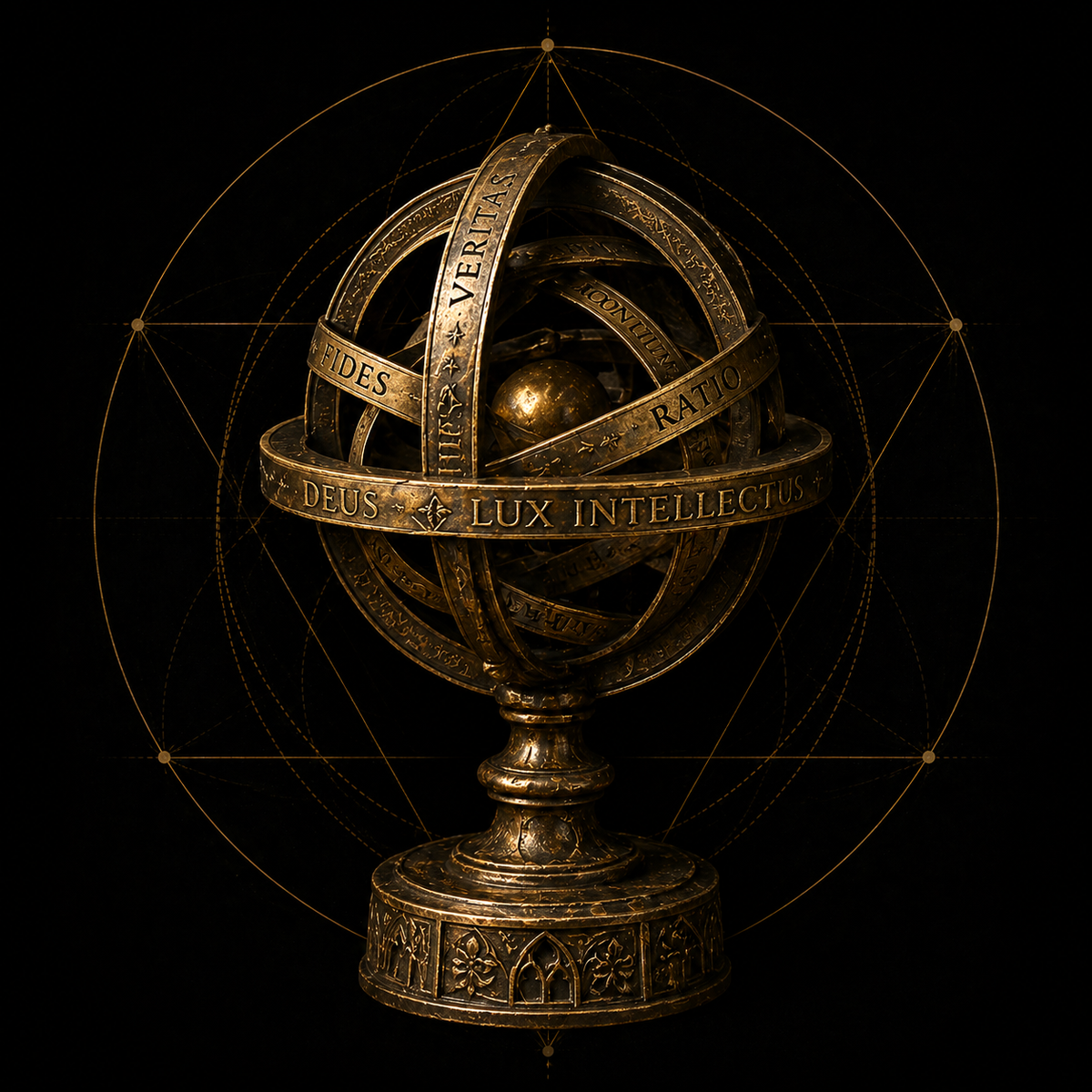
Scholastic theology occupies an unusual but important place in the history of the Western Esoteric Tradition. It was not, in itself, an esoteric movement, nor did its leading representatives usually seek hidden wisdom through magic, initiation, or visionary ascent. Scholasticism was the intellectual culture of the medieval schools and universities, shaped by Christian doctrine, Aristotelian philosophy, dialectical method, and the disciplined reconciliation of reason and revelation. Yet precisely because it provided the dominant intellectual framework of medieval Latin Christendom, it became one of the major conditions against which later esoteric currents developed. It supplied concepts, methods, boundaries, prohibitions, and theological problems that Renaissance Hermeticists, Christian Kabbalists, natural magicians, and occult philosophers would both inherit and contest.
The scholastic project was built upon the conviction that faith and reason, properly understood, could not ultimately contradict one another. Theology was the highest science because it drew upon divine revelation, but philosophy could clarify terms, refine arguments, and order knowledge. This ambition produced a vast intellectual architecture: distinctions between nature and grace, essence and existence, substance and accident, primary and secondary causation, intellect and will, angels and bodies, God and creation. Such distinctions may seem remote from esotericism at first glance, but they became essential to debates about magic, astrology, divine names, angelic mediation, the status of natural powers, and the limits of human knowledge.
Albertus Magnus is especially important in this context. A theologian, philosopher, and natural investigator, Albert helped transmit Aristotelian natural philosophy into Christian intellectual life while also engaging with alchemy, astrology, minerals, plants, and the hidden properties of things. His legacy is complicated, as medieval and early modern readers often attributed to him magical and alchemical works of uncertain authenticity. Nevertheless, his broader significance lies in his attempt to understand nature as an ordered creation whose properties could be studied without denying divine sovereignty. This view made room for inquiry into the occult qualities of natural things, provided such inquiry remained within the boundaries of orthodox theology.
Thomas Aquinas gave scholastic theology its most influential synthesis. In the Summa Theologiae and related works, he articulated a vision of creation in which all beings participate in God as first cause while retaining their own created natures and secondary causes. This distinction mattered enormously. If natural things possess real causal powers given by God, then the investigation of nature is not necessarily impious. At the same time, Aquinas sharply distinguished legitimate natural causation from demonic deception or illicit attempts to command spiritual powers. Later Christian thinkers interested in astrology, talismans, natural magic, or angelic invocation had to navigate this inherited boundary. Scholasticism did not eliminate magical speculation; it forced such speculation to justify itself.
The question of astrology provides a clear example. Medieval scholastic thinkers generally accepted that celestial bodies could influence the material world, including bodily temperament and natural processes. Yet they resisted the idea that stars could determine the rational soul or override free will. This distinction shaped later debates over astral magic and Renaissance astrology. It allowed room for a cosmos structured by celestial influences, while preserving moral responsibility and divine providence. Later esoteric writers would often work within this inherited tension: the heavens influence, but they do not absolutely compel; nature is meaningful, but not sovereign; the cosmos is ordered, but God remains transcendent.
Scholastic angelology also had major consequences for later esoteric thought. Medieval theologians developed elaborate accounts of angels as immaterial intellects, ordered hierarchically, acting as messengers, governors, and ministers of divine will. These accounts drew on scripture, patristic theology, Pseudo-Dionysius, and Aristotelian metaphysics. Although scholastic theologians did not endorse the casual manipulation of angelic beings, they provided later ritual and magical traditions with an ordered language of celestial intelligences, hierarchies, mediation, and spiritual causation. Ceremonial magic would often stray well beyond scholastic acceptability, because apparently boundaries become more tempting once written in Latin, but it still inherited much of the conceptual terrain scholasticism had organised.
The scholastic distinction between natural magic and demonic magic is equally important. Natural magic, in its later Renaissance form, claimed to work through hidden properties placed within creation by God. Demonic magic, by contrast, involved illicit commerce with spirits and was condemned as spiritually dangerous. This distinction became one of the central apologetic strategies of Renaissance magicians such as Marsilio Ficino, Giovanni Pico della Mirandola, and Heinrich Cornelius Agrippa. They sought to present their practices not as superstition or diabolism, but as learned engagement with the lawful sympathies of nature, the powers of language, and the ordered hierarchy of creation. Their arguments make little sense without the scholastic theological framework they were attempting to satisfy, stretch, or outwit.
Scholastic theology also shaped esotericism by defining the relation between knowledge and authority. Medieval intellectual culture prized commentary, disputation, citation, and systematic argument. Later esoteric writers inherited this scholarly habit. Renaissance occult philosophy frequently presents itself not as irrational enthusiasm, but as learned synthesis, grounded in authorities ancient, biblical, philosophical, and theological. Agrippa’s De occulta philosophia, for example, is full of citations and classificatory structures that reflect the scholastic and humanist culture of learned compilation. Even when esoteric thought moved beyond scholastic limits, it often retained scholastic habits of ordering knowledge.
Its mapped influence on Renaissance Christian Kabbalah and Hermetic magic is therefore highly significant. Renaissance esotericism did not arise in a vacuum of liberated imagination. It emerged within a Christian intellectual world already shaped by scholastic distinctions concerning causality, providence, angels, demons, sacraments, natural powers, free will, and divine transcendence. Christian Kabbalah and Hermetic magic borrowed from Neoplatonism, Kabbalah, Hermetic texts, astral magic, and ancient theology, but they also had to negotiate scholastic orthodoxy. Their grand syntheses were compelling partly because they promised to reconcile hidden wisdom with Christian doctrine rather than simply abandon the inherited theological order.
Scholastic theology should therefore be understood as an indirect but essential antecedent of Western esotericism. It did not provide the mythic glamour of Egypt, the symbolic architecture of Kabbalah, or the visionary intensity of Hermetic ascent. Its contribution was more austere and structural. It gave later esoteric thinkers the intellectual grammar of causation, hierarchy, nature, grace, angelic order, and theological legitimacy. It also gave them something to resist, reinterpret, and carefully manoeuvre around. Without scholastic theology, Renaissance esotericism would have lacked much of the conceptual discipline that made it more than imaginative speculation. It would also have lacked the tension that made its attempts at synthesis so intellectually ambitious.
Antecedent Traditions
· None mapped
Succeeding Traditions
· Renaissance Christian Kabbalah & Hermetic Magic