Rosicrucianism
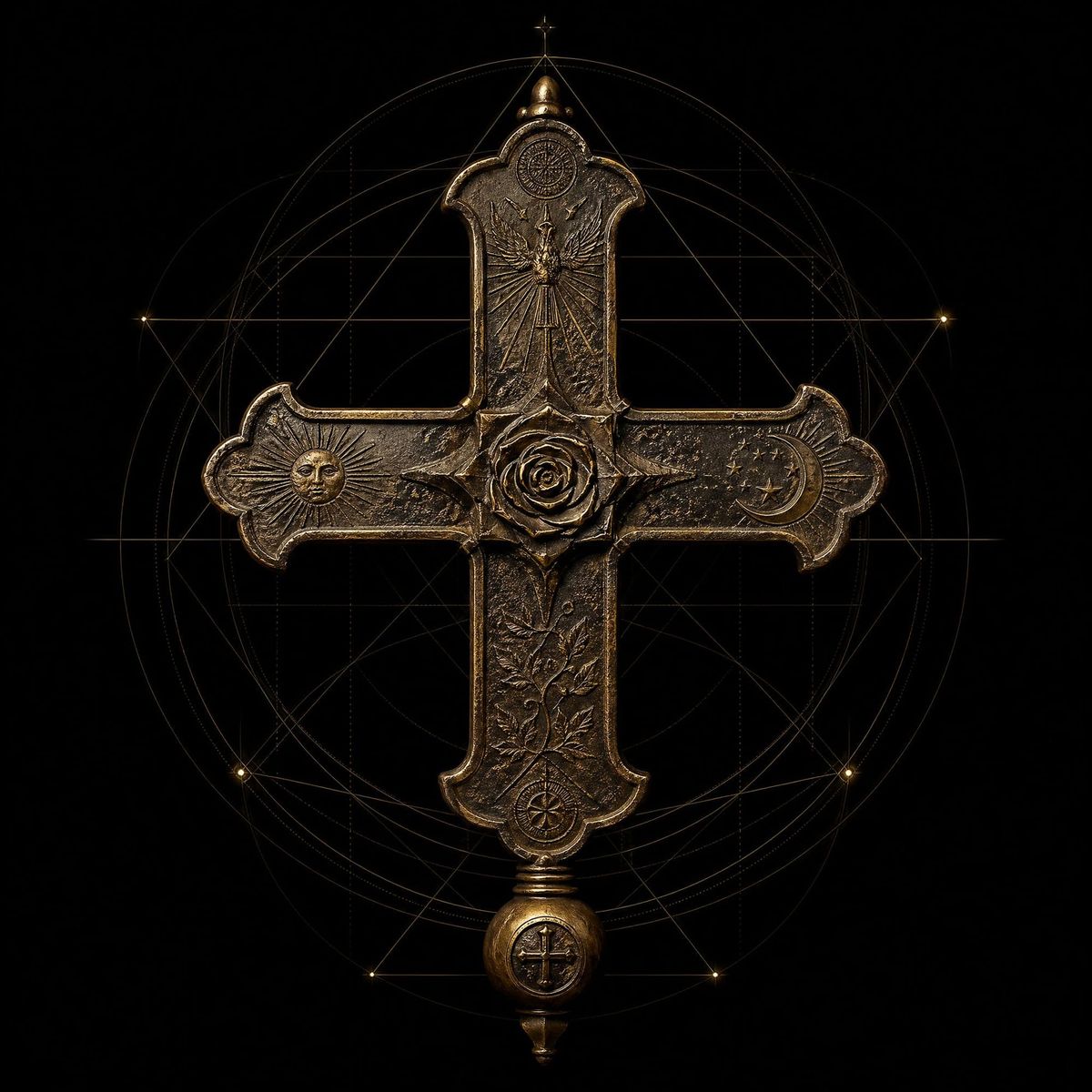
Rosicrucianism is one of the most influential and enigmatic currents in the Western Esoteric Tradition. It emerged publicly in early seventeenth-century Germany through a set of anonymous manifestos that announced the existence of a hidden fraternity devoted to universal reformation, divine wisdom, healing, and the renewal of knowledge. The movement began not as a clearly documented order with membership rolls and meeting minutes, because that would have been far too convenient, but as a literary, symbolic, and intellectual phenomenon. Its power lay precisely in the way it combined mystery, reform, alchemy, Protestant spirituality, Hermetic learning, and the promise of hidden adepts working for the transformation of Europe.
The three foundational Rosicrucian texts are the Fama Fraternitatis, the Confessio Fraternitatis, and The Chymical Wedding of Christian Rosenkreutz. Together, they created the mythic and ideological core of Rosicrucianism. The Fama tells of Christian Rosenkreutz, a legendary founder who travels through the East, receives hidden wisdom, returns to Europe, and establishes a secret brotherhood dedicated to healing and reform. The Confessio expands the programme, linking the fraternity to divine revelation, anti-papal Protestant reform, and the transformation of knowledge. The Chymical Wedding, attributed to Johann Valentin Andreae, is more allegorical and initiatory, presenting a richly symbolic journey through trial, purification, death, resurrection, and spiritual marriage.
Rosicrucianism arose from a culture already saturated with Renaissance Christian Kabbalah, Hermetic magic, Paracelsian medicine, spiritual alchemy, apocalyptic expectation, and religious conflict. Its manifestos appeared on the eve of the Thirty Years’ War, in a Europe fractured by confessional struggle, political anxiety, and intellectual change. The dream of universal reformation was not an abstract slogan. It answered a real crisis in religion, science, medicine, and society. Rosicrucianism promised that hidden wisdom might heal not only individuals, but Christendom itself. That promise was wildly ambitious, but early modern Europe was not suffering from a shortage of ambitious metaphysical repair plans.
The influence of Renaissance Christian Kabbalah and Hermetic magic is evident in Rosicrucian universalism. The manifestos imagine wisdom as ancient, hidden, and recoverable. They suggest that divine truth has been preserved across time and can be integrated with renewed learning. This reflects the Renaissance belief in a prisca theologia, a primordial wisdom glimpsed by ancient sages and recoverable through disciplined study, revelation, and symbolic interpretation. The Rosicrucian brotherhood appears as a custodian of this wisdom, not merely as a magical society, but as a spiritual and intellectual instrument of reform.
John Dee’s angelic and mathematical esotericism also belongs to the atmosphere from which Rosicrucianism emerged. Dee’s aspiration toward a universal science, sacred language, angelic revelation, and Christian renewal parallels many Rosicrucian themes, even where direct lines of influence are difficult to prove. Both Dee and the Rosicrucian manifestos imagine hidden knowledge as capable of transforming the world. Both link esoteric wisdom with Christian providence and reform. Both inhabit a universe in which mathematics, language, angels, symbols, and divine history are interwoven. Rosicrucianism gave this intellectual climate a mythic collective form: the secret fraternity.
Spiritual alchemy was even more central. Rosicrucianism drew heavily upon alchemical symbolism, not simply as a technical practice, but as a language of spiritual and cultural transformation. The alchemical themes of death, purification, conjunction, rebirth, and perfection run through the Rosicrucian imagination. The Chymical Wedding is especially important in this regard. Its wedding is not merely romantic or decorative; it signifies the reconciliation of opposites, the transformation of the seeker, and the completion of a spiritual work. The Rosicrucian adept is not only a possessor of secrets, but one who undergoes transformation.
Lutheran mysticism and Pietist spirituality also provided fertile ground for Rosicrucianism. The manifestos were shaped by a Protestant world concerned with inward renewal, scriptural truth, moral reformation, and the purification of corrupted institutions. Figures such as Johann Arndt helped cultivate a form of devotional inwardness that resonated with later esoteric Christianity. Rosicrucianism did not present itself as a rebellion against Christianity, but as a deeper, purified, and hidden Christianity aligned with divine wisdom and reform. Its critique was directed against ignorance, corruption, false authority, and empty learning, all reliable enemies for anyone trying to sound both pious and revolutionary.
One of Rosicrucianism’s most distinctive features is its fusion of secrecy and publicity. The manifestos loudly announce a hidden fraternity while simultaneously preserving its invisibility. They invite worthy readers to seek contact, yet no clear institutional structure appears. This paradox generated enormous fascination. Scholars, theologians, alchemists, reformers, and opportunists debated whether the fraternity existed, whether it could be found, and whether they themselves might be admitted. The Rosicrucian mystery thus became self-propagating. The absence of clear evidence did not weaken the idea; it strengthened the aura. Apparently nothing convinces human beings like a door that may not exist.
Historically, Rosicrucianism influenced later esoteric societies less through continuous institutional descent than through mythic and symbolic inheritance. The image of a hidden brotherhood of enlightened adepts became one of the most powerful motifs in modern esotericism. It shaped Masonic high degrees, eighteenth-century occult fraternities, nineteenth-century magical orders, Theosophical ideas of hidden masters, and numerous modern Rosicrucian organisations. Whether or not these later bodies possessed direct continuity with the original manifestos is often doubtful. But they inherited the Rosicrucian pattern: secrecy, initiation, ancient wisdom, reform, symbolic death and rebirth, and hidden custodians of spiritual knowledge.
Rosicrucianism’s influence on Speculative Freemasonry is especially important, though historically complex. Freemasonry did not simply emerge from Rosicrucianism, but Masonic culture absorbed Rosicrucian themes, especially in higher degrees and esoteric interpretations of the Craft. The shared interests include symbolic architecture, moral and spiritual transformation, secrecy, fraternity, ancient wisdom, and the recovery of lost knowledge. Rosicrucian motifs also appear in explicitly Rosicrucian Masonic systems and later initiatory orders. The relationship is not one of simple parent and child, but of mutual resonance within the wider culture of early modern and Enlightenment esotericism.
Its influence on Illuminism and Christian Theosophy is equally significant. Rosicrucianism helped transmit the dream of inward illumination, divine wisdom, spiritual regeneration, and universal restoration. Christian theosophers such as Jacob Boehme and later figures associated with illuminist currents shared the Rosicrucian concern with hidden divine processes, fallen humanity, reintegration, and the transformation of the soul. The Rosicrucian manifestos gave these aspirations a collective and reforming image: wisdom hidden in a fraternity, waiting for the right historical moment.
The Hermetic Order of the Golden Dawn also drew upon Rosicrucian symbolism, especially through its initiatory grades, temple structures, and claim to participate in a wider Western mystery tradition. The Golden Dawn did not merely repeat early Rosicrucianism; it systematised many older currents, including Hermeticism, Kabbalah, Enochian magic, Tarot, and alchemy. Yet the Rosicrucian ideal of a hidden initiatory order devoted to spiritual ascent and esoteric knowledge is unmistakably present. By the nineteenth century, Rosicrucianism had become one of the authorised ancestral languages of modern ritual magic.
Rosicrucianism should therefore be understood as both a historical episode and a durable esoteric myth. As history, it belongs to the religious, intellectual, and political crises of early seventeenth-century Europe. As myth, it became a template for hidden brotherhood, universal reformation, alchemical transformation, and initiatory wisdom. Its importance lies not in whether one can draw an unbroken institutional line from Christian Rosenkreutz to every later claimant. One usually cannot, and watching people try is a small scholarly punishment. Its real power lies in the fact that it gave Western esotericism one of its most compelling images: a secret fraternity preserving ancient wisdom for the renewal of the soul, the healing of knowledge, and the reform of the world.
Antecedent Traditions
· Renaissance Christian Kabbalah & Hermetic Magic
· John Dee's Angelic Magic
· Spiritual Alchemy
· Lutheran Mysticism & Pietism
Succeeding Traditions
· Speculative Freemasonry
· Illuminism & Christian Theosophy
· Hermetic Order of the Golden Dawn