Romanticism
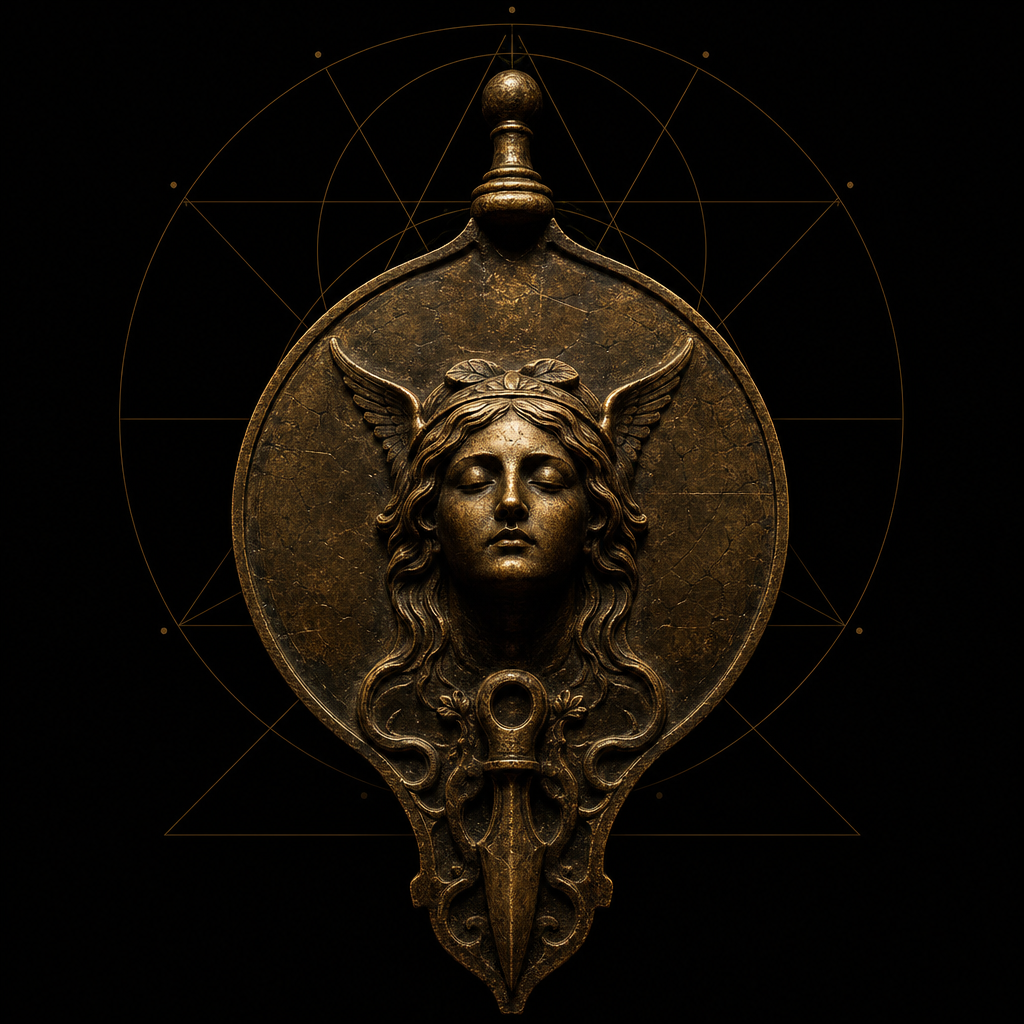
Romanticism was not an esoteric movement in the narrow sense. It was a broad cultural, literary, philosophical, artistic, and religious transformation that reshaped European thought from the late eighteenth century into the nineteenth. Yet its importance for the history of Western esotericism is considerable. Romanticism gave new authority to imagination, symbol, myth, nature, inward experience, and the spiritual depth of the individual. It challenged mechanistic views of the world and resisted the reduction of reality to calculation, utility, and abstract reason. In doing so, it created a climate in which older esoteric ideas could be reinterpreted as profound expressions of human and cosmic truth rather than dismissed as superstition or obsolete metaphysics.
The intellectual background of Romanticism includes many sources: Enlightenment philosophy, reactions against rationalism, German idealism, medieval revivalism, folklore, nationalism, religious renewal, and the political upheavals of the revolutionary age. Within the present esoteric genealogy, however, its most important antecedent is Illuminism and Christian Theosophy. This connection is not incidental. Illuminist and theosophical currents had already developed a symbolic and spiritual vision of reality in which nature, humanity, and divinity were intimately related. They treated the visible world as a manifestation of hidden life, the human soul as a site of inward illumination, and history as a drama of fall, alienation, and possible restoration. Romanticism translated many of these concerns into literary, philosophical, and aesthetic form.
Against the colder forms of Enlightenment rationalism, Romantic thinkers insisted that reason alone could not exhaust reality. This did not mean that Romanticism was simply irrational, although it certainly gave later critics abundant opportunities to say so while feeling clever. Rather, Romanticism expanded the range of legitimate knowing. Imagination, intuition, feeling, symbolic perception, and artistic creation were treated as ways of apprehending dimensions of existence inaccessible to discursive analysis alone. The poet, artist, seer, or inspired thinker became a figure of heightened perception. This greatly mattered for esotericism, because it restored dignity to symbolic and visionary modes of thought.
Nature was central to Romanticism. The natural world was not merely a storehouse of resources, a mechanical system, or a backdrop for human action. It was alive with meaning. Mountains, forests, rivers, stars, storms, ruins, and seasonal cycles could disclose spiritual realities. This sensibility drew upon earlier natural theology, Hermetic correspondences, Boehmean theosophy, and mystical traditions of creation as divine expression. Romantic nature was often sacramental without being strictly ecclesiastical. It suggested a living order in which the human mind encountered something greater than itself, whether described as God, spirit, life, imagination, or the absolute.
German Romanticism was especially important in this respect. Writers and thinkers such as Novalis, Friedrich Schlegel, Schelling, and others explored the relation between poetry, philosophy, religion, and nature. Novalis, in particular, saw the world as something to be romanticised: made strange, deep, symbolic, and spiritually transparent. Schelling’s philosophy of nature presented nature not as inert matter but as visible spirit, while spirit was nature becoming conscious of itself. Such formulations resonated strongly with esoteric traditions that understood the cosmos and the human being as interconnected expressions of one living reality. The old microcosm-macrocosm structure did not disappear; it reappeared in philosophical and poetic dress, having sensibly changed costume for the century.
Romanticism also revived interest in the medieval, the mythic, and the archaic. Gothic architecture, chivalric legend, folk song, fairy tale, national epic, and medieval Christianity all became sources of imaginative renewal. This medievalism was often selective and idealised, but it had real esoteric consequences. It encouraged the recovery or invention of hidden pasts, sacred traditions, symbolic lineages, and alternative histories. Ruins, cathedrals, knights, troubadours, secret brotherhoods, and mystical orders became imaginative resources through which modern alienation could be addressed. The past was no longer merely an earlier stage of ignorance; it could be a lost reservoir of meaning.
The Romantic imagination also helped transform the status of myth. Myth was increasingly understood not simply as false explanation but as symbolic truth. Ancient myths, religious narratives, and visionary images were read as expressions of deep structures of consciousness, culture, or spirit. This development prepared the way for later comparative mythology, depth psychology, occult symbolism, and modern esoteric interpretations of religious tradition. To think mythically was not necessarily to reject truth; it could be to approach truths too large or subtle for literal language. This Romantic rehabilitation of myth became one of its most enduring contributions to esoteric modernity.
In religious terms, Romanticism often expressed dissatisfaction with both dry rational religion and rigid confessional orthodoxy. It sought immediacy, inwardness, mystery, and the recovery of spiritual feeling. Friedrich Schleiermacher, though not an esotericist in the usual sense, famously grounded religion in feeling or immediate consciousness of the infinite. This turn toward experience paralleled wider esoteric concerns with inward illumination and living encounter. Religion was increasingly understood not only as doctrine or institution, but as a mode of consciousness and relation. Such an understanding would become vital for later forms of modern spirituality.
Romanticism’s influence on later occult and esoteric movements was diffuse rather than linear. It supplied atmosphere, assumptions, and imaginative legitimacy rather than a single institutional lineage. The nineteenth-century occult revival inherited Romantic fascination with symbols, correspondences, mythic pasts, sacred art, nature, and the exceptional individual. The magician, poet, prophet, and initiate could all be imagined as figures who penetrated beneath surface reality into hidden depths. Modern occultism’s taste for dramatic symbols, ancient wisdom, visionary synthesis, and enchanted nature owes a great deal to this Romantic climate.
There was also a darker side to Romanticism’s esoteric legacy. Its longing for wholeness, rootedness, hidden origins, and sacred tradition could produce profound art and philosophy, but it could also encourage fantasy, anti-modern nostalgia, and dubious historical reconstruction. Romanticism made the mysterious attractive, but attractiveness is not evidence, as humanity continues to learn at great expense. Later esoteric movements sometimes inherited Romanticism’s weakness for grand lineages, lost wisdom, and idealised antiquity. The same impulse that deepened symbolic interpretation could also loosen historical discipline.
Nevertheless, Romanticism remains indispensable to understanding modern Western esotericism. It re-enchanted the imagination after the disenchanting tendencies of mechanistic rationalism. It did not simply restore the old magical worldview; rather, it made possible a modern symbolic worldview in which art, myth, nature, and inward experience could carry spiritual authority. Its importance lies not in a formal doctrine but in a shift of sensibility. It changed what kinds of knowledge could matter, what kinds of experience could be profound, and what kinds of symbols could be taken seriously.
For the Western esoteric tradition, Romanticism stands as a cultural and intellectual amplifier of themes inherited from Illuminism and Christian Theosophy. It took the language of inward illumination, living nature, symbolic reality, and spiritual restoration and released it into poetry, philosophy, art, religion, and historical imagination. Its direct succeeding traditions may not be mapped as formal branches, yet its influence runs widely through the nineteenth and twentieth centuries. Romanticism taught modern esotericism to speak not only in the language of doctrine and ritual, but in the language of longing, symbol, myth, beauty, and the enchanted depths of the world.
Antecedent Traditions
· Illuminism & Christian Theosophy
Succeeding Traditions
· None mapped