Renaissance Grimoires
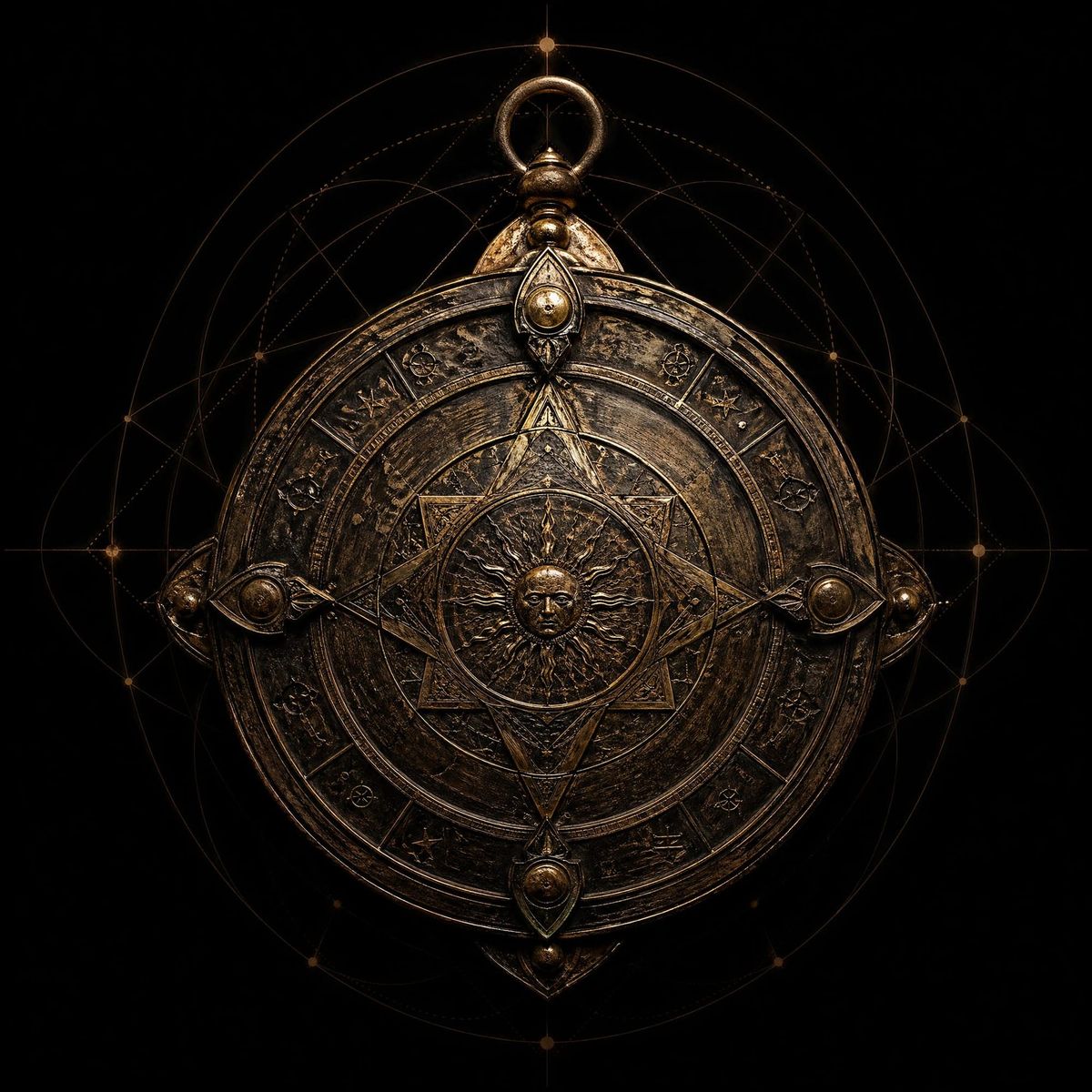
Renaissance grimoires occupy a distinctive and often misunderstood place within the Western Esoteric Tradition. They were books of ritual instruction, usually concerned with the invocation, conjuration, binding, or petitioning of spiritual beings, as well as the construction of talismans, seals, circles, prayers, suffumigations, and protective formulae. To modern readers, they are often treated as lurid spell books, which is convenient for horror films and mostly useless for historical understanding. In their own contexts, grimoires were practical ritual manuals shaped by learned magic, Christian liturgy, angelology, Solomonic legend, planetary correspondences, and medieval traditions of spirit conjuration. They represent one of the clearest examples of esoteric knowledge as operational text: knowledge written not merely to be believed, but to be enacted.
The term “grimoire” is broad, and the texts associated with it vary considerably in date, language, purpose, and theological tone. Some circulated in manuscript before appearing in print or semi-print cultures; others were repeatedly adapted, excerpted, translated, corrupted, and recombined. Their instability is part of their history. A grimoire was not always a fixed book in the modern sense, but a textual workshop, copied by scribes, owned by practitioners, reshaped by local needs, and sometimes expanded with additional prayers, seals, recipes, or spirit lists. This fluidity makes the tradition difficult to classify, but it also shows how practical magic moved across boundaries of class, language, and learned culture.
The Solomonic tradition is central to Renaissance grimoires. Texts such as the Key of Solomon present themselves under the authority of King Solomon, the biblical monarch famed for wisdom and, in later legend, mastery over spirits. Solomon became an ideal figure for ritual magic because he united divine favour, royal authority, sacred knowledge, and command over invisible beings. By attributing magical instruction to Solomon, grimoires claimed both antiquity and legitimacy. The practitioner did not appear as a rogue sorcerer inventing private fantasies, but as an inheritor of a sacred and ancient science. Naturally, this also made the books sound more impressive, because “I copied this from a dubious manuscript” lacks a certain monarchic sparkle.
Renaissance grimoires were deeply shaped by Christian ritual language. Many include prayers to God, invocations of divine names, references to angels, fasting, confession, purity requirements, consecrations, and the use of psalms or liturgical formulae. This Christian framing was not decorative. It helped define the ritual hierarchy: the operator appeals to God’s authority, commands spirits through divine names, and protects himself through sacred words, circles, and signs. Yet this also created a persistent theological tension. Were these operations pious appeals to divine order, or illicit attempts to compel spirits? The answer depended on the text, the reader, the ecclesiastical authority, and sometimes the practitioner’s luck in not being noticed.
The ritual circle is one of the most recognisable features of grimoire magic. It marks sacred and protected space, separating the operator from the forces being invoked or constrained. The circle may contain divine names, angelic names, crosses, planetary signs, or other protective inscriptions. It functions as a miniature cosmos, a bounded ritual field in which the practitioner stands under divine authority. The triangle, seal, or designated place for the spirit often appears outside or adjacent to the circle, reflecting the ritual logic of controlled encounter. In this sense, grimoire magic is spatial, textual, vocal, and performative. It is not simply a list of instructions, but an ordered drama of authority, danger, and mediation.
Astral and talismanic elements also play an important role, linking Renaissance grimoires to Islamic astral magic and the broader medieval inheritance of planetary practice. Many grimoires specify times, days, hours, metals, colours, suffumigations, and planetary correspondences. Spirits may be associated with directions, planets, elements, offices, or hierarchies. Talismans and seals are prepared under particular celestial conditions. This does not mean that every grimoire is an astrological treatise, but it does show that ritual magic often operated within a cosmological framework. The practitioner’s actions were timed and structured according to a universe understood as ordered by celestial and spiritual powers.
The Lemegeton, or Lesser Key of Solomon, is one of the most famous grimoire compilations, though its surviving form is later than the Renaissance in the strictest chronological sense. Its component books, especially the Ars Goetia, became central to the modern imagination of ceremonial magic. The Ars Goetia lists spirits, their ranks, seals, appearances, and offices, giving the practitioner a catalogue of powers to be summoned and constrained. Other sections concern aerial spirits, planetary angels, and prayers. The Lemegeton demonstrates how grimoire traditions collect, classify, and operationalise the invisible world. It is bureaucracy for demons, which may be the most human invention imaginable.
Renaissance grimoires also reveal the permeability between elite and popular magic. Learned materials from astrology, theology, angelology, and Latin ritual could coexist with practical concerns such as treasure finding, protection, healing, love, knowledge, or social advantage. This mixture has often made grimoires uncomfortable for scholars who prefer their intellectual traditions elegantly abstract. Yet it is precisely this practical dimension that makes them important. They show how cosmology becomes technique, how theology becomes command formula, and how symbolic systems are applied to urgent human desires. The grimoire is where metaphysics puts on boots and goes looking for results.
Their influence on the nineteenth-century Occult Revival and ritual magic was substantial. Modern ceremonial magicians inherited not only specific texts and spirit catalogues, but also the broader grimoire logic of consecrated tools, ritual circles, divine names, hierarchical beings, seals, invocations, and protective formulae. The Hermetic Order of the Golden Dawn, Aleister Crowley, and later magical orders all engaged grimoire materials, though often through reinterpretation and systematisation. The older grimoires were frequently reorganised within broader frameworks of Kabbalah, Tarot, Enochian magic, and occult correspondence. What had once circulated as practical ritual manuals became part of a more self-conscious modern magical curriculum.
The importance of Renaissance grimoires lies in their preservation of operative ritual forms. They are not primarily philosophical essays, although they often imply a theology and cosmology. They are manuals of action. They teach the practitioner how to prepare, purify, mark space, speak names, construct seals, time operations, address spirits, and withdraw safely. In doing so, they preserve a strand of Western esotericism that is intensely practical, textual, and embodied. Their world is one in which words matter, diagrams matter, timing matters, authority matters, and invisible beings are treated as real participants in ritual exchange.
Renaissance grimoires should therefore be understood as a crucial bridge between medieval magical traditions, Islamic astral inheritances, Christian ritual culture, and modern ceremonial magic. Their mapped antecedent is Islamic astral magic, particularly in relation to talismanic practice, planetary timing, and celestial correspondences. Their mapped successor is the Occult Revival and ritual magic of the nineteenth century, where grimoire materials were revived, edited, reinterpreted, and integrated into modern occult systems. In the long history of the Western Esoteric Tradition, grimoires represent the persistent desire to turn hidden knowledge into method, and method into power.
Antecedent Traditions
· Islamic Astral Magic
Succeeding Traditions
· Occult Revival & Ritual Magic