Paul Foster Case
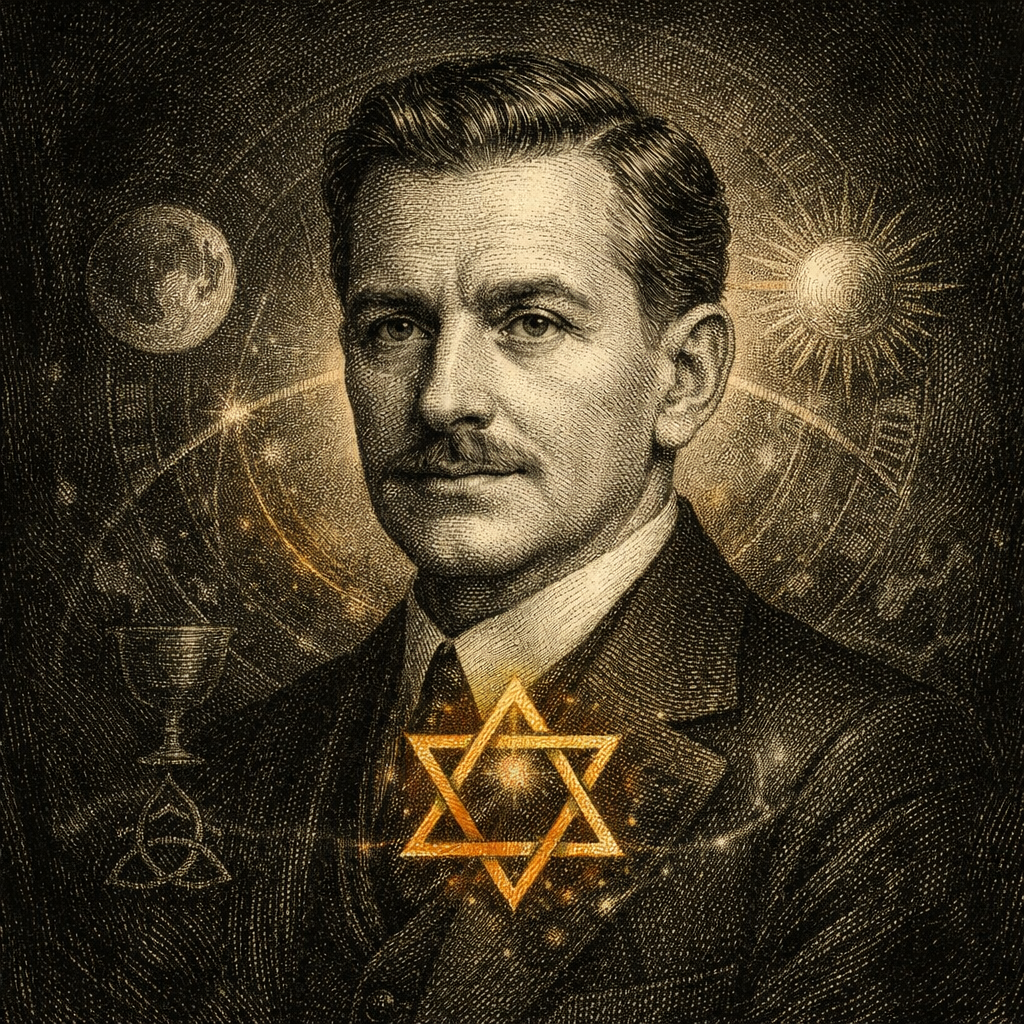
Date range: 1884–1954
Brief Biography
Paul Foster Case was an American occultist, writer, musician, tarot interpreter, and founder of Builders of the Adytum, one of the most influential twentieth-century schools of Hermetic Qabalah and esoteric tarot. Born in New York and trained as a musician, Case became deeply involved in the currents of modern ceremonial magic that descended from the Hermetic Order of the Golden Dawn. His work emphasised tarot as a structured symbolic key to Qabalistic wisdom, meditation, inner initiation, and spiritual psychology. Through writings such as The Tarot: A Key to the Wisdom of the Ages, he presented the tarot not primarily as a fortune-telling device, but as a coherent contemplative system encoding principles of consciousness, creation, transformation, and return. Case died in 1954, leaving a body of instruction that continued to shape modern Western occultism through Builders of the Adytum and related esoteric lineages.
Works and Texts
- The Tarot: A Key to the Wisdom of the Ages
Place in the Western Esoteric Tradition
Case occupies an important place in the Western Esoteric Tradition as a modern interpreter of tarot, Hermetic Qabalah, and Golden Dawn-derived symbolic practice. Receiving the influence of the Hermetic Order of the Golden Dawn and figures such as Arthur Edward Waite, S. L. MacGregor Mathers, and William Wynn Westcott, he helped refine tarot into a disciplined contemplative and initiatory system. His distinctive contribution was to emphasise the tarot as a key to inner transformation, linking its images to Hebrew letters, the Tree of Life, colour symbolism, meditation, and the ordered development of consciousness. Although the supplied succeeding fields are empty, Case’s work became one of the most enduring twentieth-century expressions of practical Hermetic Qabalah, especially in English-speaking esoteric circles.
Case’s Mystical System
Paul Foster Case’s mystical system is a disciplined synthesis of tarot, Hermetic Qabalah, meditation, and inner initiation. His work belongs to the broad inheritance of the Hermetic Order of the Golden Dawn, but it has a distinctive clarity and pedagogical restraint. Case sought to strip tarot of sensationalism and restore it to what he regarded as its proper function: a symbolic book of wisdom through which the aspirant could contemplate the structure of consciousness, the laws of manifestation, and the path of spiritual return.
At the centre of Case’s system is the tarot. For him, the cards are not merely devices for prediction, though he did not deny their diagnostic or divinatory use altogether. Their deeper purpose lies in instruction. The tarot is a sequence of archetypal images that encodes metaphysical principles and psychological processes. Each card represents a mode of consciousness, a stage in spiritual development, or an aspect of the creative order. To study the cards properly is therefore to study the architecture of the self and its relation to the divine.
This approach places Case firmly within the modern occult tarot tradition that developed from Court de Gébelin, Etteilla, Éliphas Lévi, the Golden Dawn, and Waite. Yet Case’s work differs from more romantic or literary treatments of the tarot by its systematic method. He reads the cards through Qabalah, especially through the association of the major arcana with Hebrew letters and paths on the Tree of Life. Tarot becomes a visual and meditative expression of Qabalistic structure. The images are not isolated symbols; they are part of a coherent map.
The Tree of Life is therefore essential to Case’s system. It provides the metaphysical framework within which tarot, astrology, number, colour, sound, and consciousness may be integrated. The sefirot represent modes of divine manifestation, and the paths between them represent processes of transition, mediation, and awakening. The aspirant’s work is to understand and interiorise these relations. Case’s Qabalah is not primarily historical Jewish Kabbalah. It is the Hermetic Qabalah of the Western occult revival, adapted for meditation, correspondence, and inner discipline. That distinction matters, because apparently occult history enjoys making every borrowed term carry three centuries of interpretive luggage.
Case’s mystical system is also strongly psychological, though not in a reductionist sense. He treats the tarot as a language of consciousness. The figures and scenes of the cards reveal patterns within the human mind: attention, memory, imagination, desire, will, intuition, and spiritual perception. The goal is not simply to interpret images, but to allow the images to train perception. Through repeated contemplation, the aspirant learns to recognise the forces operating within the self and to align them with higher principles. Symbol becomes a tool of interior reorganisation.
Meditation is the practical core of this process. Case’s system is not based chiefly on elaborate temple ritual or dramatic ceremonial performance. It is built around sustained study, visualisation, colour work, affirmation, contemplation, and disciplined reflection. The tarot keys become objects of concentration through which consciousness is gradually refined. This is one of his major contributions to modern esotericism: he made initiatory work portable and interior without reducing it to vague self-help mist. The temple becomes inward, but the method remains structured.
Colour symbolism plays an important role in Case’s teaching. In Builders of the Adytum practice, students are often instructed to colour the tarot images themselves, using specific esoteric colour attributions. This is not merely an exercise in keeping aspirants busy with pencils, though humanity has certainly invented stranger forms of spiritual discipline. Colour is treated as vibration, correspondence, and psychological force. By engaging actively with colour, form, and symbol, the student participates in the construction of the image and thereby impresses its meaning more deeply upon the mind.
Case’s understanding of initiation is correspondingly inward. Initiation is not simply membership in an order or reception of a ceremony. It is the awakening of consciousness to deeper levels of reality. External instruction may assist, but the true work occurs through disciplined assimilation of symbolic truth. This does not mean that lineage and order are irrelevant; Case founded Builders of the Adytum precisely to transmit a structured curriculum. Yet the emphasis falls on inner development rather than institutional prestige. The aspirant must become capable of receiving what the symbols disclose.
A further element of Case’s system is the creative power of the word and the mind. In Hermetic and Qabalistic fashion, he treats reality as structured through vibration, number, and symbolic law. Thought is not a private vapour with no consequence. It participates in the formative processes of experience. This gives his work a strong practical orientation: control of attention, purification of imagination, and right use of mental imagery become essential to spiritual development. The student learns to think in symbols because symbols organise consciousness more deeply than discursive ideas alone.
Case’s relation to Arthur Edward Waite is important but complex. Both men rejected a crude fortune-telling approach to tarot and treated it as a repository of esoteric wisdom. Waite’s approach, however, was more Christian mystical and literary, often deliberately veiled. Case was more systematic, instructional, and Qabalistic in presentation. He sought to make the tarot’s correspondences teachable. From Mathers and Westcott came the broader Golden Dawn inheritance of Qabalah, colour, tarot attribution, ceremonial structure, and initiatory symbolism. Case received that inheritance and made it the basis of a sober, correspondence-driven school of inner training.
His system also reflects a distinctive balance between secrecy and accessibility. Case did not throw the entire esoteric cupboard open for casual rummaging, yet he wrote clearly enough to guide serious students outside the older lodge structures. This balance helped his work endure. The tarot was presented as profound but approachable, symbolic but methodical, ancient in aspiration but modern in pedagogy. In a field where obscurity often masquerades as depth and theatrical mystery can pass for wisdom, Case’s clarity is almost suspiciously civilised.
The mystical aim of Case’s system is union with the higher self or divine consciousness through the ordered development of the faculties. The aspirant does not flee the world, nor merely accumulate occult facts. The work is the transformation of perception, will, imagination, and understanding until the human personality becomes a clearer instrument of spiritual intelligence. Tarot and Qabalah provide the map; meditation and practice provide the method; inner illumination is the goal.
Case’s mystical system may therefore be described as contemplative Hermetic Qabalah through tarot. It unites the Tree of Life, Hebrew letters, symbolic images, colour, meditation, and psychological discipline into a coherent path of self-transformation. Its tone is less flamboyant than much ceremonial magic and less devotional than Christian mysticism, but it is deeply initiatory. In the history of the Western Esoteric Tradition, Case stands as one of the most important modern teachers of tarot as spiritual architecture: a guide who treated the cards not as parlour curiosities, but as keys to the ordered awakening of consciousness.
Antecedent Figures
- Arthur Edward Waite; S.L. MacGregor Mathers; William Wynn Westcott
Antecedent Traditions
- Hermetic Order of the Golden Dawn
Succeeding Figures
- —
Succeeding Traditions
- —