Paracelsus
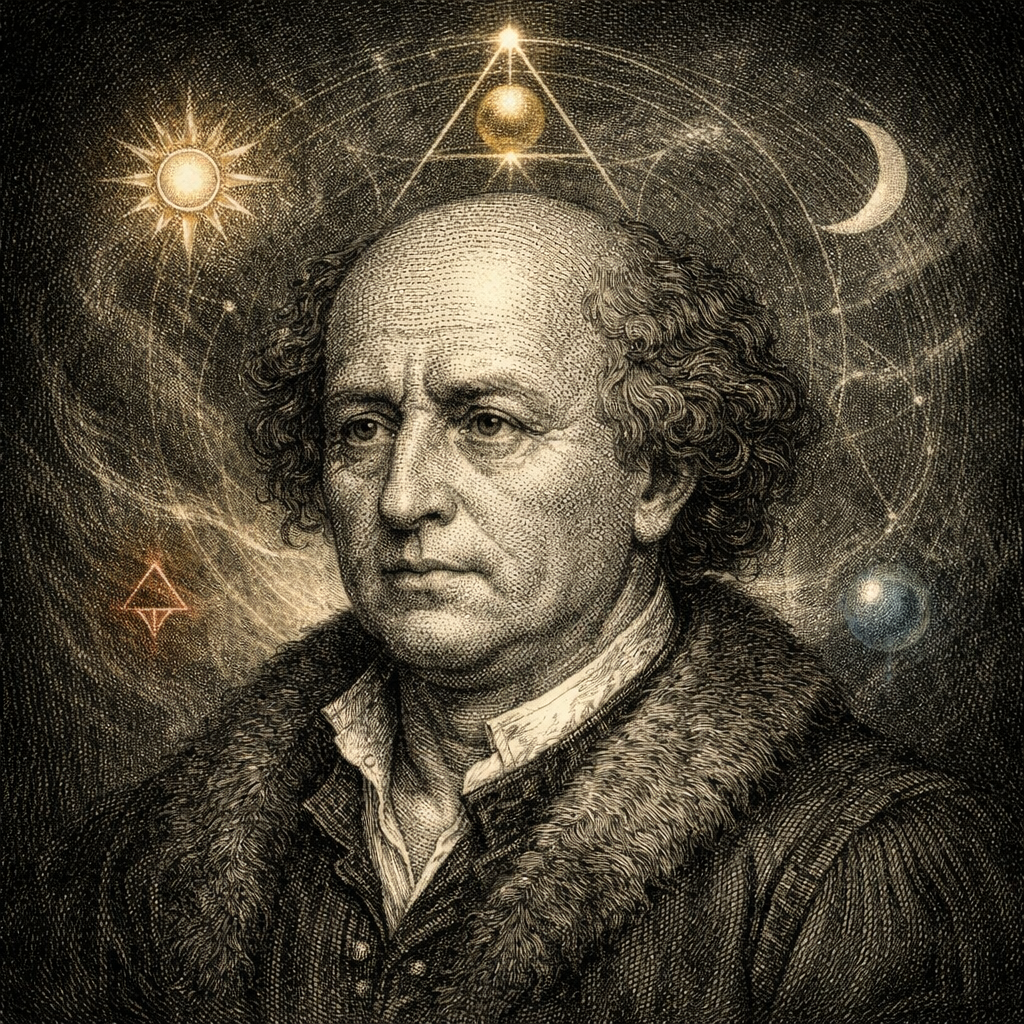
Date range: 1493–1541
Brief Biography
Paracelsus, born Theophrastus von Hohenheim, was a Swiss-German physician, alchemical thinker, natural philosopher, and one of the most disruptive medical reformers of the early sixteenth century. Rejecting much of inherited scholastic medicine and the authority of Galen and Avicenna, he argued for a medicine grounded in direct experience, chemical remedies, spiritual anthropology, and the hidden powers of nature. His thought drew upon late medieval medicine, folk healing, alchemy, Christian theology, astrology, and Renaissance currents of Hermetic and magical speculation, but it also fiercely asserted its own reforming independence. Paracelsus treated the human being as a microcosm of the greater world and saw disease, healing, minerals, stars, and divine providence as parts of a single living order. He died in Salzburg in 1541, leaving behind a difficult and uneven body of writings that transformed European medicine, alchemy, and esoteric natural philosophy.
Works and Texts
- Archidoxis magica
- De natura rerum
Place in the Western Esoteric Tradition
Paracelsus occupies a decisive place in the Western Esoteric Tradition as the figure through whom alchemy, medicine, astrology, and Christian natural philosophy were reorganised into a powerful theory of healing and hidden powers in creation. Receiving elements from Renaissance Christian Kabbalah and Hermetic magic, and from the wider intellectual world associated with Ficino, Pico, Reuchlin, Agrippa, and Bruno, he redirected esoteric speculation toward the body, disease, minerals, remedies, and the practical knowledge of nature. His contribution lies in the fusion of spiritual cosmology with medical reform: the human being is a microcosm, nature is a divinely ordered pharmacy, and the physician must read both visible symptoms and invisible causes. Even where no succeeding traditions are supplied here, Paracelsus’ influence became one of the major engines of early modern alchemy, Rosicrucianism, chemical medicine, and esoteric interpretations of nature.
Paracelsus’ Mystical System
Paracelsus’ mystical system is a Christian alchemical medicine of nature, body, and spirit. Its centre is the conviction that God has placed healing powers throughout creation, and that the true physician must learn to recognise, prepare, and apply them. Paracelsus did not understand medicine as a merely technical craft of balancing humours according to inherited authorities. He saw it as a sacred vocation requiring knowledge of the human being, the cosmos, the stars, minerals, poisons, virtues, spirits, and divine law. The physician must become an interpreter of nature rather than a parrot of books, which was apparently too radical an idea for a civilisation that enjoyed mistaking commentary for competence.
The foundation of his system is the microcosm-macrocosm relation. The human being is a little world corresponding to the greater world. This does not mean that humanity is a decorative miniature of the cosmos. It means that the same powers, elements, processes, and spiritual principles that operate in the wider universe are also active within the body and soul. Disease cannot therefore be understood only from the surface of the body. It must be read within a larger order of visible and invisible relations. The physician must know the world in order to know the patient.
This microcosmic vision gives Paracelsian medicine its cosmic scale. The stars, elements, minerals, and internal organs belong to a web of correspondences. Astrology, for Paracelsus, was not merely fortune-telling. It concerned the relation between celestial influences and earthly life, including the constitution and disorders of the body. Yet he did not reduce human beings to passive victims of the stars. The wise physician understands astral conditions as part of the total ecology of disease and healing. Celestial influence matters, but it operates within a providential world governed by God.
Alchemy is central to this system. Paracelsus transformed alchemy from a pursuit concerned primarily with metallic transmutation into a medical and spiritual science. The laboratory became a place where the hidden virtues of substances could be separated, purified, and prepared for healing. He emphasised chemical remedies, especially mineral and metallic preparations, in contrast to older humoral approaches. This was not chemistry in the modern laboratory sense, though modern chemistry owes him more than it sometimes likes to admit. It was an alchemical medicine in which transformation, purification, and extraction revealed the powers God had hidden within nature.
One of Paracelsus’ key doctrines is the presence of specific virtues in natural things. Plants, minerals, metals, and other substances contain powers suited to particular conditions. The task of the physician is to discover these powers through experience, experiment, analogy, and divine illumination. This doctrine is linked to the theory of signatures: the idea that outward forms may reveal inward virtues. A plant, mineral, colour, shape, or behaviour may bear signs of its hidden use. The world is therefore legible, but only to those trained to read it rightly. Nature becomes a book of healing signs.
The three principles, sulphur, mercury, and salt, are also central to Paracelsian thought. These are not merely ordinary chemical substances, but fundamental principles of manifestation. Sulphur is often associated with combustibility, soul, or activity; mercury with volatility, spirit, and transformation; salt with fixity, body, and preservation. Through these principles, Paracelsus sought to explain the composition and behaviour of things more dynamically than traditional elemental theory allowed. Disease could be understood as disorder within these principles, and medicine as the restoration or correction of their proper relation.
Paracelsus’ anthropology is equally important. The human being is composed of body, soul, and spirit, but also lives within several orders of influence: physical, astral, spiritual, and divine. He often speaks of the archeus, the inner formative principle or vital governor that directs bodily processes. Disease may arise when this inner order is disturbed. Healing therefore requires more than attacking symptoms. It requires assisting the body’s inner formative power and restoring harmony between the patient and the larger order of nature.
Spiritual causes of illness also have a place in his system. Paracelsus does not treat disease as purely material. Imagination, desire, sin, fear, divine judgement, and demonic or astral influences may all affect human health. Modern readers may find this untidy, because modern categories prefer to keep medicine, psychology, religion, and cosmology in separate filing cabinets. Paracelsus’ world refuses that separation. For him, the human person is porous to multiple levels of reality. A proper physician must therefore understand the patient as a whole being embedded in creation.
The imagination has special power. It is not mere fantasy, but a formative faculty capable of influencing body, spirit, and world. Human imagination can heal, harm, attract, shape, and transmit forces. This doctrine became important for later esoteric psychology and magical thought. It also shows why Paracelsus cannot be reduced to a medical empiricist, despite his insistence on experience. His empiricism is embedded in a world where subtle forces and spiritual faculties are real. Observation matters, but what is being observed includes more than visible mechanism.
Paracelsus’ Christian theology governs the system. He was fiercely critical of corrupt clergy, empty learning, and religious hypocrisy, but he did not place nature above God. Nature is a creation, a revelation, and a treasury of divine gifts. The physician serves God by relieving suffering and discovering the remedies placed in the world. This gives medicine a priestly dignity. The true physician must be humble, charitable, experienced, and spiritually serious. Knowledge without divine orientation becomes dangerous, because the same powers that heal can poison.
Poison and remedy are closely linked in Paracelsian thought. His famous principle that the dose makes the poison belongs to a broader understanding that nature’s powers are ambivalent and must be governed by art. What harms in one measure may heal in another. The physician’s knowledge lies in discerning preparation, proportion, timing, and application. This principle applies materially, but it also has symbolic force. Transformation depends on the right ordering of dangerous powers. Alchemy is not the avoidance of potency, but its purification and lawful use.
Paracelsus’ relation to the supplied antecedent figures is best understood through shared concerns rather than direct dependence in every case. Ficino’s living cosmos, Pico’s dignity of the human being, Reuchlin’s sacred language, Agrippa’s correspondences, and Bruno’s animated universe all belong to the wider Renaissance field of esoteric possibility. Paracelsus turned that field toward medicine and nature. He made the hidden world therapeutically practical. The question was not only how the soul ascends or how symbols disclose divine truth, but how the sick body may be healed through the secret virtues of creation.
His mystical system may therefore be described as a sacred medicine of the microcosm. It unites alchemy, astrology, Christian providence, signatures, subtle bodies, vital principles, and chemical remedies into a single vision of healing. Its ambition is enormous and its language often disorderly, because Paracelsus had the temperament of a reformer armed with a furnace and very limited patience for academic furniture. Yet his influence was immense. He gave Western esotericism a new centre of gravity in the body and in nature’s hidden pharmacy, making healing itself a form of sacred knowledge.
Antecedent Figures
- Giordano Bruno; Giovanni Pico della Mirandola; Heinrich Cornelius Agrippa; Johannes Reuchlin; Marsilio Ficino
Antecedent Traditions
- Renaissance Christian Kabbalah & Hermetic Magic
Succeeding Figures
- —
Succeeding Traditions
- —