Operative Masonic Guilds
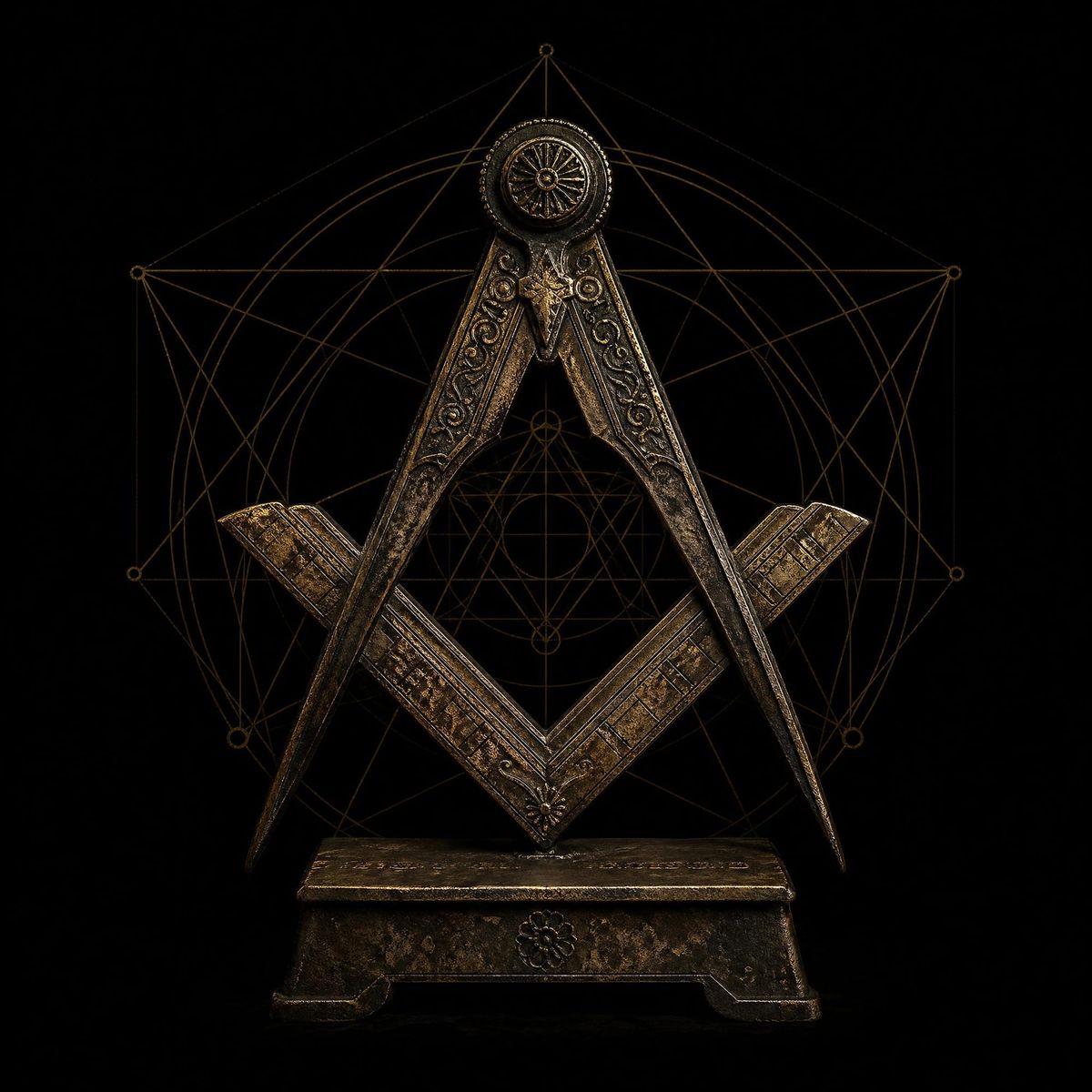
Operative Masonic guilds occupy an important but often overburdened place in the history of Western esotericism. They were, in the first instance, organisations of working stonemasons: craftsmen who built, repaired, and ornamented churches, cathedrals, castles, civic buildings, bridges, and other structures requiring specialised skill. Their world was one of labour, apprenticeship, tools, contracts, wages, mobility, geometry, and practical knowledge. Yet because later Speculative Freemasonry drew so much of its symbolism from the craft of building, operative masonry came to be retrospectively imagined as a vessel of ancient mysteries. Some of that symbolic inheritance is real. Much of the grander mythology is not. History, irritatingly, continues to resist being made more convenient.
The term “guild” itself should be used with some care. Medieval and early modern masons were organised in different ways across Europe and Britain, including craft guilds, lodges attached to major building works, municipal corporations, and regional systems of regulation. Their structures varied according to place, period, and type of work. What matters for the later esoteric tradition is not a single uniform institution, but the transmission of craft identity, moral regulation, legendary history, technical instruction, and symbolic language associated with building. The mason’s lodge was originally a practical space, but it also became a setting in which craft order, discipline, and identity were maintained.
The building trades required a high degree of technical and mathematical knowledge. Geometry was especially central. It governed proportion, design, measurement, layout, and the translation of architectural intention into stone. In a medieval Christian context, geometry was not merely a practical art. It belonged to the quadrivium and carried associations with divine order, cosmic harmony, and the rational structure of creation. The mason who understood geometry participated, at least symbolically, in the ordering principles by which sacred architecture embodied theological meaning. Later Speculative Freemasonry would greatly expand this association, turning geometry into a moral and metaphysical emblem.
The Old Charges are among the most important textual witnesses to operative and transitional Masonic culture. Manuscripts such as the Regius Poem and the Cooke Manuscript preserve legendary histories, moral instructions, craft regulations, and accounts of masonry’s supposed ancient origins. These texts link the craft to biblical, classical, and legendary figures, including Euclid and, in later traditions, King Athelstan. Their purpose was not modern historical accuracy, a concept medieval legendary writing was not especially losing sleep over, but the establishment of moral authority and corporate identity. By placing the craft within a sacred and ancient lineage, the Old Charges gave masonry dignity, legitimacy, and continuity.
These legendary histories are significant for later esotericism because they show how practical craft became embedded in symbolic memory. The mason was not merely a labourer but an inheritor of an ancient art. The tools of the trade were not merely instruments but emblems of discipline, skill, and moral order. The lodge was not merely a workplace but a regulated community. The master, warden, apprentice, and fellow were not only workplace roles but eventually became symbolic stations capable of ritual elaboration. Speculative Freemasonry did not invent these materials from nothing; it transformed an existing craft vocabulary into a system of moral and initiatory symbolism.
The Schaw Statutes of late sixteenth-century Scotland are particularly important in understanding the transition from operative organisation toward more formalised lodge structures. Issued by William Schaw, Master of Works to James VI, they regulated lodges, apprenticeships, testing, record keeping, and the responsibilities of officers. Scottish lodges provide some of the clearest evidence for continuity between working masonry and later speculative developments. They also show that lodges could become institutional bodies with memory, governance, and ritualised forms of membership. This does not mean that speculative Freemasonry was simply operative masonry with a few philosophical decorations attached. It means that operative structures provided a durable framework that could be reinterpreted.
The use of secrecy within operative masonry also deserves careful treatment. Medieval and early modern crafts often guarded techniques, marks, passwords, or modes of recognition for practical reasons: to regulate labour, protect trade knowledge, verify skill, and control access to work. This kind of secrecy was not necessarily esoteric in the later occult sense. It was professional, economic, and communal. Yet it created habits of guarded knowledge that later speculative systems could spiritualise. The notion that certain knowledge belongs only to the properly prepared, duly admitted, or tested initiate found a ready symbolic home in the craft lodge.
Masons’ marks provide another example of the connection between practical craft and symbolic identity. These marks were used to identify the work of individual masons, often for accountability or payment. Later antiquarian and esoteric imagination has sometimes invested them with elaborate secret meanings. While caution is necessary, the marks still matter as signs of individual craft presence within collective construction. They remind us that medieval building was both communal and personal, regulated and creative. The later speculative interest in signs, tokens, and marks did not arise from nowhere; it developed within a culture already accustomed to visible and guarded signs of recognition.
Operative masonry also carried a strong moral dimension. The Old Charges and related texts emphasised duties to masters, fellows, apprentices, patrons, God, Church, and community. The craft was framed as an honourable discipline requiring honesty, obedience, competence, and mutual obligation. Later Speculative Freemasonry would elevate such moral instruction into a central purpose of the institution. The square, compasses, plumb, level, gauge, and trowel became emblems of ethical formation. Their symbolic power depended upon their original practical use. A tool teaches effectively as a symbol because it first teaches materially. Even humans occasionally improve a metaphor by starting with reality.
The relationship between operative guilds and Speculative Freemasonry is therefore both real and complex. There is no need to claim that medieval masons secretly preserved a complete esoteric doctrine inherited from Solomon, Egypt, or the Templars. Such claims usually say more about later romantic desire than about medieval craft history. Yet it is equally mistaken to sever speculative masonry entirely from operative roots. The language, offices, tools, charges, lodge setting, geometry, legends, and craft ethos of operative masonry provided the raw material from which speculative ritual and symbolism were developed. The continuity is symbolic, institutional, and cultural rather than simply doctrinal.
Operative Masonic guilds should therefore be understood as a foundational craft matrix for later Masonic esotericism. Their importance lies not in hidden metaphysical teachings clearly transmitted through uninterrupted secret doctrine, but in the extraordinary symbolic potential of the builder’s art. Building is naturally suited to moral and spiritual interpretation. It concerns foundations, measurement, proportion, labour, cooperation, ascent, light, structure, and the transformation of rough matter into ordered form. Speculative Freemasonry would later transform this craft world into an initiatory allegory of human improvement, but the symbolic grammar was already latent in the work of stone.
In the mapped tradition, Operative Masonic Guilds serve as an antecedent to Speculative Freemasonry. That relationship is direct and essential. The operative craft supplied the institutional vocabulary and symbolic tools that speculative masonry reinterpreted. It gave later Freemasonry its lodge, its working tools, its legendary charges, its concern with geometry, and its moral image of the builder. Without operative masonry, Speculative Freemasonry would have lacked its central metaphor. It might still have developed as a fraternal or esoteric movement, but it would not have possessed the same architectural depth, symbolic discipline, or enduring imaginative force.
Antecedent Traditions
· None mapped
Succeeding Traditions
Speculative Freemasonry