Neo-Paganism/Wicca
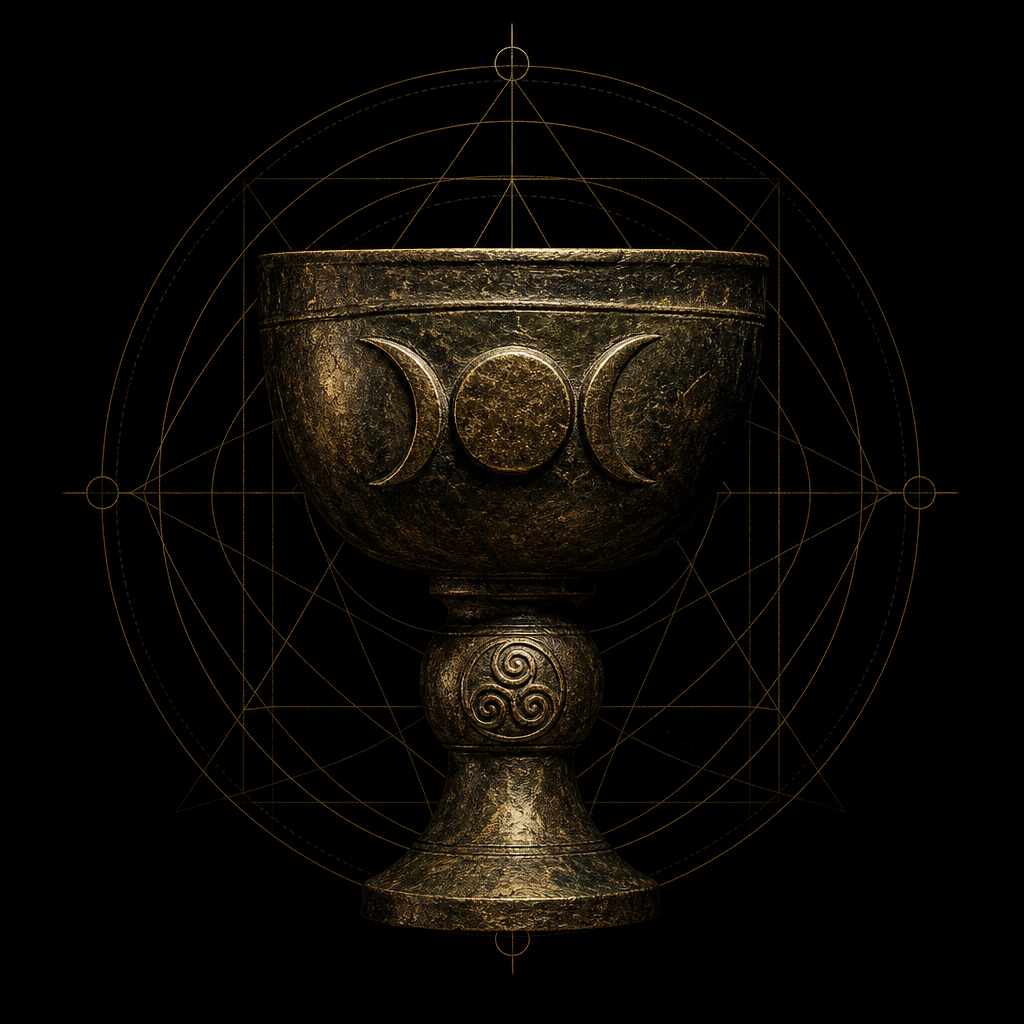
Neo-Paganism and Wicca represent one of the most important religious developments to emerge from twentieth-century Western esotericism. They are often spoken of together, but they are not identical. Wicca is a specific modern initiatory witchcraft religion, most closely associated with Gerald Gardner and mid-twentieth-century Britain. Neo-Paganism is a broader field of revived, reconstructed, or newly created religious movements that draw inspiration from pre-Christian, polytheistic, nature-centred, and mythic traditions. Together, they mark a significant shift in Western esotericism: from ceremonial lodges, Christian theosophy, and occult orders toward embodied ritual, seasonal celebration, goddess spirituality, ecological consciousness, and the sacralisation of nature.
The modernity of these movements must be stated clearly. However ancient their symbols, myths, and deities may be, modern Wicca and Neo-Paganism are not simple survivals of uninterrupted pre-Christian religion. The older thesis that Wicca preserved an underground pagan witch-cult from antiquity into the modern period is no longer accepted in serious scholarship. Yet this does not make Wicca or Neo-Paganism meaningless, fraudulent, or superficial. Religious traditions are often built through recovery, reinterpretation, imaginative reconstruction, and ritual creativity. The question is not whether every claimed lineage is historically literal, but how older materials are transformed into living religious practice. Naturally, this is less tidy than claiming a secret coven met continuously from the Stone Age in someone’s spare room, but history is inconsiderate like that.
The antecedents of Wicca and Neo-Paganism lie partly in the Occult Revival and the Hermetic Order of the Golden Dawn. The Occult Revival provided the broader environment in which magic, ritual, tarot, Kabbalah, ceremonial practice, folklore, mythology, and comparative religion were revalued as serious spiritual resources. It also normalised the idea that modern people could recover or reconstruct ancient wisdom through symbolic systems and initiatory practice. The Golden Dawn contributed a more specific ritual inheritance: casting sacred space, invoking elemental powers, using correspondences, structuring initiation, and treating ritual as a technology of transformation. Even where Wicca presents itself in simpler, more nature-centred terms than ceremonial magic, its modern ritual forms bear the imprint of occult revival culture.
Gerald Gardner is the central figure in the public emergence of Wicca. In works such as Witchcraft Today and The Meaning of Witchcraft, Gardner presented witchcraft as a surviving pre-Christian religion centred on the worship of a Goddess and a Horned God, seasonal rites, initiation, magic, and coven practice. Gardner’s sources were varied: ceremonial magic, folklore, Freemasonry, the writings of Margaret Murray, Rosicrucian and occult currents, nudist and naturist culture, and possibly earlier ritual groups. The resulting system was not a transparent survival of ancient paganism, but a modern synthesis of myth, magic, ritual, and religious imagination.
Margaret Murray’s witch-cult hypothesis had a major influence on early Wiccan self-understanding. Murray argued that the witch trials of early modern Europe preserved distorted evidence of an organised pre-Christian fertility religion. Her thesis has been overwhelmingly rejected by historians, but it was culturally powerful. It gave modern witchcraft a myth of persecution, survival, and ancient continuity. For early Wiccans, it supplied a narrative in which the witch was not a servant of evil but a priestess or priest of an older nature religion suppressed by Christianity. Even when historically flawed, this narrative helped invert the inherited demonology of witchcraft and reclaim the witch as a figure of spiritual power.
Wiccan ritual generally centres on the creation of sacred space, seasonal festivals, magical intention, initiation, and devotion to divine polarity. The ritual circle functions as a consecrated space between ordinary and sacred reality. The four elements and directions are commonly invoked, reflecting both magical and natural symbolism. The Wheel of the Year, comprising solstices, equinoxes, and cross-quarter festivals, gives Wicca a strong seasonal structure. This emphasis on cyclical time distinguishes it from many esoteric systems built primarily around ascent, hierarchy, or hidden doctrine. Wicca sacralises rhythm: moon phases, fertility, harvest, death, renewal, and return.
The Goddess became especially important in the development of Wicca and wider Neo-Paganism. In Gardnerian Wicca, the Goddess and Horned God form a central polarity, expressing fertility, nature, desire, death, and renewal. Later feminist and goddess spiritualities often placed the Goddess at the centre more exclusively, interpreting her as a symbol of female divinity, embodied wisdom, ecological interdependence, and resistance to patriarchal religious structures. This development was not merely theological; it was cultural and political. Neo-Paganism offered many practitioners a religious language for gender, body, sexuality, nature, and power outside the dominant frameworks of monotheistic tradition.
Neo-Paganism as a broader field includes many movements and orientations. Some are reconstructionist, seeking to revive ancient religious traditions as accurately as possible from historical, archaeological, linguistic, and literary sources. Examples include forms of Heathenry, Hellenism, Roman revivalism, Celtic reconstructionism, and Kemetic practice. Others are more eclectic, drawing freely from multiple mythologies, magical systems, seasonal rites, and personal experience. Some are initiatory and coven-based; others are solitary, devotional, communal, ecological, or festival-centred. This diversity is both a strength and a source of confusion, because the word “Pagan” can refer to anything from disciplined historical reconstruction to someone putting moon water next to a laptop and calling it a cosmology.
The influence of the Golden Dawn and ceremonial magic is most visible in Wicca’s ritual structure. The casting of the circle, calling of quarters, use of ritual tools, consecration, elemental symbolism, and initiatory degrees all reflect the broader magical culture from which Wicca emerged. Yet Wicca simplified and naturalised these structures. Instead of the formal temple hierarchy of the Golden Dawn, Wicca emphasised the coven. Instead of complex Kabbalistic correspondences, it often foregrounded nature, polarity, seasonal myth, and magical intention. It translated ceremonial magic into a more intimate, embodied, and religious form.
Neo-Paganism also absorbed Romanticism indirectly, even where it is not formally mapped as an antecedent here. The Romantic re-enchantment of nature, fascination with folklore, idealisation of pre-modern cultures, and recovery of mythic imagination all helped prepare the cultural soil in which modern Pagan religion could grow. By the twentieth century, industrial modernity, secularisation, ecological damage, and dissatisfaction with institutional religion made nature-centred spirituality increasingly compelling. Neo-Paganism responded by offering ritual participation in the living world rather than merely belief about it.
The significance of Neo-Paganism and Wicca lies in their transformation of Western esoteric practice into modern religious communities centred on nature, myth, magic, and embodied ritual. They moved esotericism out of the exclusively male lodge room and the ceremonial temple into covens, groves, festivals, homes, forests, and seasonal gatherings. They gave renewed prominence to the feminine divine, to polytheism, to the body, to ecology, and to ritual creativity. Their historical claims have often required correction, but their religious vitality cannot be measured only by antiquity. Traditions may be modern and still meaningful, constructed and still powerful, imaginative and still sincere.
For the Western esoteric tradition, Neo-Paganism and Wicca represent a major twentieth-century reorientation. They inherited ritual structures, magical theory, and symbolic methods from the Occult Revival and the Hermetic Order of the Golden Dawn, but redirected them toward nature religion, seasonal practice, goddess spirituality, and modern witchcraft. They are not museum fragments of ancient paganism. They are modern esoteric religions that turned the longing for enchantment into ritual life. In doing so, they became among the most visible and enduring expressions of modern Western alternative spirituality.
Antecedent Traditions
· Occult Revival & Ritual Magic
· Hermetic Order of the Golden Dawn
Succeeding Traditions
· None mapped