Lutheran Mysticism and Pietism
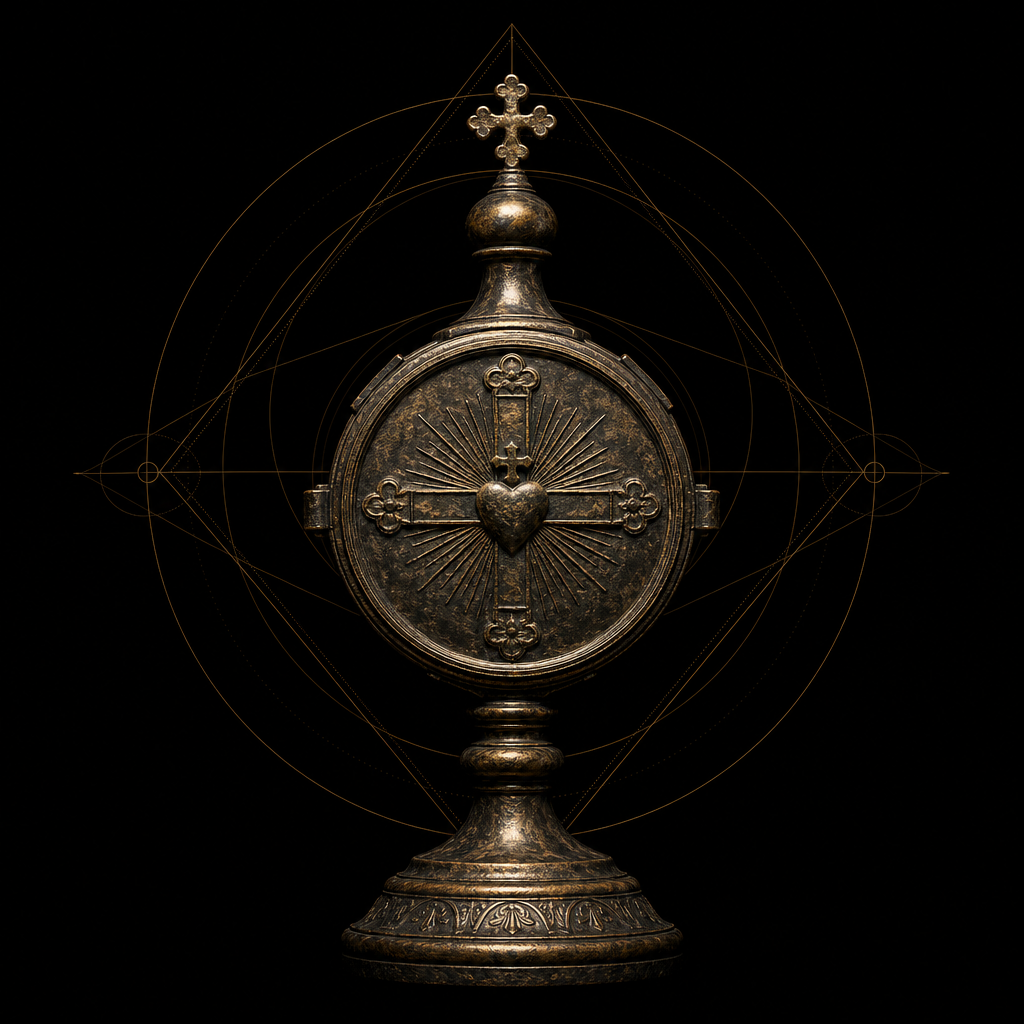
Lutheran Mysticism and Pietism occupy a distinctive place in the development of early modern religious thought. They arose within the Protestant world, yet they often pressed beyond the boundaries of formal doctrine into questions of inward transformation, spiritual rebirth, divine illumination, and the living experience of faith. Where Lutheran orthodoxy emphasised correct teaching, confessional identity, and the authority of Scripture, mystical and pietist currents asked how doctrine was to become life. Their central concern was not the rejection of theology, but the renewal of the soul.
The Reformation had insisted that salvation was grounded in divine grace rather than human works, and that the Christian life should be centred on faith in Christ rather than on ecclesiastical mediation. Yet by the seventeenth century, many Protestants believed that the churches of the Reformation had themselves become rigid, institutional, and excessively scholastic. Theological precision remained important, but it could appear spiritually barren when separated from devotion, charity, repentance, and practical holiness. Lutheran Mysticism and Pietism developed partly as responses to this problem. They sought to recover an inward, experiential Christianity without abandoning the basic framework of Protestant belief.
The mystical dimension of Lutheranism drew upon older Christian traditions of contemplation, inward purification, and union with God, though it recast them in Protestant terms. It did not usually present itself as an alternative religion or as a speculative system detached from Christ. Rather, it emphasised the rebirth of the believer, the indwelling of Christ in the soul, and the transformation of the inner person through divine grace. In this respect it stood in continuity with medieval devotional writers, German mystical theology, and the language of spiritual regeneration, but it was also shaped by the Reformation’s suspicion of external works, sacerdotal authority, and purely ceremonial religion.
No figure better illustrates the power and ambiguity of this current than Jacob Boehme. Although not easily contained within any single category, Boehme’s visionary theosophy emerged from a Lutheran environment and gave extraordinary metaphysical scope to the language of inner illumination. His writings explored the birth of divine manifestation, the conflict of light and darkness, the structure of creation, the fall, regeneration, and the soul’s return to God. Boehme did not write as an academic theologian. He wrote as a visionary craftsman whose symbolism fused Scripture, nature, alchemical language, and direct spiritual insight. Naturally, this made him both immensely influential and deeply inconvenient to tidy-minded authorities, who prefer revelation to arrive in approved filing cabinets.
Pietism, in a more organised and ecclesial form, emerged in the later seventeenth century as a movement of devotional and moral renewal within Lutheranism. Philipp Jakob Spener’s Pia Desideria, published in 1675, is often treated as one of its founding texts. Spener did not call for the overthrow of Lutheran doctrine. He called for its practical realisation. He encouraged more serious study of Scripture, the formation of small devotional gatherings, the active participation of laypeople, a less polemical form of theology, and a Christianity visible in conduct rather than merely confessed in words. The emphasis fell on lived faith, spiritual discipline, and the renewal of the church through transformed individuals.
August Hermann Francke gave Pietism a more institutional and educational form, especially through the Halle foundations. Under his influence, Pietism became associated not only with inward devotion but also with schooling, charity, missionary activity, biblical publication, and social reform. This is an important point, because Pietism was not simply a private inwardness. Its spirituality had practical consequences. The reborn heart was expected to produce visible fruits: discipline, compassion, industry, moral seriousness, and concern for the spiritual welfare of others. It was inward religion with outward effects.
The relationship between Lutheran Mysticism and Pietism was not always straightforward. Pietists could be wary of speculative mysticism, especially when it seemed to drift into private revelation, obscure metaphysics, or antinomian tendencies. Mystical writers, in turn, could regard ordinary church reform as insufficiently radical unless it reached the deepest transformation of consciousness and being. Yet the two currents shared several concerns: the inadequacy of merely external religion, the need for regeneration, the primacy of inward experience, and the belief that divine truth must be realised in the life of the believer. Both were attempts to answer a question that confessional systems alone could not settle: what does it mean for spiritual truth to become actual within the human person?
These currents also helped prepare the ground for later esoteric and theosophical developments. Lutheran mystical and pietist environments nourished an expectation of hidden wisdom, inward illumination, and spiritual renewal that could easily intersect with Rosicrucian and illuminist ideas. The Rosicrucian manifestos had already presented the image of a secret Christian brotherhood devoted to reform, wisdom, and the healing of the world. Pietist and mystical Protestant culture supplied a receptive atmosphere for such themes, especially when they were framed not as occult novelty but as deeper Christianity. The longing for invisible fellowship, purified religion, divine wisdom, and universal reformation found a congenial home in this world.
Christian Theosophy also drew heavily from these sources. Theosophy in this older sense did not mean the later movement associated with Helena Blavatsky, but a form of speculative Christian wisdom concerned with divine nature, creation, fall, regeneration, and the soul’s ascent. Boehme’s influence was especially decisive here. His symbolic metaphysics helped shape later figures who sought to unite Christian devotion with visionary cosmology. In this stream, the universe was not a dead mechanism but a living revelation of divine processes; the human being was not merely a moral agent but a microcosm in whom cosmic and spiritual dramas were recapitulated.
The significance of Lutheran Mysticism and Pietism lies, therefore, in their insistence that religion cannot be reduced to institutional belonging, doctrinal correctness, or ceremonial performance. They preserved, within Protestantism, a powerful language of inward rebirth and experiential knowledge. They also helped transmit older mystical and symbolic patterns into modern religious and esoteric culture. Their legacy can be seen in devotional renewal, missionary Protestantism, Christian theosophy, Rosicrucian reception, and the broader modern fascination with interior transformation.
For the history of Western esotericism, Lutheran Mysticism and Pietism matter because they formed a bridge between Reformation Christianity and later currents of illuminist and theosophical thought. They did not always present themselves as esoteric, and much of Pietism was deliberately practical, moral, and biblical. Yet their emphasis on inward illumination, spiritual regeneration, hidden wisdom, and the living presence of divine truth made them fertile ground for esoteric reinterpretation. They remind us that modern esotericism did not develop only from magical, hermetic, or ceremonial sources. It also emerged from the devotional hunger of Christians who believed that true religion must penetrate beneath words, institutions, and inherited forms into the awakened life of the soul.
Antecedent Traditions
· None mapped
Succeeding Traditions
· Rosicrucianism
· Illuminism & Christian Theosophy