John Dee's Angelic Magic
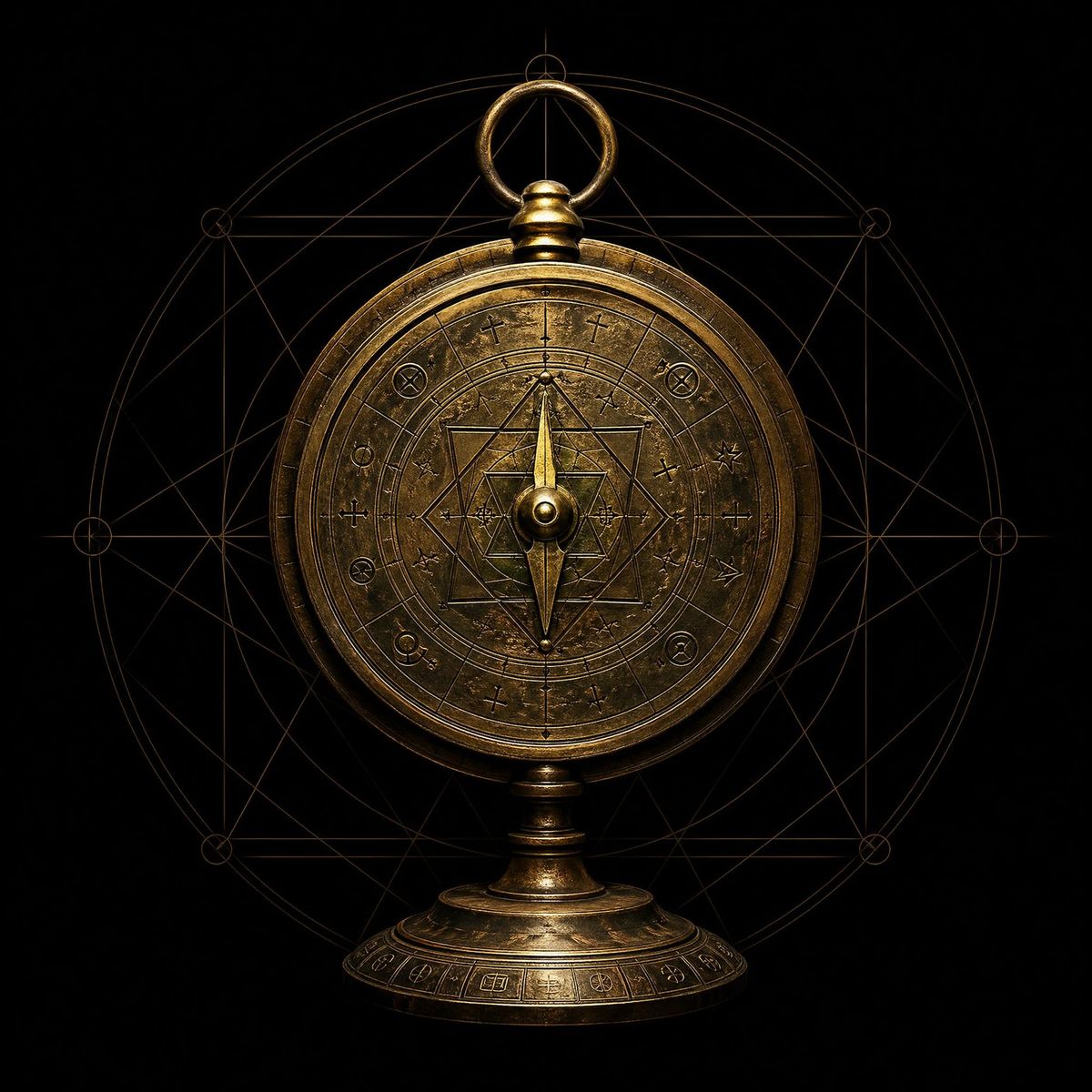
John Dee’s angelic magic occupies a singular position in the Western Esoteric Tradition. It stands at the intersection of Renaissance Hermeticism, Christian Kabbalah, mathematics, navigation, imperial ambition, apocalyptic expectation, and ceremonial revelation. Dee was not merely a magician in the modern sensational sense. He was a scholar, mathematician, astrologer, adviser to Elizabeth I, collector of manuscripts, advocate of British maritime expansion, and one of the most learned figures of sixteenth-century England. His angelic work, conducted principally with the scryer Edward Kelley, should be understood as part of a larger intellectual project: the recovery of divine knowledge through a reformed, sacred understanding of nature, language, number, and spiritual hierarchy.
Dee’s work emerged from the world of Renaissance Christian Kabbalah and Hermetic magic. Like many learned esoteric thinkers of the period, he believed that ancient wisdom had been fragmented, obscured, and corrupted over time. He sought access to a purer form of knowledge, one that would unite mathematics, theology, cosmology, and divine revelation. His famous Monas Hieroglyphica attempted to express a universal symbol of cosmic unity, drawing together planetary signs, alchemical principles, geometry, and theological meaning. It is a characteristically Renaissance work: compact, ambitious, difficult, and convinced that the correct arrangement of signs might unlock the secret architecture of reality.
The angelic conversations began in the 1580s, when Dee sought contact with celestial intelligences through ritual prayer, crystal-gazing, and visionary mediation. Dee himself was not usually the visionary receiver. That role was played by Kelley, whose reliability has been debated ever since, partly because humans become very suspicious when revelation requires a business partner. Dee recorded the sessions in extraordinary detail, producing a body of diaries that remain among the most important documents of early modern ritual magic. The angels, as reported through Kelley, delivered prayers, tables, seals, cosmological schemes, and eventually a complex angelic language often called Enochian.
The term “Enochian” reflects the belief that this language was connected with the primordial wisdom of Enoch, the biblical patriarch who “walked with God” and was taken into heaven. Dee believed that the recovery of such a language might restore humanity’s access to prelapsarian knowledge: the language of creation, or at least a divine language by which the structure of creation could be understood. This concern with sacred language connects Dee to both Christian Kabbalah and earlier Jewish mystical traditions. Names, letters, sounds, and tables were not merely communicative devices. They were thought to participate in the order of creation itself.
The angelic system delivered to Dee and Kelley is elaborate. It includes the Sigillum Dei Aemeth, a complex holy seal used as a ritual foundation; the Holy Table; the seven ensigns of creation; planetary and elemental kings and princes; the Forty-Eight Calls or Keys; and a set of lettered tablets associated with the quarters of the world. Later occultists would develop these materials into the Enochian magical system known today, though that later system is not identical with Dee’s own practice. Dee’s original concern was not simply magical power, but divine instruction and cosmic restoration. He sought counsel from angels on theology, politics, spiritual reform, and the destiny of Christendom.
This gives Dee’s angelic magic its peculiar character. It is intensely ritualised and technically complex, but it is also devotional. Dee approached the angels through prayer, humility, purification, and Christian language. He did not understand himself to be commanding spirits in the manner of crude conjuration. He sought communication with divine messengers who might reveal the hidden order of God’s creation. Yet the boundary between pious angelic consultation and dangerous spirit magic was always unstable. Dee’s work sits precisely in that charged Renaissance zone where theology, occult philosophy, ceremonial practice, and spiritual risk overlap. Naturally, this is where the interesting material usually hides.
Mathematics is another essential dimension of Dee’s angelic magic. Dee regarded number, geometry, and measurement as keys to divine order. His intellectual world did not separate mathematics from metaphysics as sharply as modern thought often does. To understand number was to approach the rational structure by which God ordered the cosmos. This mathematical imagination shaped his interest in navigation, architecture, optics, astrology, and magical symbolism. In the angelic workings, tables, grids, seals, and geometric arrangements function not as ornamental diagrams, but as structured vehicles of revelation.
Dee’s relationship to empire and reform should also be noted. He was deeply involved in arguments for English maritime expansion and even used the phrase “British Empire” in a formative sense. His esoteric work cannot be isolated from these broader ambitions. He imagined England, under Elizabeth, as potentially central to a providential renewal of knowledge, religion, and global order. This does not mean that his angelic magic was simply political propaganda. It means that Dee’s search for revelation was embedded in a larger vision of sacred history and national destiny. The recovery of divine wisdom, the reform of knowledge, and the expansion of Christian civilisation were, for Dee, intertwined.
The influence of John Dee’s angelic magic on Rosicrucianism is indirect but meaningful. Dee’s work helped define the image of the learned Christian adept seeking universal wisdom through mathematics, angelic mediation, and the restoration of hidden knowledge. Rosicrucianism would later express similar ambitions in a different literary and symbolic form: universal reform, secret wisdom, divine science, and the renewal of Europe through hidden fraternity. Whether or not Dee directly caused Rosicrucianism is not the point. His work belongs to the same intellectual climate and helped shape the kind of esoteric imagination in which such movements became plausible.
His later influence on the Hermetic Order of the Golden Dawn was much more direct. In the nineteenth century, Dee’s angelic materials were reinterpreted, reorganised, and ritualised within a modern magical curriculum. The Golden Dawn transformed Dee’s received tablets, calls, and angelic language into a powerful system of elemental and ceremonial magic. This later Enochian magic became one of the most influential components of modern Western occultism, shaping Thelema and numerous twentieth-century magical orders. In this sense, Dee’s diaries became a delayed engine of occult modernity, proving that sufficiently obscure notebooks can still cause trouble three centuries later.
John Dee’s angelic magic is significant because it reveals the Renaissance esoteric project at its most ambitious and unstable. It sought a universal language, a reformed science, a sacred mathematics, a Christian angelology, and a restored wisdom capable of renewing both soul and world. It fused scholarship with revelation, mathematics with ritual, and national ambition with apocalyptic hope. Its enduring power lies in this tension. Dee was not simply looking backward to ancient wisdom, nor merely dabbling in forbidden arts. He was attempting to recover the divine grammar of creation itself, and to place that recovered knowledge in the service of spiritual and historical transformation.
Antecedent Traditions
· Renaissance Christian Kabbalah & Hermetic Magic
Succeeding Traditions
· Rosicrucianism
· Hermetic Order of the Golden Dawn