Jean-Baptiste Willermoz
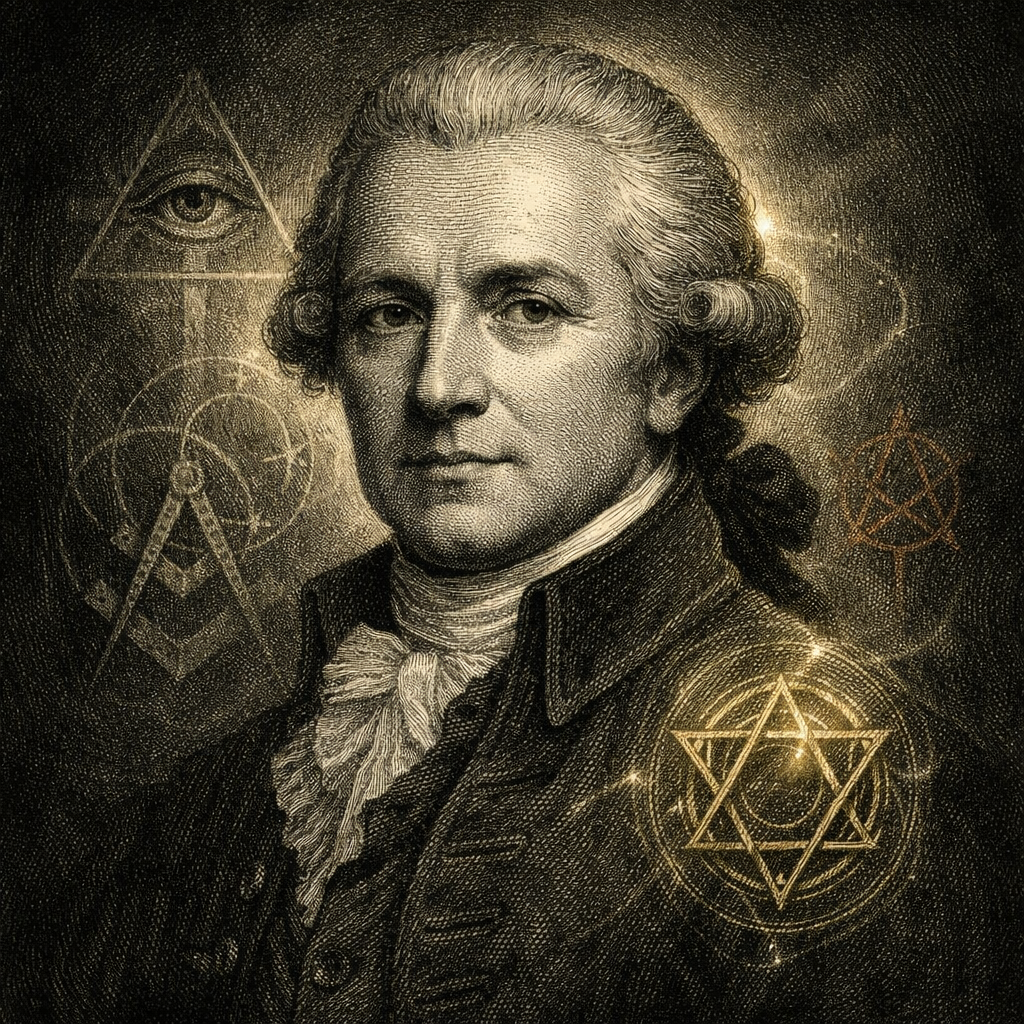
Date range: 1730–1824
Brief Biography
Jean-Baptiste Willermoz was a French Freemason, silk merchant, organiser, and initiatory reformer whose work helped shape one of the most important currents of esoteric Masonry in the eighteenth century. Based in Lyon, he became deeply involved in high-degree Masonic systems, especially the Strict Observance and the teachings of Martinez de Pasqually’s Élus Coëns, before developing the Rectified Scottish Rite and the Chevaliers Bienfaisants de la Cité Sainte. Willermoz was less a speculative author than an architect of ritual systems, integrating chivalric Masonry, Christian theosophy, moral discipline, and doctrines of spiritual reintegration into a coherent initiatory structure. He lived through the upheavals of the French Revolution and died in 1824, leaving behind a ritual legacy that continued to influence Christian esoteric Masonry and related currents of illuminist thought.
Works and Texts
- Ramsay's Oration
- Statutes of the CBCS
Place in the Western Esoteric Tradition
Willermoz occupies a central place in the Western Esoteric Tradition as a systematiser of Christian initiatory Masonry. His work received the symbolic and institutional inheritance of speculative Freemasonry and reshaped it through the doctrines of fall, reintegration, chivalric service, and inner regeneration. The antecedent figures supplied here — Elias Ashmole, James Anderson, and William Preston — represent the broad movement through which Masonic memory, symbolism, and moral instruction were codified before Willermoz gave them a more explicitly theosophical and initiatory form. Through the Rectified Scottish Rite and the CBCS, Willermoz helped carry Masonic symbolism into the orbit of Illuminism and Christian theosophy, influencing later esoteric currents concerned with ritual transformation, spiritual repair, and the recovery of a lost divine order.
Willermoz’s Mystical System
Jean-Baptiste Willermoz’s mystical system is best understood as a Christian initiatory architecture of fall, repair, and reintegration. Unlike writers whose influence rests primarily upon treatises, visions, or metaphysical speculation, Willermoz worked through ritual structure, grades, statutes, instruction, and institutional reform. His genius was organisational and symbolic. He absorbed doctrines from Martinez de Pasqually, currents of chivalric Masonry, and the moral language of speculative Freemasonry, then reshaped them into a disciplined initiatory system centred upon spiritual restoration.
The foundation of Willermoz’s system is the idea that the human condition is marked by loss. Humanity is not simply ignorant, immature, or socially disordered. It has fallen from a higher spiritual estate and must be restored to its proper relation with God. This theme, drawn strongly from the Martinist and Élus Coëns milieu, gives his Masonic vision a depth that ordinary moral fraternity alone could not provide. Masonry becomes more than an ethical society or a repository of architectural symbolism. It becomes a path of regeneration in which the candidate is gradually instructed in the meaning of his exile and the possibility of return.
This doctrine of reintegration is central. The human being is understood as bearing traces of a divine origin, yet living in a fractured state. The initiatory work seeks to awaken memory, conscience, humility, discipline, and spiritual aspiration. Reintegration does not mean a simple restoration of social respectability, nor a merely intellectual acceptance of doctrine. It involves the reordering of the whole person toward divine law. The candidate must learn to recognise the disorder of self-will and the need for inner transformation. Ritual becomes the instrument through which this recognition is staged, deepened, and gradually interiorised.
Willermoz’s use of Freemasonry is therefore both conservative and transformative. He preserved the lodge as a moral and initiatory setting, retaining the language of brotherhood, obligation, symbolic labour, and progressive instruction. Yet he redirected these elements toward a specifically Christian theosophical aim. The working tools and architectural metaphors of Masonry become signs of an inward reconstruction. The temple is no longer only the temple of Solomon or the moral temple of social virtue. It becomes an image of the fallen and restorable human being, as well as of a sacred order that must be recovered within and beyond the visible world.
The chivalric dimension of Willermoz’s system is equally important. The Chevaliers Bienfaisants de la Cité Sainte, or Knights Beneficent of the Holy City, give the initiatory path a language of service, discipline, and sacred knighthood. Chivalry here is not merely romantic ornament. It provides a model of moral nobility directed toward charity, self-command, and spiritual responsibility. The knight is not simply a warrior, but a servant of divine order. Beneficence becomes a ritual and ethical principle, linking spiritual restoration to conduct in the world. The initiate must not simply know; he must become useful, upright, and charitable.
This emphasis on beneficence marks one of Willermoz’s distinctive contributions. His system does not permit esoteric knowledge to remain a private theatre of spiritual vanity. The work of reintegration must appear in disciplined action. Charity, moral seriousness, and social responsibility are not external additions to the initiatory path. They are signs that the interior work has begun to bear fruit. In this respect, Willermoz holds together two tendencies that often drift apart in esoteric traditions: inward illumination and outward moral duty.
Willermoz’s relation to Martinez de Pasqually is essential for understanding the deeper structure of his system. Pasqually’s teachings presented a dramatic cosmology of primordial fall, spiritual beings, ritual repair, and the reintegration of beings into their original divine state. Willermoz did not simply reproduce the Élus Coëns system, with its more overtly operative ceremonial practices. He translated its theological and initiatory core into a more stable Masonic framework. The result was less theurgically dramatic but more institutionally durable. One might say, with only mild despair at human organisational tendencies, that he turned visionary theosophy into a functioning committee structure with rituals attached.
This institutional translation mattered. The eighteenth-century esoteric world was crowded with systems, grades, secret superiors, chivalric legends, and reforming ambitions. Many burned brightly and collapsed under the weight of their own claims. Willermoz sought order. Through the Convent of Wilhelmsbad and related reforms, he worked to clarify the identity of the Rectified Scottish Rite, distancing it from unstable Templar fantasies while preserving a Christian chivalric and initiatory character. His system aimed to be spiritually serious, ritually coherent, and morally disciplined.
The divine economy assumed by Willermoz is hierarchical and restorative. The world is not spiritually neutral; it is marked by disorder and by the possibility of grace. Human beings require instruction because their condition is obscured. They require initiation because ordinary social identity cannot reveal the full meaning of their spiritual state. They require discipline because return is impossible without transformation of will. This is why the degrees of his system function as stages of recognition. Each level adds not only information, but a deeper sense of obligation.
Symbolism in Willermoz is therefore pedagogical. It teaches by staged disclosure, repetition, ritual atmosphere, and moral pressure. The candidate is moved through forms that present the drama of loss and restoration in embodied form. This is one of the strengths of initiatory systems: they do not merely state doctrine; they make doctrine experiential. The lodge room, the oath, the charge, the sign, the title, and the ceremonial sequence become instruments of interior formation. Willermoz understood that a doctrine of reintegration required more than explanation. It required a structure capable of forming the person who received it.
His influence on later Illuminism and occult revival currents rests on this fusion of Masonry, Christian theosophy, and disciplined initiatory ascent. Figures and traditions associated with Saint-Martin, Pasqually, Papus, Lévi, Swedenborg, and Boehme all belong, directly or by reception, to a broader world in which esoteric Christianity sought to interpret fall and restoration through symbolic systems. Willermoz’s contribution was to make that world ritually habitable. He provided a Masonic body for doctrines that might otherwise have remained scattered across visionary writings and private circles.
Willermoz’s mystical system may therefore be described as ritualised Christian reintegration. It begins from the premise that humanity has fallen from a higher order, proceeds through disciplined initiation and moral purification, and culminates in the ideal of restored relation to divine law. Its symbols are Masonic, its ethos chivalric, its theology Christian and theosophical, and its method institutional. The system’s power lies in its refusal to separate spiritual knowledge from moral formation. The initiate is not invited merely to admire a doctrine of restoration; he is placed inside a structure designed to make restoration the work of a life.
Antecedent Figures
- Elias Ashmole; James Anderson; William Preston
Antecedent Traditions
- Speculative Freemasonry
Succeeding Figures
- Emanuel Swedenborg; Jacob Boehme; Louis-Claude de Saint-Martin; Martinez de Pasqually; Papus (Gérard Encausse); Éliphas Lévi
Succeeding Traditions
- Illuminism & Christian Theosophy; Occult Revival & Ritual Magic