Illuminism and Christian Theosophy
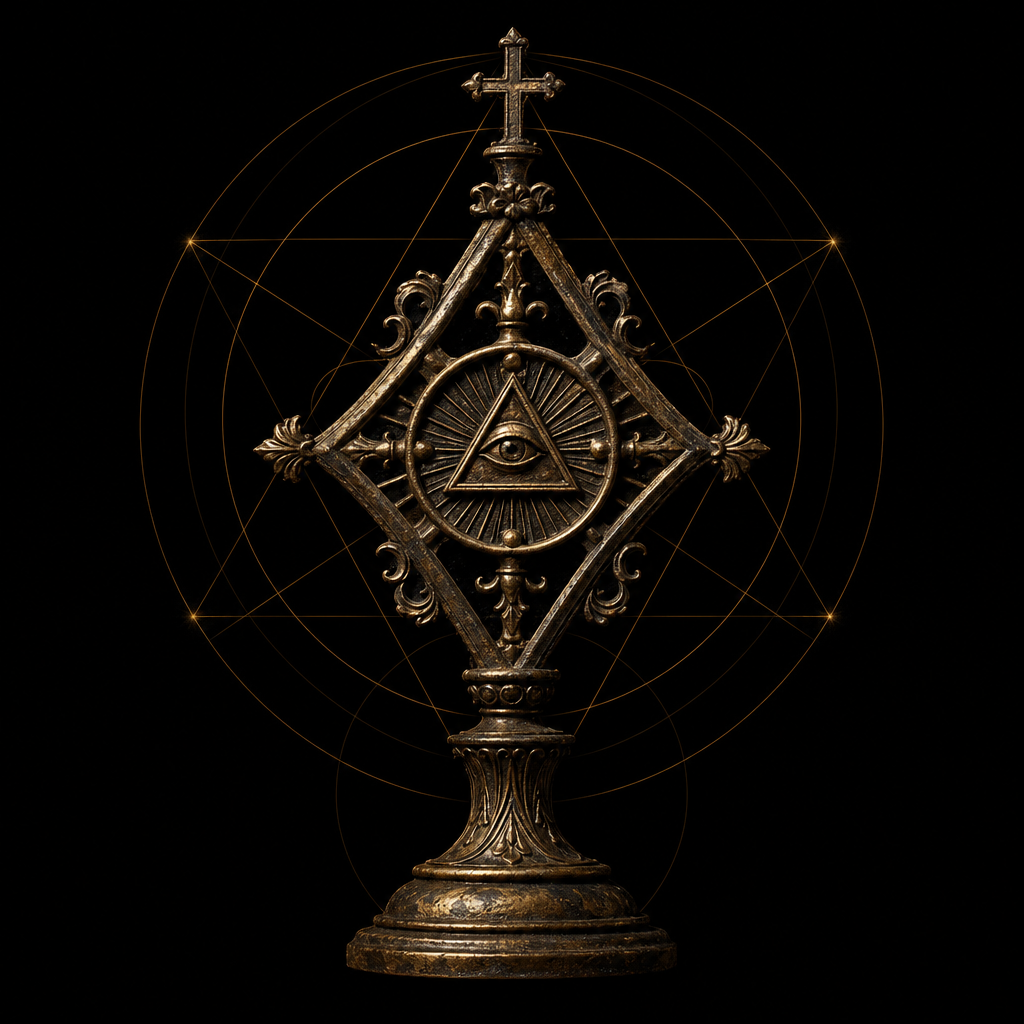
Illuminism and Christian Theosophy form one of the most important bridges between early modern religious mysticism and the organised occult revivals of the nineteenth century. The terms can be difficult, partly because “Illuminism” has been burdened by later conspiracy theories and partly because “theosophy” is often confused with the Theosophical Society founded in 1875. In its earlier Christian sense, however, theosophy referred to a form of divine wisdom: a speculative, visionary, and often deeply symbolic understanding of God, creation, the fall, regeneration, and the spiritual destiny of humanity. Illuminism, in this context, referred not to political manipulation by shadowy puppet-masters, despite humanity’s apparently inexhaustible need to invent them, but to the search for inward enlightenment and spiritual restoration.
The intellectual ancestry of this current lies in several earlier traditions. Rosicrucianism supplied the image of hidden Christian wisdom, secret reform, and a fraternity devoted to the renewal of religion, knowledge, and society. Speculative Freemasonry contributed the language of initiation, moral architecture, lost wisdom, and progressive symbolic instruction. High-Degree Masonry expanded this framework into chivalric, templar, hermetic, and theosophical forms, creating ritual spaces in which Christian esotericism could be dramatised. Lutheran Mysticism and Pietism added the language of inward rebirth, devotional seriousness, and the living experience of divine illumination. Illuminism and Christian Theosophy arose from the convergence of these currents.
At the centre of Christian Theosophy stands the conviction that divine truth is not merely to be believed, but inwardly known. This knowledge is not simple intellectual information. It is transformative wisdom, granted through regeneration, purification, contemplation, and grace. The theosopher seeks to understand the hidden structure of reality as the manifestation of divine life. Creation is read symbolically, the human being is understood as a microcosm, and history itself may be interpreted as a drama of fall and restoration. Such thinking is speculative, but it is not speculative in the thin academic sense of idle theory. It is speculation as spiritual seeing: an attempt to behold the divine pattern beneath the visible world.
Jacob Boehme was the great fountainhead of this current. His visionary writings described the emergence of creation from divine depths, the tension of contraries within manifestation, the fall into selfhood and darkness, and the possibility of rebirth through Christ. Boehme’s language drew upon Scripture, alchemy, nature mysticism, and direct visionary insight. It was difficult, symbolic, and often unruly, which naturally ensured its survival among readers who suspected that official theology had become too tidy to be true. Through later interpreters, translators, and admirers, Boehme became a central authority for Christian theosophers across Europe.
Illuminism developed in a related but somewhat broader field. It was marked by the belief that humanity, or at least a spiritually prepared portion of it, could recover lost divine knowledge and participate in a process of inner and sometimes social renewal. This could take explicitly Christian forms, as in the work of Louis-Claude de Saint-Martin, Martinez de Pasqually, and Jean-Baptiste Willermoz. These figures were associated with forms of Masonic and para-Masonic initiation that sought not merely moral improvement but reintegration: the restoration of the human being to an original divine condition. Their systems combined ritual, prayer, angelic or spiritual mediation, cosmology, and a strongly Christian understanding of fall and redemption.
Martinez de Pasqually’s Order of Élus Coëns, for example, presented a complex ceremonial and theological system concerned with the fall of spiritual beings, the exile of humanity, and the possibility of reconciliation with the divine order. Saint-Martin, often called “the Unknown Philosopher,” moved away from elaborate ceremonial operations toward a more interior path. For him, the true temple was within the human heart, and the work of reintegration was fundamentally spiritual and contemplative. Willermoz, by contrast, helped incorporate theosophical and Martinist themes into rectified Masonic structures, especially through the Rectified Scottish Rite. Together, these figures show how Illuminism could move between ritual, mysticism, Masonry, and interior devotion.
The relationship between Illuminism and Freemasonry is therefore crucial. Eighteenth-century Masonry provided a powerful institutional and symbolic environment for illuminist ideas. Its lodges and high-degree systems offered graded initiation, secrecy, mythic history, and a language of lost and recovered wisdom. Illuminist thinkers could use this structure to present spiritual restoration as a disciplined path. Yet they also pushed Masonry beyond ordinary fraternity and moral allegory. In their hands, the lodge became a possible theatre of cosmic reconciliation, where the candidate’s progress symbolised not only ethical refinement but the return of fallen humanity toward its divine source.
Christian Theosophy also had a profound relationship with Romanticism. Romantic thinkers inherited from theosophical and illuminist currents a dissatisfaction with mechanistic views of nature and a desire to recover the living unity of mind, world, and spirit. Nature was not merely matter in motion; it was a symbolic and organic revelation of deeper life. The imagination was not merely fantasy; it could be understood as a faculty of insight. While Romanticism took many literary, philosophical, and political forms, its spiritual depth cannot be separated from the wider current of Christian esoteric and theosophical speculation that preceded it.
By the nineteenth century, Illuminism and Christian Theosophy also helped prepare the conditions for the occult revival. They preserved the idea that initiation, symbolism, ritual, and inward illumination could provide access to hidden structures of reality. Later occultists would often shift the emphasis away from explicitly Christian regeneration toward broader hermetic, magical, comparative, or universalist systems. Yet the older Christian theosophical inheritance remained visible. The conviction that spiritual knowledge is transformative, that symbols conceal living realities, and that the human being participates in a cosmic drama continued to shape occult thought long after its theological foundations had been revised or secularised.
This current also contributed indirectly to the emergence of the Theosophical Society. The later Theosophical movement differed substantially from earlier Christian theosophy, especially in its appeal to Eastern religions, occult cosmology, and universal wisdom traditions. Nevertheless, it inherited the ambition suggested by the word itself: divine wisdom as a comprehensive account of spirit, cosmos, humanity, and evolution. Earlier Christian Theosophy had already shown that esoteric religion could claim to be more than private devotion or ritual practice. It could present itself as a total vision of reality.
The significance of Illuminism and Christian Theosophy lies in this synthesis of inward religion, symbolic cosmology, and initiatory aspiration. It stands between church and occult order, between mysticism and ritual, between Christianity and modern esotericism. Its leading figures did not merely preserve older doctrines; they reimagined Christianity as a path of reintegration, illumination, and cosmic meaning. They sought a religion that was not exhausted by dogma, a philosophy that was not reduced to rational abstraction, and an initiation that was not mere ceremony.
For the broader history of Western esotericism, Illuminism and Christian Theosophy mark a decisive stage in the transformation of early modern mystical Christianity into modern esoteric spirituality. They absorbed Rosicrucian dreams of reformation, Masonic structures of initiation, pietist demands for inward renewal, and Boehmean visions of divine manifestation. From this convergence emerged a powerful language of hidden wisdom, spiritual restoration, and symbolic ascent. Its influence flowed into Romanticism, ritual magic, occult revivalism, and later theosophical speculation. It remains one of the clearest examples of how Christian mystical thought became a seedbed for the modern esoteric imagination.
Antecedent Traditions
· Rosicrucianism
· Speculative Freemasonry
· High-Degree Masonry
· Lutheran Mysticism & Pietism
Succeeding Traditions
· Romanticism
· Occult Revival & Ritual Magic
· Theosophical Society