How Do You Read an Alchemical Emblem?
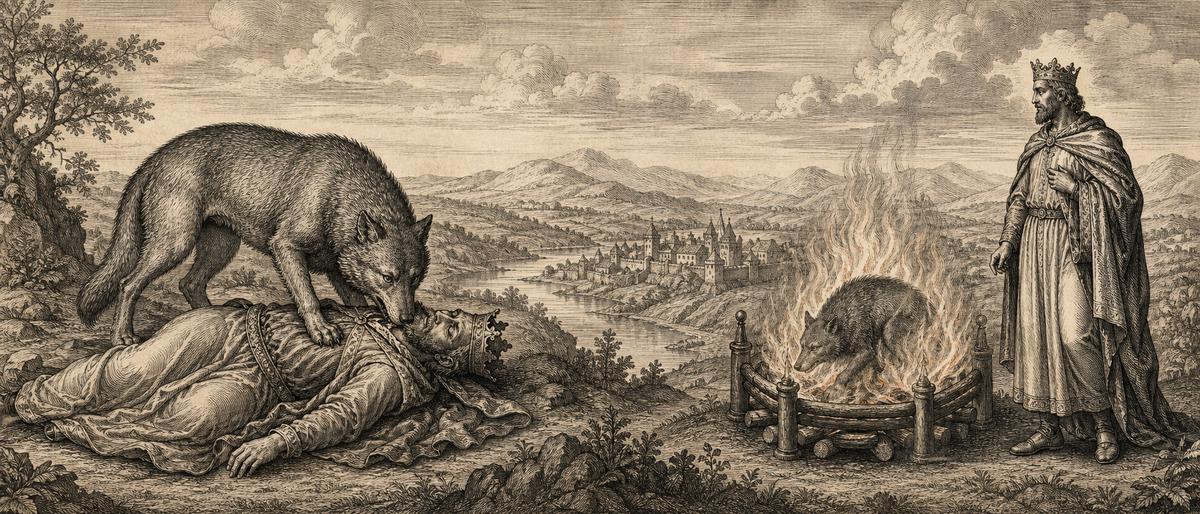
An emblem is easy to mistake for a picture with a concealed answer. Find the wolf, identify what it represents, and the puzzle is solved. Early modern readers were expected to work rather harder than that.
Emblem books brought images and words together in a form designed to provoke interpretation. A motto might announce the problem, an engraving would render it visible, and an epigram or commentary would complicate whatever first impression the reader had formed. The parts were meant to be considered together. An emblem did not merely illustrate an argument; it made the reader participate in constructing one.
Michael Maier’s Atalanta fugiens, first published in 1617, carried this method to an unusual degree. Its fifty alchemical emblems combine mottos, engravings, epigrams, prose discourses and three-part musical fugues. The reader was invited to look, read, listen and compare. It was, in effect, a multimedia work produced several centuries before the term became necessary.
Emblem XXIV gives us a good place to begin.
Take the rapacious wolf, and let him feast
His hungry stomach on the King deceased:
Let Vulcan then blow up a fire, that he
By the flames to ashes may reduced be;
Repeat this method, which at length will bring
Life and a Lions courage to the King.
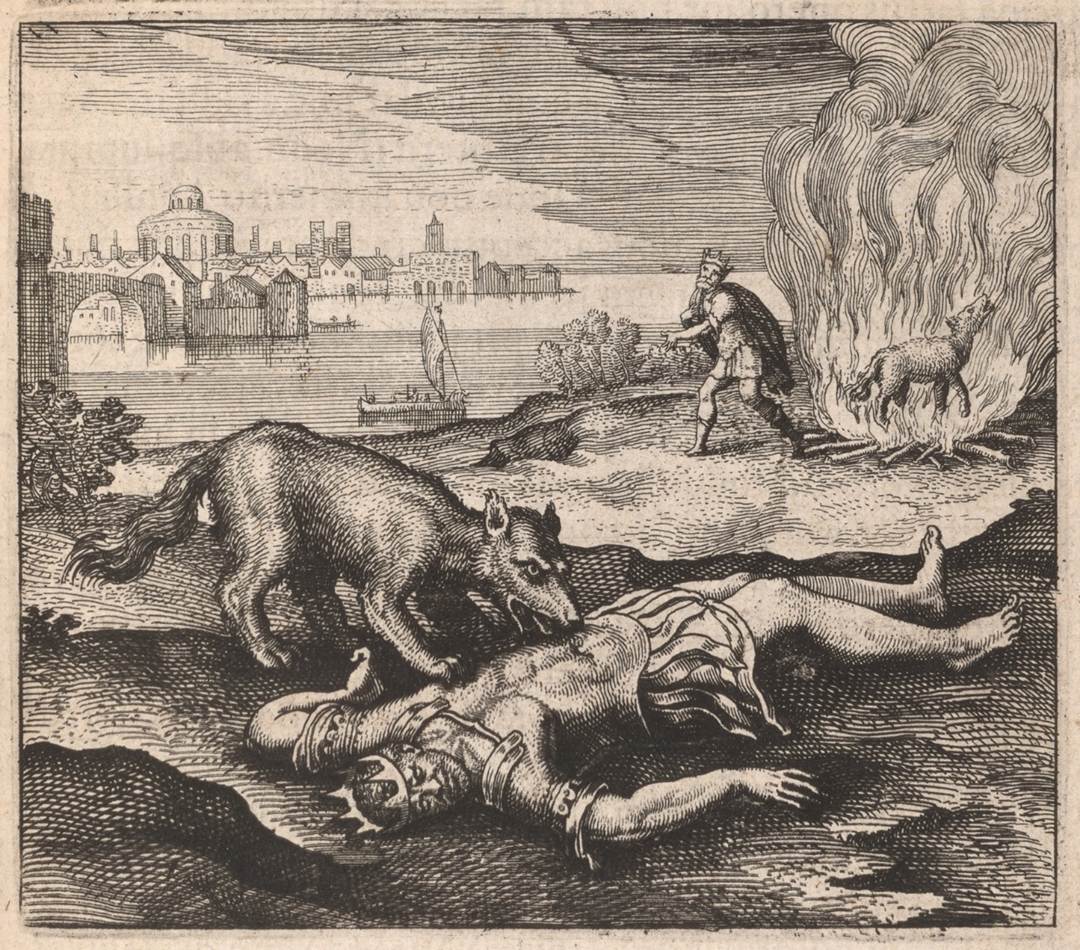
Michael Maier, Emblem XXIV from Atalanta fugiens. The motto reads: “A wolf devoured the King, and being burnt restored him to life again.” Public domain, Science History Institute.
First, look at the whole scene
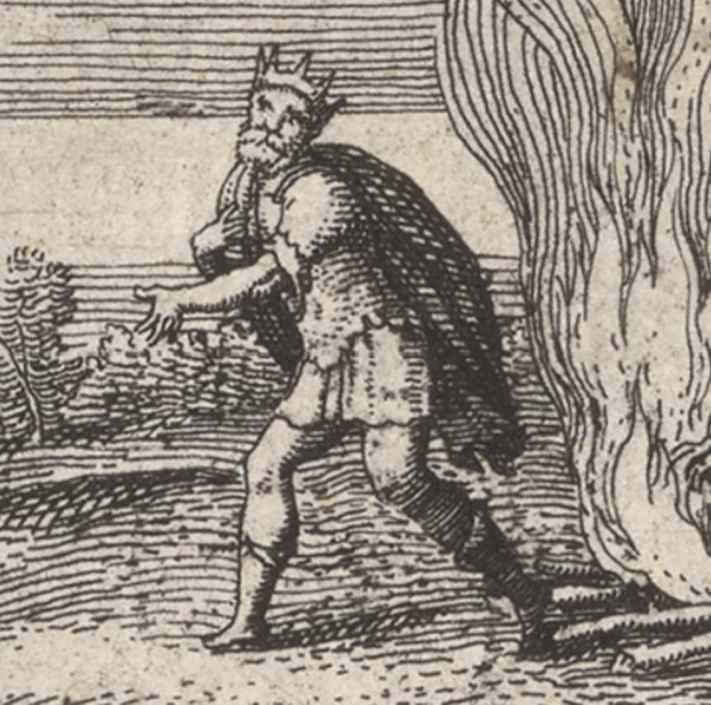
The engraving contains several moments at once. In the foreground, a wolf attacks or devours the fallen King. To the right, the animal lies within a fire while a crowned figure stands nearby. The landscape joins these episodes into a single field, although they do not occur at the same time.
We are therefore looking at a sequence rather than an isolated symbol. The King is devoured; the wolf is burned; the King returns. Maier’s epigram makes the order explicit and adds one important instruction: the procedure is to be repeated. What looks at first like a violent fable is also an account of a process.
The wolf and the King
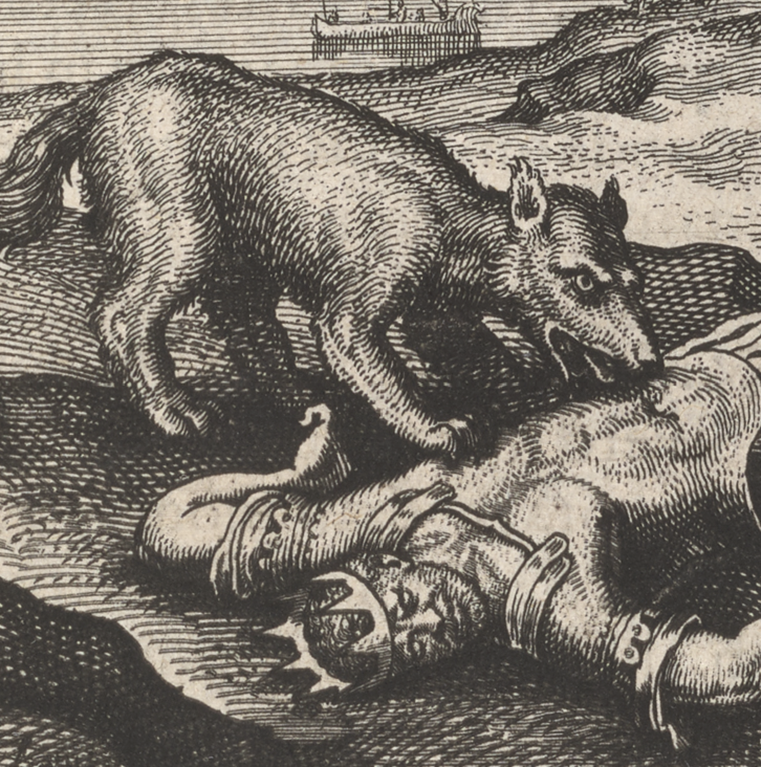
The crowned body identifies the victim as something precious, sovereign and yet strangely helpless. In alchemical writing, kings frequently stand for noble matter, especially gold or the perfected substance towards which the work is directed. Here, however, the King begins “deceased” or nearly dead. His dignity has not made him useful.
The wolf represents a devouring agent. It is commonly associated in interpretations of this emblem with antimony, a substance used in the refining of gold. Yet Maier does not simply label the animal and leave matters there. He dwells on its hunger, violence and ability to consume. The image asks us to understand a material operation through the observed character of an animal. The wolf matters because it devours.
The work of fire
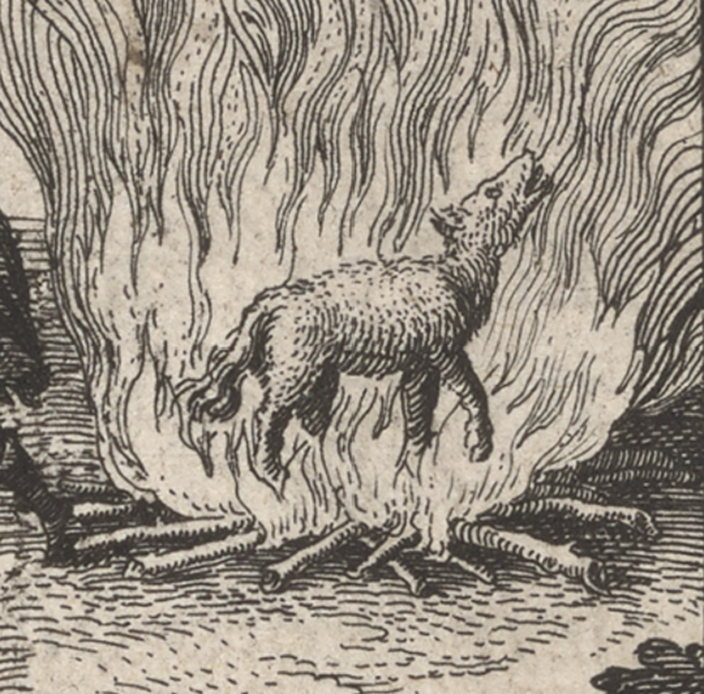
The next stage reverses the apparent victory. Having consumed the King, the wolf is placed upon the fire. Maier assigns this work to Vulcan, the classical god of fire and metalworking. The mythological reference leads directly back to the furnace.
Fire here is not a general symbol of spiritual illumination. It performs a particular task: separation through burning. The devouring agent is reduced to ashes, while that which belonged to the King survives the ordeal. Destruction and purification consequently occupy the same moment. Alchemical images are often inconvenient in this way; the same action may be death from one position and recovery from another.
The return of the King
The King reappears upright, crowned and apparently restored. Maier’s epigram promises more than simple survival: after the process has been repeated, the King rises with “a lion’s courage.” What returns is not merely the original body rescued from danger. It has acquired strength through dissolution, consumption and fire.
This is the central movement of the emblem. Perfection is not presented as the preservation of an untouched substance. The King must pass through an encounter that appears to destroy him. The agent of that destruction must then itself be destroyed. Only after these operations can the King return in a more powerful form.
A process within nature
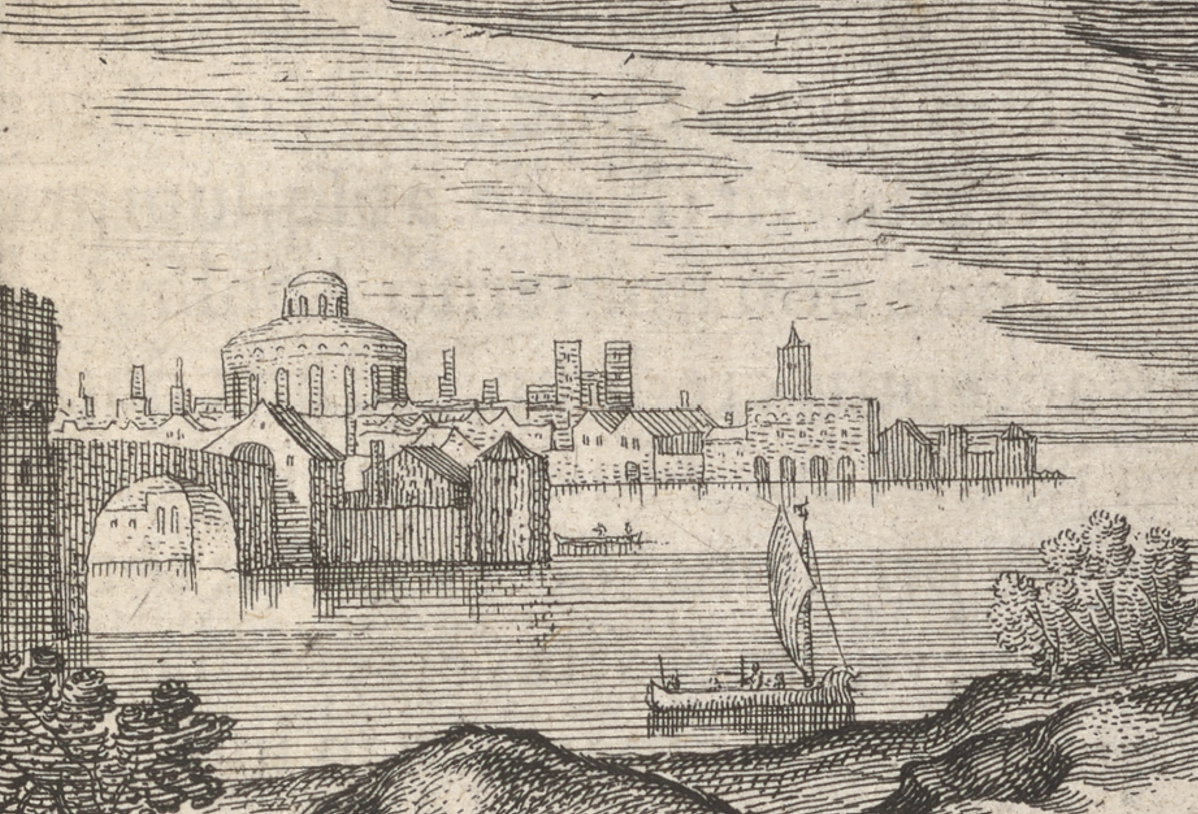
The broad landscape prevents the scene from becoming a diagram on an empty page. Mountains, water, buildings and cultivated ground place the strange transaction within an ordered natural world. Alchemy claimed to work with nature’s processes, although usually by concentrating, directing or accelerating them.
The landscape also allows separate stages to be viewed together. The eye can move from devouring to burning and restoration without leaving the page. Time has been turned into space. This is one reason the emblem works so well as a teaching device: it does not state a doctrine once and neatly. It gives the reader a process to retrace.
Reading without reducing
We can now return to the full engraving. The wolf may be read chemically, the King as noble matter, Vulcan as furnace fire and the entire scene as a sequence of purification. But none of these identifications quite replaces the image. Maier surrounds the operation with animal lore, classical mythology, royal imagery and the language of death and resurrection.
To read the emblem is not to discover that the wolf “means” one thing. It is to observe how several kinds of meaning have been made to work together. The result remains partly elusive, but that is not a defect in the design. It is the design.
Sources
Michael Maier, “Emblem 24,” Atalanta fugiens, Furnace and Fugue digital scholarly edition.
Emblem XXIV: high-resolution public-domain image, Science History Institute Digital Collections.