High-Degree Masonry
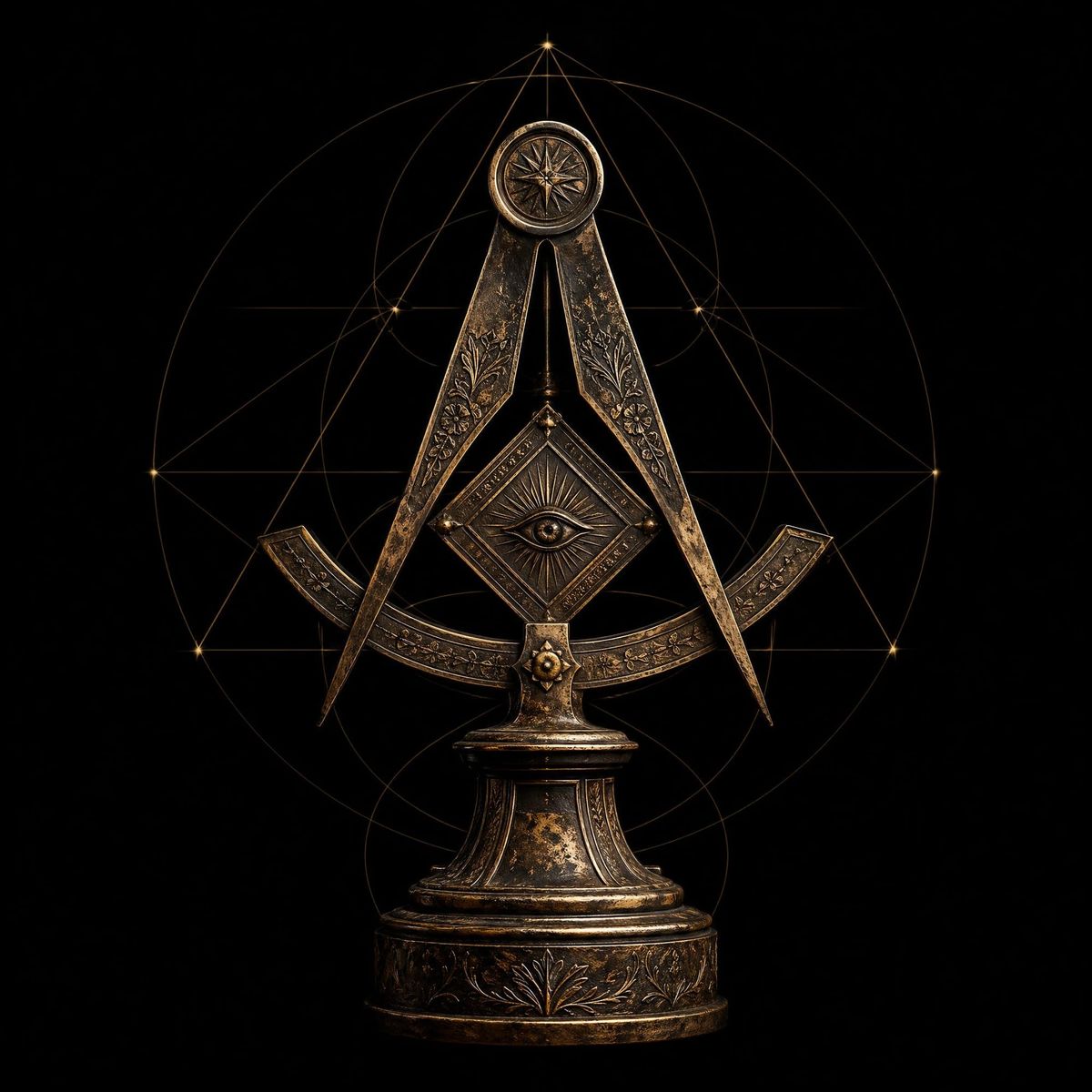
High-Degree Masonry emerged in the eighteenth century as one of the most significant expansions of the speculative Masonic system. While the three Craft degrees of Entered Apprentice, Fellow Craft, and Master Mason provided the foundational structure of modern Freemasonry, the high degrees extended that structure into elaborate systems of chivalric, biblical, hermetic, templar, and theosophical symbolism. They did not simply add more ceremonial stages to an existing institution. They transformed Masonry into a much wider imaginative and initiatory field, capable of absorbing many of the religious, political, philosophical, and esoteric currents of the Enlightenment and post-Reformation world.
The development of high-degree Masonry must be understood against the background of speculative Freemasonry itself. The Craft lodge had already reinterpreted the language of operative building into a moral and symbolic system. Its central myth concerned the building of Solomon’s Temple and the death of Hiram Abiff, using architectural tools and ritual drama to explore virtue, mortality, fidelity, and the search for lost wisdom. High-degree systems took this symbolic foundation and extended it both backwards and forwards. They asked what had been lost, where it might be found, who had preserved it, and what spiritual or historical mission Masonry might secretly contain.
This expansion occurred in a period when European intellectual life was marked by intense fascination with antiquity, hidden history, natural religion, chivalric romance, and secret societies. The eighteenth century was not simply an age of rational disenchantment, as it is sometimes caricatured. It was also an age of system-building, myth-making, and speculative reconstruction. Masonic high degrees flourished in precisely this environment. They offered a way to connect biblical history, medieval knighthood, Christian mysticism, alchemical symbolism, and Enlightenment moral philosophy within a single graded initiatory architecture. Human beings, never content with three degrees when thirty-three might be made available, proceeded accordingly.
Among the most influential high-degree developments were the various Scottish, Templar, and Rosicrucian-inflected systems that circulated through France, Germany, Britain, and beyond. These systems were often fluid in their early stages. Degrees were composed, adapted, translated, reorganised, and attached to new bodies with considerable freedom. Some emphasised vengeance and justice in response to the death of Hiram. Others developed the rebuilding of the Temple, the recovery of the lost word, the preservation of sacred knowledge, or the continuation of chivalric orders. Still others introduced explicitly Christian, hermetic, or theosophical themes. The result was not a single uniform phenomenon but a constellation of related rites, orders, and degree sequences.
The appeal of high-degree Masonry lay partly in its capacity to deepen the drama of initiation. The Craft degrees introduced the candidate to moral discipline, symbolic labour, and the experience of ritual death and restoration. The high degrees placed that experience within broader historical and metaphysical narratives. The initiate might become a knight, a priestly guardian of sacred knowledge, a restorer of the Temple, a seeker of the divine name, or a participant in a hidden lineage of wisdom. Such roles were not merely decorative. They allowed Masonic ritual to dramatise the ethical and spiritual concerns of the age: the relation between reason and revelation, the possibility of universal religion, the dignity of moral self-cultivation, and the hope that history concealed a providential order.
At the same time, high-degree Masonry occupied an ambiguous position within the wider Masonic world. Some regarded it as a legitimate elaboration of Craft symbolism, giving fuller expression to themes already present in the Master Mason degree. Others saw it as a proliferation of unnecessary inventions, prone to vanity, theatrical excess, and dubious claims of antiquity. This tension has never entirely disappeared. The high degrees are often most powerful when read not as literal survivals of ancient orders, but as symbolic and ritual constructions that reveal what eighteenth- and nineteenth-century initiates wished Masonry to be: a vessel of moral seriousness, sacred history, esoteric depth, and social distinction, all wrapped in aprons and titles because apparently subtlety was taking the century off.
Historically, high-degree Masonry became a major conduit through which esoteric and mystical ideas entered later initiatory movements. Its systems created spaces in which Rosicrucian, Christian theosophical, alchemical, Kabbalistic, and chivalric motifs could be ritualised and transmitted. In particular, the search for hidden superiors, unknown masters, restored wisdom, and secret Christian or universalist doctrines helped shape later currents of Illuminism and Christian Theosophy. Figures and movements associated with the late eighteenth-century esoteric milieu often worked within, around, or against high-degree Masonic structures. Masonry became not only a fraternity but a framework through which spiritual authority, hidden history, and reforming aspiration could be imagined.
High-degree Masonry also contributed to the later occult revival by preserving the idea of a graded initiatory curriculum. The nineteenth-century magical orders inherited much from Masonic precedent: formal initiation, symbolic officers, passwords, ritual drama, progressive grades, and the conviction that spiritual knowledge could be organised into a structured ascent. Even when later occult groups moved beyond Masonry or criticised its limitations, they often retained its ceremonial grammar. The Hermetic Order of the Golden Dawn, for example, did not simply emerge from nowhere. It drew upon a world in which Masonic and quasi-Masonic ritual structures had already made the graded esoteric order imaginable.
The significance of high-degree Masonry, therefore, lies less in the historical accuracy of its legendary claims than in its creative power as a symbolic engine. It took the relatively compact system of Craft Masonry and expanded it into an initiatory universe. Within that universe, the Temple could become a map of the soul, chivalry a form of moral discipline, lost words symbols of metaphysical absence, and ritual progression a model of spiritual ascent. Its mythology was often extravagant, but extravagance is not the same as triviality. In the history of Western esotericism, high-degree Masonry matters because it gave institutional and ceremonial form to the desire for hidden continuity, sacred order, and transformative knowledge.
Its legacy is consequently double. On one side, it belongs firmly to the history of Freemasonry, extending the symbolic and moral world of the lodge into increasingly elaborate systems. On the other, it belongs to the broader history of modern esotericism, where it helped prepare the ground for Christian theosophy, illuminist movements, ritual magic, and later occult orders. High-degree Masonry stands at a threshold: still Masonic in language and structure, but already reaching toward the wider occult and mystical currents that would define the nineteenth century.
Antecedent Traditions
· Speculative Freemasonry
Succeeding Traditions
· Illuminism & Christian Theosophy
Occult Revival & Ritual Magic