Hermetic Order of the Golden Dawn
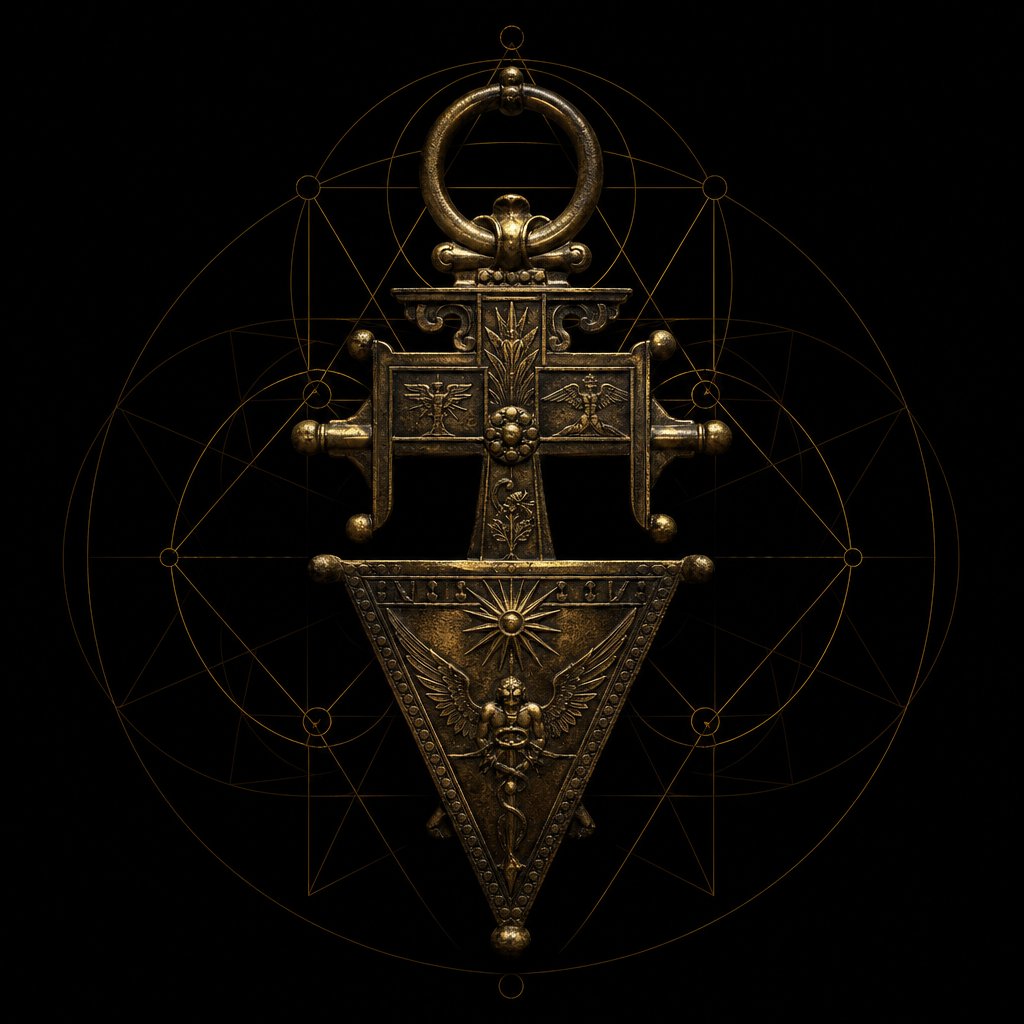
The Hermetic Order of the Golden Dawn was one of the most influential magical orders in the history of modern Western esotericism. Founded in Britain in the late nineteenth century, it gathered together strands of ceremonial magic, Rosicrucianism, Kabbalah, tarot, astrology, alchemy, Enochian material, Egyptian symbolism, Masonic ritual structure, and Theosophical speculation into a coherent initiatory system. Its life as an institution was relatively brief and famously troubled, but its influence has been immense. Much of what modern readers now imagine as ceremonial magic bears the mark of Golden Dawn theory, ritual, and symbolism.
The Order was formally established in 1888 by William Wynn Westcott, Samuel Liddell MacGregor Mathers, and William Robert Woodman. All three were connected with the Societas Rosicruciana in Anglia, a Masonic Rosicrucian society that provided part of the intellectual and ritual background for the new Order. The Golden Dawn claimed authority through the so-called Cipher Manuscripts and through contact with hidden adepts or “Secret Chiefs,” a claim that suited the esoteric expectations of the period. Whether understood as myth, device, pious fiction, or initiatory necessity, the idea of hidden authority gave the Order a pedigree of mystery, which was apparently essential because no Victorian magical body could simply admit it had written its own curriculum.
The Golden Dawn’s antecedents were numerous. From John Dee’s angelic magic it inherited, especially through later development, the Enochian system of angelic language, tablets, calls, and visionary exploration. Dee and Edward Kelley’s sixteenth-century angelic operations had long remained difficult, obscure, and only partially absorbed into later esotericism. The Golden Dawn helped bring Enochian material into the mainstream of modern ceremonial magic, systematising it within a broader initiatory framework. This gave Dee’s angelic legacy a new ritual life beyond its original Elizabethan setting.
Rosicrucianism was equally important. The Golden Dawn presented itself as heir to a hidden Rosicrucian wisdom tradition concerned with spiritual illumination, symbolic knowledge, and the transformation of the human being. Its grade structure, temple symbolism, and language of inner orders drew deeply upon Rosicrucian models, especially as filtered through Masonic and nineteenth-century occult channels. The Rosicrucian ideal of an invisible college of adepts became central to the Order’s self-understanding. It allowed the Golden Dawn to imagine itself not merely as a study group or ritual society, but as the outer expression of a deeper initiatory current.
The Occult Revival supplied the immediate cultural and intellectual atmosphere. By the late nineteenth century, figures such as Éliphas Lévi had already reconfigured magic as a symbolic, philosophical, and initiatory science. Tarot had been elevated into a book of occult wisdom; Kabbalah had become a master key of correspondences; ritual magic had been recast as disciplined spiritual work rather than crude superstition. The Golden Dawn inherited this revived occult vocabulary and organised it with extraordinary thoroughness. Where earlier occult writers often offered suggestive synthesis, the Golden Dawn turned synthesis into a syllabus.
Theosophy also shaped the Order’s environment. The late nineteenth-century esoteric world was saturated with Theosophical ideas: hidden masters, spiritual evolution, subtle bodies, comparative religion, and the recovery of ancient wisdom. Several Golden Dawn members had some degree of contact with Theosophical currents, even where the Order maintained a more Western and ritualistic identity. Theosophy helped normalise the idea that ancient religious symbols concealed a universal esoteric doctrine. The Golden Dawn accepted that premise but pursued it through ceremonial practice, graded initiation, and technical symbolism rather than primarily through Theosophical cosmology.
The genius of the Golden Dawn lay in its systematic organisation of correspondences. It arranged elements, planets, zodiacal signs, Hebrew letters, divine names, archangels, tarot trumps, geomantic figures, colours, paths on the Tree of Life, ritual tools, and states of consciousness into a unified structure. The Kabbalistic Tree of Life served as the central organising diagram. Through it, the Order could integrate many otherwise disparate materials into a single symbolic architecture. This was not merely intellectual classification. The correspondences were intended to guide ritual, meditation, visualisation, initiation, and magical operation. Naturally, the result was both profound and slightly like watching a metaphysical accountant experience divine mania.
The Order’s grade structure was also central to its significance. The outer order introduced candidates to elemental symbolism, Hebrew, astrology, tarot, geomancy, alchemy, and ritual theory. The inner order, associated with the Rosy Cross, moved toward practical magic, consecration of implements, invocation, scrying, astral work, and more advanced ceremonial operations. This staged progression was one of the Golden Dawn’s most enduring contributions. It presented magic not as isolated technique but as a curriculum of disciplined formation. The magician was to be educated, purified, symbolically reconstructed, and gradually introduced to the powers and structures of the invisible world.
The Golden Dawn also gave tarot an enduring esoteric form. Its tarot teachings, later mediated through figures such as Arthur Edward Waite, Aleister Crowley, and Paul Foster Case, shaped modern occult tarot profoundly. The association of tarot cards with Hebrew letters, astrological signs, paths on the Tree of Life, elemental forces, and initiatory states became standard in much twentieth-century esotericism. The Rider-Waite-Smith deck and the Thoth deck both owe an enormous debt to Golden Dawn symbolism, even where they diverge in tone and doctrine. Modern tarot, still shuffling along with the confidence of a symbolic empire, remains one of the Order’s most visible legacies.
The membership of the Golden Dawn included several major figures of modern literature and occultism. W. B. Yeats, Arthur Edward Waite, Florence Farr, Moina Mathers, Annie Horniman, and Aleister Crowley all belonged to or were associated with the Order. Its internal conflicts were as dramatic as its rituals. Disputes over authority, leadership, legitimacy, secrecy, and personality eventually fractured the organisation. Yet the collapse of the original Order did not end its influence. Its documents, rituals, teachings, and successor groups continued to circulate widely, especially after Israel Regardie published much of its material in the twentieth century.
The Golden Dawn’s succeeding influence is particularly visible in Thelema, B.O.T.A., and Neo-Paganism/Wicca. Aleister Crowley carried Golden Dawn methods into his own Thelemic system, adapting and often radically reinterpreting them. Paul Foster Case, through the Builders of the Adytum, developed a more contemplative and tarot-centred system deeply indebted to Golden Dawn Qabalah. Gerald Gardner and other figures in the emergence of modern Wicca were influenced, directly or indirectly, by the ritual structures and magical atmosphere that the Golden Dawn helped establish. Its ceremonial grammar became part of the wider language of modern esoteric practice.
The Order’s importance lies not in institutional longevity but in structural achievement. It created a workable synthesis of Western magical traditions at a moment when occult materials were scattered, fragmentary, and unevenly understood. Its historical claims may be questionable, and its internal politics were often magnificently absurd. Yet its system proved durable because it gave practitioners a method: study, initiation, correspondence, ritual, visualisation, symbolic ascent, and magical discipline. It transformed the occult revival into a practical curriculum.
For the history of Western esotericism, the Hermetic Order of the Golden Dawn stands as a central organising force. It received materials from Dee, Rosicrucianism, occult revivalism, and Theosophy, and transmitted them into the magical systems of the twentieth century. It made ceremonial magic intellectually ambitious, ritually elaborate, and pedagogically structured. More than almost any other modern order, it provided the template through which Western magic would be studied, practised, adapted, and endlessly reinvented.
Antecedent Traditions
· John Dee’s Angelic Magic
· Rosicrucianism
· Occult Revival & Ritual Magic
· Theosophical Society
Succeeding Traditions
· Thelema
· B.O.T.A.
· Neo-Paganism/Wicca