Eastern Religions
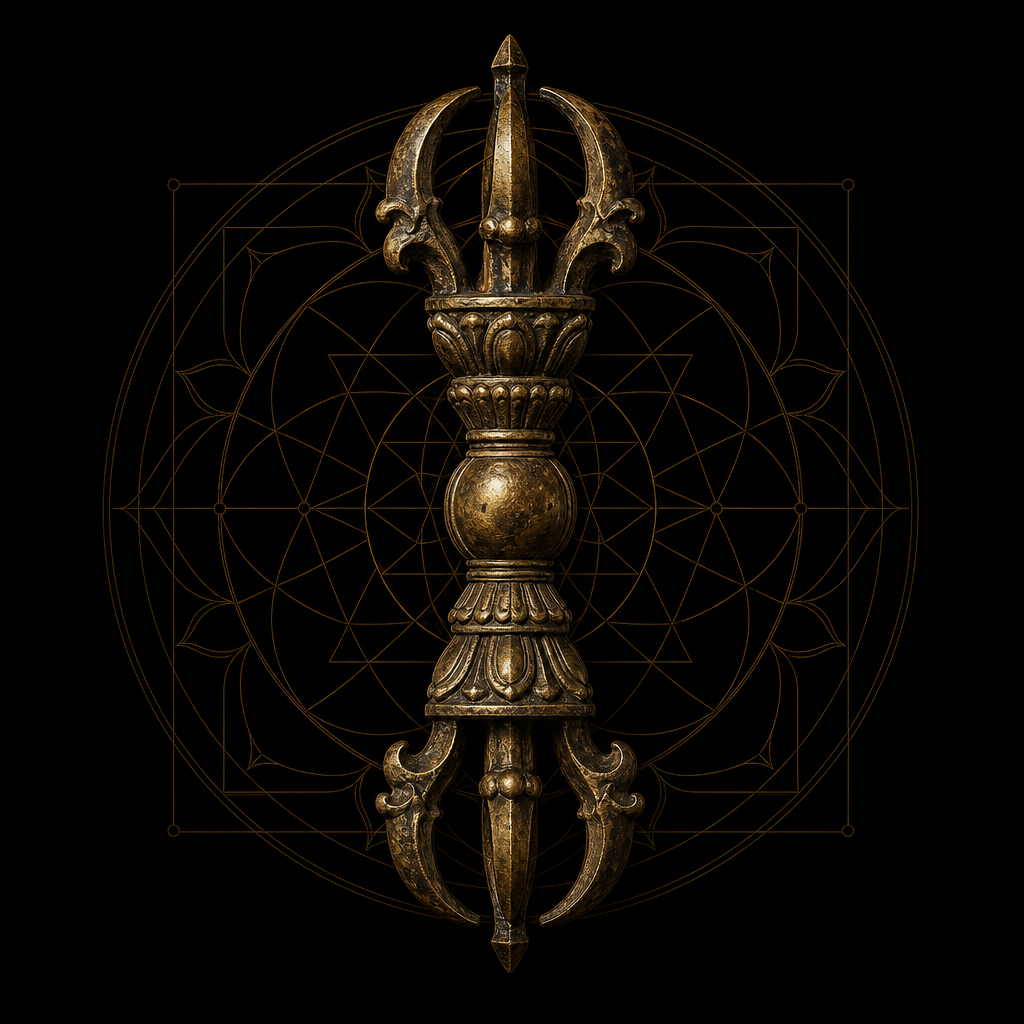
“Eastern Religions” is an inevitably broad and imperfect category. It gathers together a range of traditions from South, East, and Inner Asia that differ profoundly in history, doctrine, practice, language, and self-understanding. Hinduism, Buddhism, Jainism, Daoism, Confucianism, Sikh traditions, tantric systems, yoga lineages, devotional movements, and various forms of Asian esotericism cannot be reduced to a single religious type without doing violence to their specificity. Yet within the history of modern Western esotericism, “Eastern Religions” does name an important historical function: the encounter, interpretation, adaptation, and often misinterpretation of Asian religious ideas by Western seekers, scholars, occultists, reformers, and spiritual universalists.
This encounter did not begin in the nineteenth century. Trade, travel, missionary activity, empire, translation, and intellectual exchange had linked Europe and Asia for many centuries. Classical writers, medieval travellers, Jesuit missionaries, Orientalist scholars, and colonial administrators all contributed to European knowledge of Asian religions, though usually through partial and interested lenses. What changed in the modern period was the scale and spiritual significance of the encounter. Asian religious texts, concepts, and practices increasingly became available to Western readers through translation and scholarly mediation. At the same time, dissatisfaction with inherited Christianity, mechanistic materialism, and narrow rationalism led many Western intellectuals and esotericists to look eastward for alternative models of wisdom.
The Western reception of Hindu traditions was especially significant. The translation of texts such as the Upanishads, the Bhagavad Gita, and later a range of Vedantic, yogic, and tantric materials introduced Western readers to concepts of Brahman, Atman, karma, rebirth, liberation, meditation, and spiritual discipline. These ideas seemed to offer a metaphysical depth and contemplative psychology that many found lacking in modern Western religion. Vedanta in particular was often received as a philosophical expression of universal spiritual truth, though this reception was selective. Western readers frequently privileged texts and doctrines that resembled their own search for metaphysics, while ignoring ritual, social, linguistic, and sectarian contexts. Humanity’s ability to discover itself in someone else’s tradition remains one of its more persistent talents.
Buddhism also entered Western consciousness in increasingly powerful ways. Early Western interpretations often presented Buddhism as rational, ethical, philosophical, and even compatible with modern science. This was partly a reaction against Christian dogma and partly a product of selective reading. Doctrines of impermanence, suffering, non-self, karma, rebirth, meditation, and liberation appealed to those seeking a disciplined account of consciousness and suffering without reliance on a creator God. Yet the Western construction of Buddhism often simplified a vast range of traditions, including Theravada, Mahayana, Vajrayana, devotional, monastic, ritual, and popular forms. Buddhism became, for many Western readers, both a religion and a mirror for modern anxieties about belief, selfhood, suffering, and rationality.
Tantric and yogic traditions had a more complicated reception. They offered powerful models of the subtle body, mantra, visualisation, initiation, energy, sacred sound, and transformative practice. These elements became particularly important for Western esotericism because they seemed to provide practical technologies of spiritual development. Concepts such as chakras, kundalini, nadis, mantra, and meditation were eventually absorbed into Theosophy, occultism, yoga movements, New Age spirituality, and modern alternative healing. Yet this absorption was frequently decontextualised. Practices rooted in specific initiatory, ritual, devotional, and philosophical systems were often translated into general techniques of self-development or occult physiology.
The encounter with Daoism and Chinese traditions also influenced Western esoteric and philosophical thought, though often more diffusely. Daoist ideas of harmony, naturalness, polarity, internal alchemy, subtle energy, and the interplay of yin and yang resonated with Western interests in correspondence, polarity, and hidden natural processes. Confucianism was often received less as an esoteric tradition and more as ethical and social philosophy, while Daoism was more readily romanticised as mystical, natural, and occult. As usual, Western reception tended to sort traditions according to its own needs: one for ethics, one for mysticism, one for exotic atmosphere, and then a great deal of confident misunderstanding in the middle.
Within Western esotericism, the importance of Eastern religions lies not only in what they were, but in what they were imagined to represent. Asia became associated with ancient wisdom, spiritual discipline, contemplative depth, hidden masters, sacred languages, and alternative models of the human being. This imagination was shaped by Orientalism, colonial power, missionary polemic, genuine admiration, scholarly labour, and esoteric aspiration. It produced distortions, but it also expanded the Western religious horizon. It challenged the assumption that Christianity or classical antiquity exhausted the possibilities of spiritual knowledge. It also provided concepts that could be used to construct universal histories of religion and comparative metaphysical systems.
The Theosophical Society was the decisive channel through which many Eastern religious ideas entered modern Western esoteric discourse. Helena Petrovna Blavatsky, Henry Steel Olcott, and their successors drew extensively upon Hindu, Buddhist, and other Asian materials, though always through a Theosophical framework. The Society’s move to India in 1879 gave this engagement institutional and symbolic importance. Theosophy presented Eastern religions as preserving fragments, and sometimes privileged forms, of an ancient wisdom tradition. Concepts such as karma, reincarnation, subtle planes, cycles of cosmic evolution, spiritual adepts, and liberation became central to its teaching.
The Theosophical use of Eastern religions was both influential and problematic. On one hand, it introduced many Western audiences to Asian religious ideas and encouraged comparative study, cross-cultural spiritual inquiry, and respect for traditions outside Christianity. Olcott’s involvement in Buddhist revival in Sri Lanka, for instance, was historically significant. On the other hand, Theosophy often reinterpreted Asian religions according to its own occult cosmology, sometimes treating living traditions as repositories of symbols rather than as historically complex communities of practice. It universalised, systematised, and esotericised them. This made them accessible to Western seekers, but often at the cost of accuracy.
Nevertheless, the impact was immense. Through Theosophy and related movements, Eastern religious concepts became embedded in modern alternative spirituality. Karma and reincarnation became familiar ideas in Western popular culture. Meditation and yoga were gradually reframed as universal spiritual or psychological disciplines. The subtle body became a standard feature of esoteric anatomy. The guru, adept, master, lama, yogi, and sage entered the Western esoteric imagination as figures of hidden authority. Later movements, including Anthroposophy, the New Age Movement, modern yoga, alternative healing, and various occult and magical systems, would inherit this vocabulary.
It is important, however, to distinguish between Eastern religions as living traditions and their Western esoteric reception. Hinduism, Buddhism, Daoism, and related systems have their own histories, debates, institutions, rituals, philosophies, and internal diversities. Their importance does not depend on their usefulness to Western occultism. Yet the Western esoteric tradition was undeniably transformed by its engagement with them. This transformation involved admiration, appropriation, study, fantasy, translation, and reinvention in roughly equal measure. The result was not a pure transmission of Asian religion, but a hybrid field of modern spirituality.
For the history of Western esotericism, Eastern religions matter because they expanded the imagined geography of wisdom. They helped shift esoteric thought from a primarily Christian, Hermetic, Kabbalistic, and Masonic framework toward a global and comparative one. They supplied concepts of reincarnation, karma, liberation, meditation, subtle bodies, cosmic cycles, and spiritual masters that became central to later esoteric culture. Their reception was often flawed, but it was also transformative. Once Western esotericism began to speak of universal wisdom, hidden adepts, spiritual evolution, and the convergence of all religions, it was speaking in a world reshaped by the encounter with the East.
Antecedent Traditions
· None mapped
Succeeding Traditions
· Theosophical Society