Early Jewish Mysticism
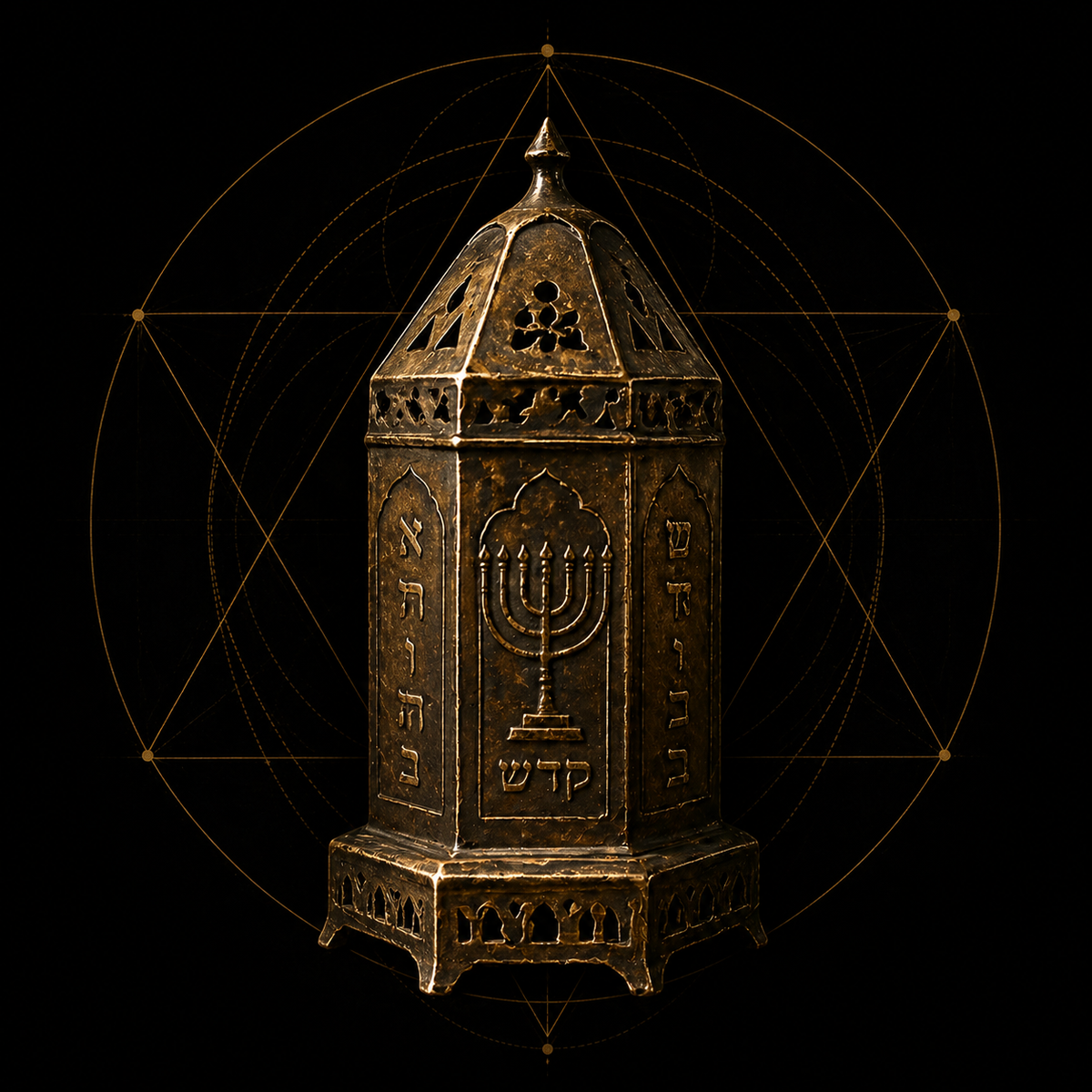
Early Jewish mysticism represents one of the deep religious and symbolic sources from which later Western esoteric traditions would draw. It does not begin as a single school, nor as a formalised doctrine of occult practice, but as a cluster of visionary, cosmological, angelological, and exegetical currents within ancient and late antique Judaism. Its concerns were profound and enduring: the structure of the heavens, the mystery of divine names, the role of angels and intermediary beings, the hidden meanings of scripture, the nature of creation, and the possibility of ascent toward the divine presence. Later Kabbalah would systematise many of these concerns, but early Jewish mysticism provided the conceptual and symbolic groundwork.
One of its most important forms was Merkabah mysticism, centred on the divine chariot vision in the opening chapter of Ezekiel. This vision, with its wheels, living creatures, fire, movement, and enthroned divine glory, became a major object of contemplation and speculation. The mystic did not merely read the biblical text as narrative or prophecy, but treated it as a doorway into the architecture of the heavens. The chariot became a symbol of divine manifestation and cosmic order, while the ascent toward the throne became a model for visionary encounter. In later esoteric traditions, this pattern of ascent through ordered spiritual realms would reappear in many forms, from Hermetic planetary ascent to magical and initiatory systems of graded progression.
The associated Hekhalot literature, or “palaces” literature, develops this visionary world in greater detail. These texts describe the soul’s passage through heavenly palaces, guarded by angels and sealed by divine names. The journey is perilous, hierarchical, and ritualised. Access to the divine presence is not casual; it requires preparation, knowledge, purity, and the correct use of sacred formulae. This is one of the earliest sustained expressions, within a Jewish context, of the idea that ascent toward divine knowledge involves both spiritual discipline and technical knowledge. Later ceremonial traditions would find in such material a powerful precedent for the use of names, seals, angelic guardians, and ordered stages of approach.
A second major strand concerns creation and the hidden structure of language. The Sefer Yetzirah, though difficult to date precisely, is central to this development. It presents creation as unfolding through the Hebrew letters, numbers, and elemental correspondences. The world is not merely made by divine command in a general theological sense; it is structured through language, measure, and symbolic relation. Letters become cosmological principles. Number, sound, and form are bound together. This vision would have enormous influence on later Kabbalistic speculation and, indirectly, on Christian Kabbalah, Renaissance magic, and modern esoteric systems that treat sacred alphabets as maps of creation.
The role of divine names is particularly important. In early Jewish mystical and magical material, names are not arbitrary labels. They participate in the power and presence of what they name. The divine name, and the extended angelic and divine names derived from scriptural and visionary traditions, become vehicles of access, protection, invocation, and contemplation. This assumption would later become fundamental to Kabbalistic practice and to many forms of Western ritual magic. The sacred name is at once theological, linguistic, and operative. It reveals a worldview in which language is not merely descriptive, but creative and mediating.
Early Jewish mysticism also cultivated a strong angelological imagination. Angels were not ornamental figures placed around the edges of doctrine, but active beings within a structured heavenly order. They guarded thresholds, conveyed divine messages, mediated power, and embodied aspects of divine governance. This angelic hierarchy provided later esoteric traditions with a framework for thinking about intermediary beings between the human and the divine. In Hermetic, Gnostic, Kabbalistic, Christian theosophical, and ceremonial magical systems, such intermediary orders would become essential for explaining how divine influence descends and how human ascent becomes possible.
At the same time, early Jewish mysticism remained deeply rooted in scripture. Its speculative force came not from abandoning the biblical text, but from reading it as inexhaustibly layered. Scripture was treated as a symbolic universe, a field of hidden meanings in which letters, numbers, visions, names, and narratives could disclose concealed realities. This habit of esoteric exegesis became one of Judaism’s major gifts to the wider Western Esoteric Tradition. Later Kabbalists would develop it with extraordinary sophistication, and Christian esoteric thinkers would adapt it, sometimes creatively and sometimes with spectacular theological overconfidence, because apparently no tradition is safe once Renaissance intellectuals discover allegory.
The relationship between early Jewish mysticism and Late Antique Hermeticism and Gnosticism is complex. These currents did not simply flow in one direction, nor can they be collapsed into a single shared system. Yet they occupied overlapping religious and intellectual worlds in which ascent, revelation, angelic mediation, cosmic hierarchy, and salvific knowledge were major concerns. Jewish apocalyptic and mystical traditions contributed to the wider late antique vocabulary of heavenly journeys, secret wisdom, divine names, and visionary transformation. Gnostic systems, in particular, often show strong interest in cosmic rulers, heavenly powers, scriptural reinterpretation, and the liberation of the soul through revealed knowledge. Hermetic texts likewise share the broader late antique concern with divine intellect, ascent, and the recovery of primordial wisdom.
The significance of early Jewish mysticism lies in its disciplined fusion of text, vision, language, and cosmology. It offered later traditions a way of imagining the universe as a layered sacred order, accessible through revelation, contemplation, and the correct understanding of symbols. It gave extraordinary importance to letters, names, numbers, angels, and visionary ascent. These themes would become central to Medieval Kabbalah and, through Kabbalah’s later transmission, to Christian Kabbalah, Renaissance Hermeticism, ceremonial magic, the Golden Dawn, modern Qabalah, and much of the wider esoteric imagination.
Early Jewish mysticism should therefore be understood as a generative source rather than a finished system. It is a field of symbolic and visionary possibility from which later systems drew structure, authority, and method. Its legacy is visible wherever the sacred text is treated as a hidden architecture, wherever divine names are understood as powers, wherever the cosmos is imagined as a hierarchy of ascent, and wherever spiritual knowledge is guarded by thresholds that must be crossed with reverence, discipline, and understanding.
Antecedent Traditions
· None mapped
Succeeding Traditions
· Late Antique Hermeticism & Gnosticism